How to Review Your Mortgage Closing Disclosure Before Signing
Your mortgage closing disclosure is the last chance to catch costly mistakes before you sign, so it’s worth comparing every detail carefully. A quick review can help you confirm your loan terms, spot surprises, and head to closing with confidence.
By: Mary Mitchell on August 2, 2026
Anúncios
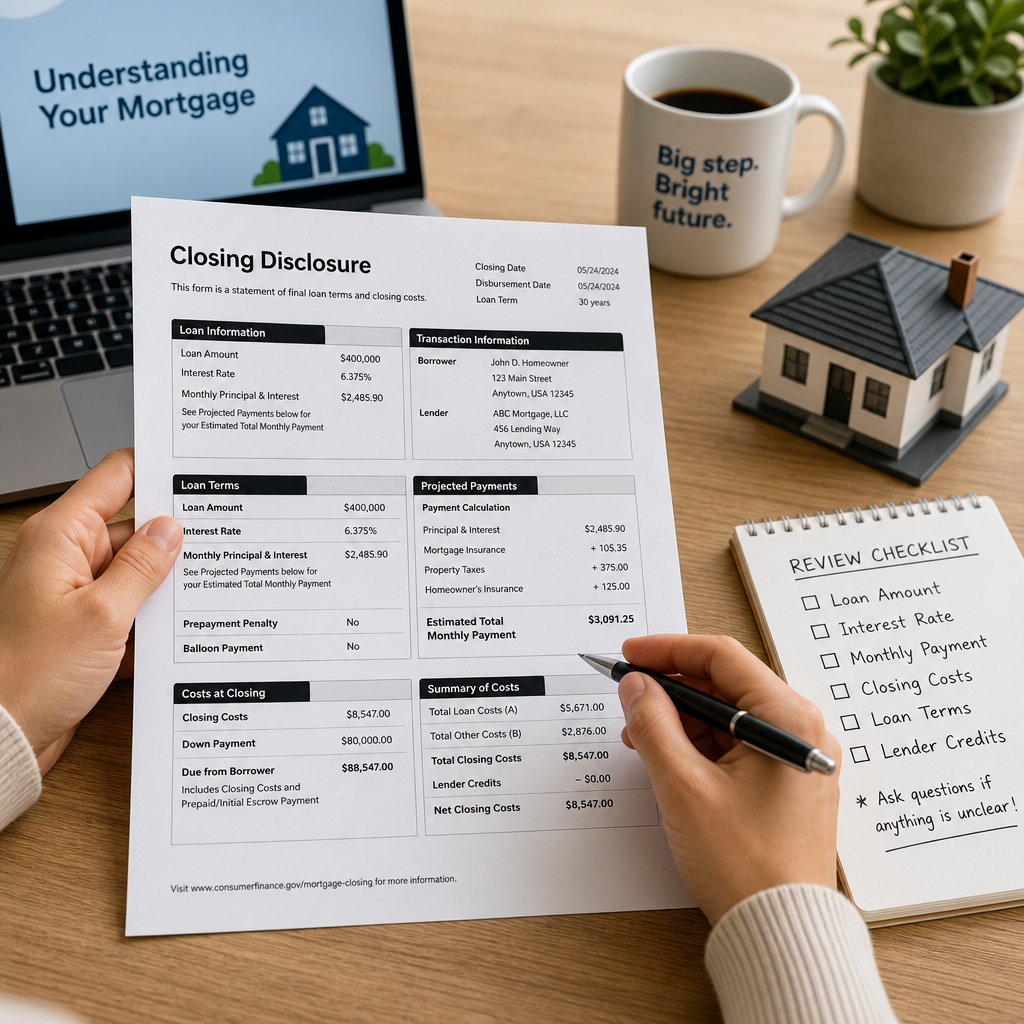
Buying a home is exciting, but the final stretch can feel overwhelming. One of the most important documents you’ll see at the end of the process is the mortgage closing disclosure. This form lays out the final terms of your loan, including your interest rate, monthly payment, closing costs, and the amount of cash you need to bring to closing.
Knowing how to review your mortgage closing disclosure before signing can help you catch errors, avoid surprises, and make sure the loan you’re about to accept matches what you expected. Even small mistakes can affect your payment or your out-of-pocket costs, so it’s worth slowing down and checking every section carefully.
Anúncios
What Is a Mortgage Closing Disclosure?
A closing disclosure is a standard form that lenders must give you before you finalize your mortgage. It summarizes the key details of your loan and the full breakdown of your closing costs.
You’ll typically receive it at least three business days before closing. That waiting period gives you time to compare it with your Loan Estimate and review the final terms.
Anúncios
The closing disclosure usually includes:
Loan amount
Interest rate
Monthly principal and interest payment
Estimated taxes and insurance
Closing costs and lender fees
Cash to close
Prepayment penalties, if any
Escrow account details
This document matters because once you sign, you are agreeing to the loan terms as written. If something looks off, now is the time to speak up.
Why Reviewing Your Closing Disclosure Matters
Many buyers focus only on the monthly payment, but the closing disclosure contains much more than that. It shows the complete financial picture of your mortgage.
Careful review helps you:
Confirm the loan matches what you were promised
Catch last-minute changes in fees or terms
Avoid paying for services you didn’t expect
Understand how much money you need at closing
Prevent delays by resolving issues early
A little attention now can save you a lot of stress later. It also gives you confidence that you are making a fully informed decision.
How to Review Your Mortgage Closing Disclosure Before Signing
The best way to review your mortgage closing disclosure before signing is to compare it side by side with your Loan Estimate and verify every major section. Don’t assume everything is correct just because it came from your lender or title company.
1. Check Your Personal Information
Start with the basics. Make sure all names, addresses, and loan details are accurate.
Look for:
Your full legal name
Property address
Mailing address
Loan number
Correct spelling of all borrower names
If your name is misspelled or the property address is wrong, ask for a correction right away. These errors may seem minor, but they can create problems at closing or after the loan is funded.
2. Compare the Loan Terms to Your Loan Estimate
Your Loan Estimate should be the reference point for reviewing the closing disclosure. Compare the two documents carefully.
Focus on:
Loan amount
Interest rate
Loan term
Type of loan
Monthly principal and interest payment
Whether the loan has a fixed or adjustable rate
Some changes may be allowed, but major differences should be explained. If your rate changed unexpectedly or the loan amount is different, ask your lender why.
3. Review Closing Costs Line by Line
Closing costs can include lender charges, title fees, government recording fees, prepaid taxes, insurance, and escrow deposits. These costs can add up quickly, so don’t just glance at the total.
Check each category:
Origination or underwriting fees
Appraisal fees
Credit report charges
Title search and title insurance
Recording fees
Survey fees
Attorney fees, if applicable
Prepaid interest
Homeowners insurance
Property tax escrows
Look for fees that seem unfamiliar or higher than expected. Some fees may have changed slightly, but your lender should be able to explain any difference.
4. Look at the Cash to Close
The cash to close is the amount you need to bring to settlement. It includes your down payment, closing costs, and any adjustments, minus credits or earnest money already paid.
This section is critical because it tells you exactly how much money you need available on closing day.
Make sure you understand:
Down payment amount
Earnest money credit
Seller credits, if any
Lender credits, if any
Adjustments for taxes or HOA dues
Final total you must pay
If the cash-to-close amount is higher than expected, ask for a detailed explanation. You do not want to show up to closing without enough funds.
5. Confirm Your Interest Rate and Monthly Payment
Your interest rate affects your long-term cost, and your monthly payment affects your budget. Make sure both match what you locked in or were quoted.
Verify:
Interest rate
Whether the rate is fixed or adjustable
Monthly principal and interest
Estimated escrow payment for taxes and insurance
Mortgage insurance, if applicable
Total estimated monthly payment
If you locked your rate, confirm that the closing disclosure reflects the correct locked rate and expiration date. If anything looks inconsistent, contact your lender immediately.
6. Check for Points, Credits, and Discounts
Sometimes borrowers pay discount points to lower the interest rate. In other cases, they may receive lender credits to offset closing costs. These items should be clearly shown.
Ask yourself:
Did I agree to pay points?
Do the credits match what I was promised?
Is the lender credit reducing my costs as expected?
If you do not remember agreeing to a fee or credit, do not ignore it. Ask the lender or loan officer to walk you through it.
7. Review Escrow and Prepaid Items
Many mortgages require an escrow account to cover property taxes and homeowners insurance. Your closing disclosure should show how much the lender is collecting upfront and how your monthly payment will be divided.
Review:
Initial escrow deposit
Property tax prepayment
Homeowners insurance premium
Mortgage insurance premium, if required
Number of months collected at closing
Escrow details can be confusing, but they matter because they affect both your upfront costs and ongoing monthly payment.
8. Watch for Unexpected Changes in Seller Credits or Prorations
If the seller agreed to pay part of your closing costs, that credit should appear clearly on the closing disclosure. The same goes for tax prorations or HOA dues that are split between buyer and seller.
Check for:
Seller-paid closing costs
Repair credits
Prorated property taxes
HOA fee adjustments
If the numbers seem different from what was negotiated in the purchase agreement, ask your real estate agent or closing agent to verify the contract terms.
9. Read the Loan Features and Comparisons
The closing disclosure usually includes sections that summarize how much you’ll pay over the life of the loan and whether your loan has features like a balloon payment or prepayment penalty.
Look for:
Balloon payment, if any
Prepayment penalty
Assumption terms
Late payment fee
Escrow waiver details
Most standard home loans do not include a balloon payment or prepayment penalty, but you should never assume. Always confirm.
10. Compare the Final Documents to the Purchase Agreement
Your mortgage closing disclosure should align with your purchase contract and any addenda. If the home inspection led to a seller concession, or if the contract was amended, those changes should show up correctly.
Compare:
Purchase price
Seller contributions
Repair credits
Closing date
Occupancy date
Earnest money applied
If anything doesn’t match, you may be looking at a clerical mistake or a missing update.
Red Flags That Deserve Immediate Attention
Some issues on a closing disclosure are more urgent than others. If you notice any of the following, contact your lender or closing agent right away:
Interest rate is higher than expected
Loan amount changed without explanation
Closing costs jumped significantly
Seller credits are missing
Cash to close is much higher than your estimate
Personal information is incorrect
A fee appears that you never discussed
Escrow amounts look unusually high or low
The loan type changed from what you applied for
A quick question today can prevent a costly mistake at closing.
What to Do If Something Looks Wrong
If you find an error or a confusing item, don’t sign until you understand it. Ask for clarification in writing if possible.
Here’s a simple process:
Mark the item you want explained.
Compare it with your Loan Estimate and purchase contract.
Contact your loan officer, lender, or closing agent.
Ask for a corrected disclosure if needed.
Review the updated version before signing.
It’s normal to ask questions. Lenders expect borrowers to review these documents carefully. What matters is making sure you understand exactly what you’re accepting.
Tips for a Smooth Review
A careful review does not have to be stressful. A few practical habits can make the process much easier.
Use a Side-by-Side Comparison
Place your Loan Estimate next to your closing disclosure and check line items one by one. This makes differences easier to spot.
Bring a Calculator
Use a calculator or spreadsheet to verify totals, especially the cash to close and monthly payment.
Save Copies of Everything
Keep digital or printed copies of:
Loan Estimate
Closing Disclosure
Purchase agreement
Email communication about credits or concessions
These documents can help resolve disputes if something changes unexpectedly.
Ask Questions Early
Do not wait until you are at the closing table. If you can review the documents as soon as they arrive, you’ll have more time to resolve issues.
Understand That Some Changes Are Normal
A few items may shift slightly before closing, such as prepaid interest or escrow deposits. Small changes can happen for legitimate reasons. The key is to understand why the numbers changed and whether they still fit what you agreed to.
Common Mistakes Homebuyers Make
Even organized buyers sometimes miss important details. Avoid these common mistakes:
Skimming the document too quickly
Focusing only on the monthly payment
Ignoring closing cost line items
Forgetting to compare the disclosure to the Loan Estimate
Assuming the lender will catch every error
Waiting until closing day to ask questions
The closing disclosure is not just paperwork. It is the final summary of your mortgage, and it deserves a careful review.
Frequently Asked Questions
1. When should I receive my closing disclosure?
In most cases, lenders must provide the closing disclosure at least three business days before closing. That gives you time to review the final loan terms and ask questions before signing.
2. What should I compare on the closing disclosure?
Compare the interest rate, loan amount, monthly payment, closing costs, seller credits, and cash to close against your Loan Estimate and purchase agreement. These are the sections where errors or unexpected changes are most likely to appear.
3. Can I negotiate fees on the closing disclosure?
Some fees may be negotiable, while others are set by third parties or government agencies. You can often question lender fees, ask for clarification on service charges, or request a fee explanation if something seems too high.
4. What happens if I find an error before closing?
Tell your lender or closing agent immediately. They may issue a corrected closing disclosure. If the change is significant, your closing date may need to move so you can review the updated document within the required waiting period.
5. Is the cash to close the same as my down payment?
No. Cash to close usually includes your down payment plus closing costs, prepaid items, and adjustments, minus any credits or deposits already paid. It is the total amount you need to bring to closing, not just the down payment.
Reviewing your mortgage closing disclosure before signing is one of the most important steps in the homebuying process. This document tells you exactly what you are agreeing to, from your loan terms and interest rate to your closing costs and cash to close. Taking the time to compare it with your Loan Estimate, purchase agreement, and any seller credits can help you catch mistakes before they become expensive problems.
The key is to slow down, read each section carefully, and ask questions about anything that does not match your expectations. Even if you feel pressure to move quickly, it is better to pause than to sign something you do not fully understand. A well-reviewed closing disclosure gives you clarity, protects your budget, and helps your closing day go more smoothly.
If you are preparing to buy a home, make this review part of your standard checklist. The more informed you are now, the more confident you will feel when it is time to sign.
Mary S, CFP®, is a Certified Financial Planner with over 12 years of experience in personal finance, retirement planning, and wealth management. She writes educational content that helps readers understand financial concepts and make informed decisions based on reliable information.