How to Read and Review a Brokerage Account Statement
Anúncios
A brokerage account statement can feel like a wall of numbers, but it’s one of the most important documents an investor receives. If you know how to read and review a brokerage account statement, you can spot errors, track performance, monitor fees, and catch signs of fraud or unauthorized activity before they become bigger problems.
Whether you invest through a full-service broker, an online trading platform, or a retirement account with a brokerage window, your statement tells a story about your portfolio. The key is knowing where to look and what matters most.
Anúncios
Why a Brokerage Account Statement Matters

A brokerage account statement is more than a summary of balances. It is a record of your holdings, transactions, cash activity, income, and charges over a specific period. Reviewing it regularly helps you:
- Confirm your investments are accurate
- Understand how your portfolio has changed
- Identify dividend payments, interest, and reinvestments
- Spot unexpected trades or withdrawals
- Evaluate commissions, advisory fees, and margin interest
- Stay organized for tax time
If you ignore your statement, small mistakes can go unnoticed. A duplicate trade, an incorrect fee, or a missing dividend may seem minor at first, but these issues can affect your returns and, in some cases, your account security.
Anúncios
What You’ll Typically Find on a Brokerage Account Statement
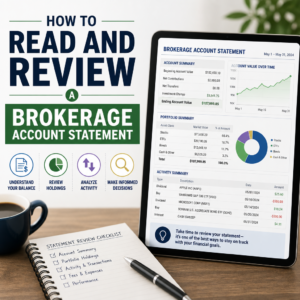
Most brokerage statements follow a similar structure, though the layout can vary by firm. When you learn how to read and review a brokerage account statement, start by identifying the major sections.
Account Summary
The account summary gives you a snapshot of your portfolio at a glance. It usually includes:
- Beginning account value
- Ending account value
- Cash balance
- Market value of securities
- Gains or losses
- Realized and unrealized performance
This section helps you understand whether your account grew or declined during the statement period. Keep in mind that the ending value reflects market prices on the statement date, so short-term changes are normal.
Holdings or Positions
The holdings section lists each security in your account, such as:
- Stocks
- Bonds
- Mutual funds
- Exchange-traded funds (ETFs)
- Options
- Cash equivalents
For each position, review:
- Ticker or security name
- Quantity owned
- Price per share or unit
- Market value
- Cost basis, if provided
- Unrealized gain or loss
This section matters because it confirms what you own. If a security appears that you did not buy, or if a holding is missing, you should ask your broker about it right away.
Activity or Transactions
This is one of the most important parts of the statement. It shows what happened in your account during the period, including:
- Buys and sells
- Dividend payments
- Interest earned
- Reinvestments
- Deposits and withdrawals
- Transfers between accounts
- Corporate actions such as stock splits or mergers
- Fees and expenses
Carefully compare these entries with your own records. If you placed an order but it shows a different price or date, the discrepancy may be worth investigating.
Cash Flow and Money Movement
Your brokerage account may hold uninvested cash. The statement should show how money moved in and out of the account. Review:
- Starting cash balance
- New deposits
- Withdrawals
- Settlement of trades
- Cash used for purchases
- Interest paid or received
This section is especially useful if you move money frequently or use the account as part of a larger financial plan.
Fees and Charges
Fees can be easy to overlook because they may appear as small line items, but they still affect your returns. Common charges include:
- Trading commissions
- Advisory fees
- Account maintenance fees
- Inactivity fees
- Margin interest
- Transfer fees
- Option contract fees
Even if your broker advertises commission-free trading, that does not mean the account is free of all charges. Advisory and product-based fees can still apply.
How to Read and Review a Brokerage Account Statement Step by Step
The best way to review a brokerage statement is to use a consistent process each month or quarter. You do not need to be a professional analyst; you just need a method.
1. Confirm the Account Information
Start at the top of the statement and verify that it is yours.
Check:
- Your name and address
- Account number
- Statement period
- Account type
- Broker or custodian name
If you receive paper statements, confirm that the mailing address is correct. If you use e-delivery, make sure your contact details are current.
2. Compare Beginning and Ending Balances
Look at the starting value, ending value, and any major changes in between. Ask:
- Did the balance change because of market movement?
- Were there deposits or withdrawals?
- Were there any trades that explain the difference?
- Did dividends or interest affect the total?
A large jump or drop in value may be perfectly normal, but it should still make sense based on activity and market changes.
3. Review Every Transaction
Go through the transaction history line by line. Match it against your own trade confirmations, email alerts, or notes.
Check for:
- Duplicate trades
- Incorrect quantities
- Wrong prices
- Missing dividends
- Unauthorized withdrawals
- Unexpected transfers
If you use automated dividend reinvestment, make sure the reinvested shares were recorded correctly.
4. Verify Holdings and Cost Basis
Your current holdings should match what you actually own. For each position, check the quantity, market value, and cost basis.
Why cost basis matters:
- It helps calculate gains or losses when you sell
- It supports tax reporting
- It shows whether a trade was profitable or not
If your statement includes cost basis, compare it with your purchase records. If it does not, your broker may provide it in a separate tax document or online portal.
5. Look Closely at Fees
Fees can reduce long-term returns, especially in accounts that are actively managed or heavily traded.
Look for:
- Advisory fees charged as a percentage of assets
- Trading fees for certain securities
- Option exercise or assignment charges
- Margin interest
- Fund expenses if they are disclosed on the statement
Even if the amount seems small, repeated fees can add up over time. If something seems unfamiliar, ask your broker to explain it in plain language.
6. Check for Corporate Actions
Corporate actions are events that affect securities in your account. Common examples include:
- Stock splits
- Reverse splits
- Mergers
- Spinoffs
- Ticker changes
- Cash or stock dividends
These events can change share counts, cost basis, or security names without a trade you initiated. Make sure your statement reflects these changes accurately.
7. Review Margin Activity, If Applicable
If you use margin, your statement may include borrowed amounts, margin interest, and collateral details. Margin can increase buying power, but it also adds risk and costs.
Review:
- Debit balance
- Interest rate charged
- Interest accrued
- Marginable securities
- Maintenance requirements
If you do not fully understand the margin section, do not ignore it. It can materially affect your account value.
Common Mistakes Investors Make When Reviewing Statements
Even experienced investors can overlook important details. Here are some common mistakes to avoid when you read and review a brokerage account statement.
Skimming Only the Summary
The account summary is helpful, but it does not tell the whole story. A statement can look fine at the top while hiding a problematic transaction, fee, or tax detail below.
Ignoring Small Charges
A few dollars here and there may not seem important. But over a year, recurring fees can become meaningful, especially in smaller accounts.
Assuming Market Losses Are Errors
A lower ending balance does not automatically mean something is wrong. The market can fall quickly. Before you assume there is an error, review transaction history and market movements.
Forgetting to Check Beneficiary or Registration Details
Account statements often show ownership type, such as individual, joint, trust, or retirement account. Make sure the registration is correct and that beneficiary information is current in your brokerage records.
Not Reconciling Tax-Related Activity
Dividends, capital gains distributions, and realized gains should line up with your records. If they do not, it can cause confusion when tax season arrives.
How Often Should You Review a Brokerage Statement?
At a minimum, review each statement when it arrives. Many brokers issue monthly statements, while others send them quarterly if there is less activity.
A practical review schedule looks like this:
- Monthly or quarterly – Read the statement carefully
- After every trade – Confirm the order, fill price, and settlement
- At tax time – Cross-check dividends, interest, and gains
- Annually – Review fees, asset allocation, and account goals
If your account is active, uses margin, or holds more complex securities, monthly review is especially important.
A Simple Statement Review Checklist
Use this quick checklist each time you open a new statement:
- Confirm your name, account number, and statement period
- Compare beginning and ending balances
- Review all deposits and withdrawals
- Check every trade and reinvestment
- Verify dividends and interest payments
- Confirm holdings, share counts, and prices
- Look for unfamiliar fees or charges
- Review margin activity, if relevant
- Check corporate actions and adjustments
- Save the statement for your records
Keeping a short checklist helps you stay consistent and reduces the chance of missing something important.
What to Do If You Find an Error
If you spot a mistake, act quickly. Most brokerages have procedures for handling account disputes or suspected unauthorized activity.
Steps to Take
- Gather supporting documents, such as trade confirmations or prior statements
- Contact the broker’s customer service or compliance department
- Ask for a written explanation or correction
- Keep notes of the date, time, and name of the person you spoke with
- Follow up in writing if needed
If the issue involves fraud or identity theft, ask the broker about account protection steps immediately. In serious cases, you may also need to report the matter to regulators or law enforcement.
How a Brokerage Statement Supports Better Investing
Learning how to read and review a brokerage account statement is not just about catching mistakes. It also helps you become a more informed investor. When you understand your statement, you can:
- See how your strategy is working
- Monitor whether your investments match your risk tolerance
- Track income from dividends and interest
- Spot excessive trading or hidden costs
- Make better decisions during market volatility
In other words, the statement becomes a tool for accountability. It shows you what your money is doing and whether your account still aligns with your goals.
Frequently Asked Questions
1. How do I know if my brokerage account statement is correct?
Start by comparing the statement with your trade confirmations, deposit records, and personal notes. Verify balances, holdings, and transaction details line by line. If everything matches and the activity makes sense, the statement is likely accurate. If you see something unusual, contact the broker promptly.
2. What is the difference between realized and unrealized gains?
Realized gains or losses happen when you sell an investment. Unrealized gains or losses reflect the paper increase or decrease in value of securities you still own. Both may appear on your brokerage statement, but only realized gains typically affect the tax reporting for completed sales.
3. Why do I see dividends on my brokerage statement?
Dividends are payments made by companies or funds to shareholders. Your statement may show cash dividends, dividend reinvestments, or mutual fund distributions. Make sure the amounts and dates match the securities you hold. If you signed up for automatic reinvestment, the dividend may appear as both income and a share purchase.
4. Are brokerage statements the same as trade confirmations?
No. A trade confirmation is a transaction-specific record sent after a buy or sell order is executed. A brokerage account statement is a broader summary of account activity over a set period. The statement includes trades, dividends, fees, cash movement, and holdings, while a confirmation focuses on one trade.
5. How long should I keep brokerage account statements?
It is wise to keep brokerage statements for several years, especially if they document taxable events, account transfers, or cost basis information. Many investors store them electronically for easy access. Retaining older statements can help resolve disputes and support tax records if needed.
Official Resources
- U.S. Securities and Exchange Commission (SEC) – Investor Publications
- FINRA – Understanding Brokerage Account Statements
- Investor.gov – Brokerage Accounts
- Consumer Financial Protection Bureau (CFPB)
- Internal Revenue Service (IRS) – Topic 409, Capital Gains and Losses
Conclusion
Knowing how to read and review a brokerage account statement gives you a clearer view of your financial life. Instead of treating the statement as routine paperwork, use it as a practical tool to confirm holdings, track performance, spot fees, and verify that every transaction belongs in your account. A careful monthly or quarterly review can uncover errors early, help protect you from unauthorized activity, and keep your investment records organized for taxes and long-term planning.
The good news is that you do not need advanced financial knowledge to do this well. By focusing on the account summary, transactions, holdings, cash activity, and fees, you can quickly separate normal market movement from actual problems. Over time, this habit can make you a more confident and disciplined investor. If you want better control over your portfolio, start with your next brokerage statement and review it line by line.