How to Report Identity Theft and Create a Recovery Plan
Identity theft can escalate quickly, but taking the right steps early can make all the difference. This guide shows you how to file an identity theft report, document the fraud, and build a recovery plan that helps protect your finances and peace of mind.
By: Mary Mitchell on August 2, 2026
Anúncios
Identity theft can feel overwhelming in the moment, but a clear plan can help you regain control quickly. If you know how to report identity theft and create a personal recovery plan, you can reduce damage, stop new fraudulent activity, and start rebuilding with confidence. The key is to act fast, document everything, and follow a practical sequence of steps.
This guide walks you through what to do first, how to report identity theft to the right places, and how to build a recovery plan that protects you long after the initial crisis is over.
Anúncios
What Identity Theft Can Look Like
Identity theft happens when someone uses your personal information without permission. That can include your name, Social Security number, bank details, email address, or even your medical insurance information.
Common signs include:
Anúncios
Accounts or charges you do not recognize
Collection notices for debts you never opened
Missing mail or tax documents
Credit report inquiries you did not authorize
Login alerts for accounts you do not use
Denied credit applications that should have been approved
Medical bills for services you never received
Sometimes the warning signs are obvious. Other times, you may only notice a small issue that later turns into a much larger problem. That is why it helps to know how to report identity theft as soon as something looks off.
Step 1: Confirm the Fraud and Gather Evidence
Before you start contacting agencies, collect as much information as possible. A solid paper trail makes reporting easier and helps you dispute fraudulent accounts later.
What to collect
Create a simple file or digital folder with:
Dates and times you noticed suspicious activity
Copies of billing statements or account alerts
Screenshots of unknown transactions or login messages
Names of companies involved
Any letters, emails, or texts related to the fraud
Notes from phone calls, including who you spoke with and when
If possible, keep a running log. Even small details can matter later, especially if you need to prove that you acted quickly.
Step 2: Report Identity Theft to the FTC
One of the first official steps is to file a report with the Federal Trade Commission. The FTC’s IdentityTheft.gov site creates a personalized recovery plan based on your situation.
Why this matters
An FTC identity theft report can help you:
Prove to businesses that the fraud is real
Dispute fraudulent accounts or charges
Create a step-by-step action plan
Document the timeline of events
What to do
Go to IdentityTheft.gov and answer the questions about what happened. The site will help you create an official report and recovery plan. Save the report and any related forms in both digital and printed form.
If you’re dealing with fraud involving a tax return, employment, or government benefits, this report can still be useful as part of your documentation.
Step 3: Place a Fraud Alert or Credit Freeze
If someone has your personal information, they may try to open new accounts. A credit alert or freeze can help reduce that risk.
Fraud alert
A fraud alert tells lenders to take extra steps to verify your identity before opening new credit in your name. It’s free to place and typically lasts one year, though an extended alert may be available if you’ve filed an identity theft report.
Credit freeze
A credit freeze blocks most lenders from accessing your credit report, which makes it harder for new accounts to be opened. You can lift or remove the freeze when you need to apply for credit.
Which one should you choose?
Fraud alert: Good if you want a lighter layer of protection and may apply for credit soon
Credit freeze: Better if you want stronger protection and don’t need immediate access to new credit applications
You can contact the three major credit bureaus directly:
Equifax
Experian
TransUnion
Consider freezing all three reports if the theft involves your Social Security number or other sensitive information.
Step 4: Contact Banks, Credit Card Issuers, and Other Financial Institutions
If fraud affected your bank accounts or cards, contact the institution immediately. Most companies have dedicated fraud departments and can act quickly.
What to ask for
Freeze or close compromised accounts
Reverse unauthorized charges
Issue new cards or account numbers
Reset online banking credentials
Add extra authentication to your accounts
For debit card fraud, time matters. The sooner you report it, the better your chances of limiting losses. For credit card fraud, you typically have strong protections, but you still need to notify the issuer promptly.
Tip
Use the fraud report number or case number from each company. Add it to your recovery log so you can track every conversation.
Step 5: Report the Theft to Police if Needed
Not every identity theft case requires a police report, but in some situations it helps a lot. A police report can strengthen your case when disputing accounts or working with businesses that want extra proof.
Consider filing a police report if:
Someone used your identity to open new accounts
You suffered significant financial loss
Your ID documents were stolen
A lender or creditor asks for formal documentation
The fraud involves harassment, threats, or repeated misuse
Bring copies of your FTC identity theft report, evidence of fraud, and any correspondence from affected companies. Ask for a copy of the police report for your records.
Step 6: Dispute Fraudulent Accounts and Charges
Once you’ve reported the theft, start disputing anything that does not belong to you.
Where to dispute
You may need to contact:
Credit bureaus
Banks and credit card companies
Debt collectors
Retailers or service providers
Medical providers or insurers
What to include in a dispute
Your dispute should be clear and direct. Include:
Your full name and contact information
The account number or transaction in question
A statement that you are a victim of identity theft
A request to block or remove fraudulent information
Copies of supporting documentation
Keep copies of everything you send. Send important disputes by certified mail if possible, especially when the issue affects your credit report or debt collection.
Step 7: Protect Your Online Accounts
Identity theft often starts or continues through email, cloud storage, or social media. Once your financial accounts are secured, move on to your digital life.
Update passwords
Change passwords for:
Email
Banking
Shopping accounts
Social media
Cloud storage
Phone carrier accounts
Password managers
Use unique passwords for each account. A password manager can make this easier.
Turn on multi-factor authentication
Multi-factor authentication adds another layer of security by requiring a code, app approval, or biometric confirmation. Enable it wherever possible, especially on email and financial accounts.
Review account recovery settings
Check:
Backup email addresses
Security questions
Phone numbers on file
Authorized devices
An identity thief may try to use account recovery tools to regain access after you change your password.
Step 8: Watch for Tax, Medical, and Government Fraud
Identity theft does not always involve credit cards or bank accounts. It can also affect tax returns, medical records, unemployment claims, and government benefits.
Tax fraud
If someone uses your Social Security number to file a tax return, contact the IRS and follow its identity theft procedures.
Medical identity theft
Review insurance claims and explanation-of-benefits statements for services you never received. Mistakes in medical records can affect future care, so report errors quickly.
Government benefits fraud
If someone used your identity to claim unemployment or other benefits, notify the appropriate agency right away and ask what documentation they need.
How to Create a Personal Recovery Plan
Knowing how to report identity theft and create a personal recovery plan means more than filing forms. It means building a system that helps you recover now and stay safer later.
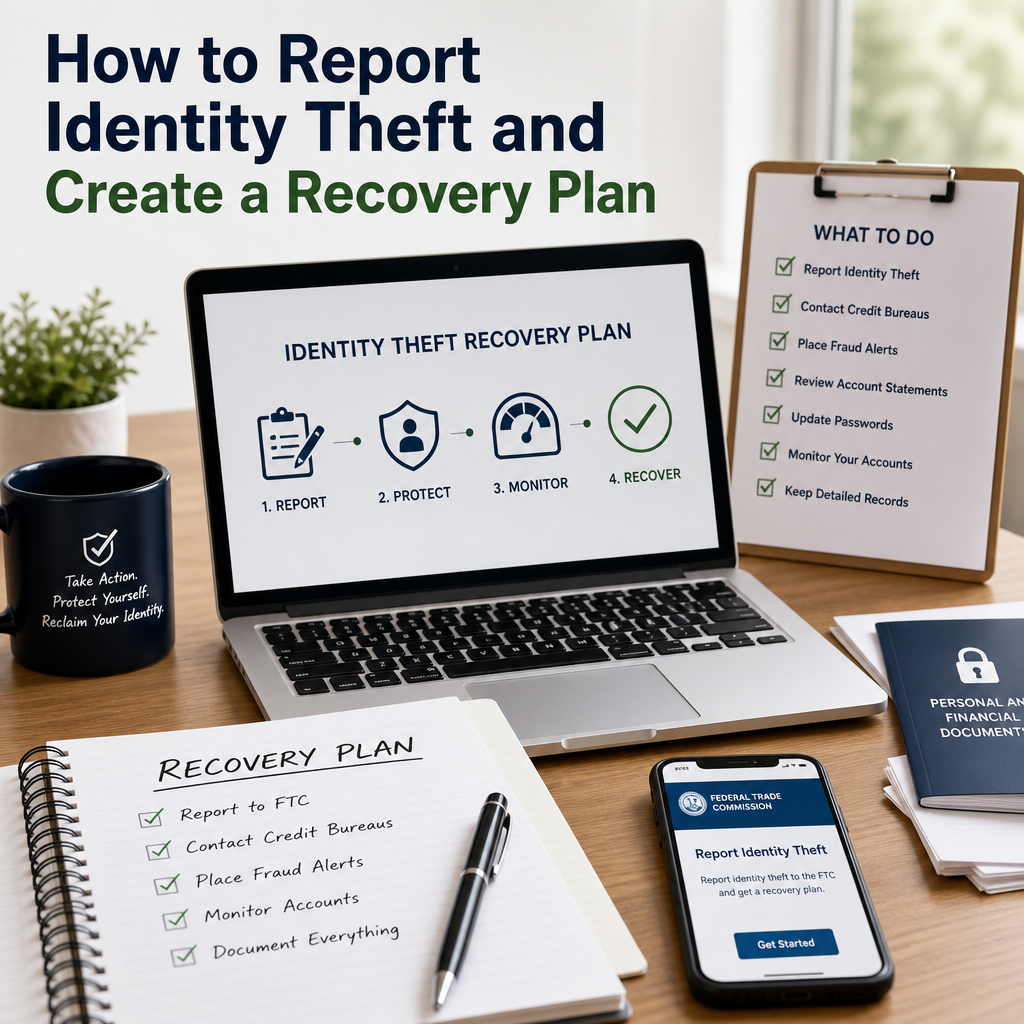
Build Your Recovery Plan in 4 Parts
1. Immediate actions
These are the steps you take in the first 24 to 72 hours:
File an FTC identity theft report
Freeze or alert your credit files
Contact affected banks and card issuers
Change passwords on important accounts
Review recent account activity
2. Short-term tasks
Over the next few weeks, focus on cleanup:
Dispute fraudulent accounts and charges
Follow up with credit bureaus
Replace stolen cards or ID documents
Review your credit reports
Track responses from companies
File a police report if needed
3. Long-term monitoring
Identity theft recovery does not end after the first round of calls. Add ongoing monitoring to your plan:
Check bank and card statements regularly
Review credit reports periodically
Watch email and phone accounts for login alerts
Track mail for unexpected bills or notices
Monitor your insurance and tax records
4. Prevention habits
Once the immediate crisis is under control, strengthen your routine:
Use strong, unique passwords
Keep software and devices updated
Shred sensitive paper documents
Limit what you share online
Avoid clicking suspicious links or attachments
Store important documents securely
A Simple Recovery Checklist
If you want a straightforward way to stay organized, use this checklist:
[ ] File FTC identity theft report
[ ] Save all evidence and case numbers
[ ] Contact banks and credit card issuers
[ ] Place fraud alerts or credit freezes
[ ] Dispute fraudulent accounts and charges
[ ] Change passwords and enable multi-factor authentication
[ ] Review credit reports
[ ] File a police report if helpful
[ ] Monitor accounts for new suspicious activity
[ ] Keep all records in one recovery folder
This kind of structure can reduce stress and keep you from missing important follow-up steps.
Practical Example: What a Recovery Plan Might Look Like
Suppose you notice a credit card charge you never made and then discover a new loan inquiry on your credit report. A recovery plan might look like this:
Day 1: Call the card issuer, report the fraud, and request a new card
Day 1: File the FTC report
Day 1: Place a credit freeze at all three bureaus
Day 2: Review your credit report for other suspicious accounts
Day 3: Change your email password and enable two-factor authentication
Week 1: Send written disputes for any fraudulent inquiries or accounts
Week 2: Follow up on each dispute and save responses
Month 1: Review statements and credit reports again
This approach keeps the problem manageable and gives you a clear next step at every stage.
When to Get Extra Help
Some cases are more complicated than others. You may want additional support if:
The fraud keeps happening
Multiple accounts were opened in your name
You are facing debt collection for accounts you never used
Your tax return was rejected because someone already filed with your SSN
You’re unsure how to respond to creditors or collectors
A consumer protection attorney, a nonprofit credit counselor, or a trusted financial professional may help you understand your options. If you need legal advice, choose someone experienced in identity theft or consumer law.
Frequently Asked Questions
1. What is the first thing I should do after discovering identity theft?
Start by gathering evidence and reporting the fraud to the FTC at IdentityTheft.gov. Then contact affected banks, card issuers, or other companies right away. If your Social Security number or credit file is involved, place a fraud alert or credit freeze as soon as possible.
2. Do I need a police report for identity theft?
Not always, but it can be very helpful. A police report may strengthen your case when disputing fraudulent accounts or when a company asks for extra proof. It is especially useful if someone opened new credit in your name or stole official documents.
3. Should I freeze my credit or place a fraud alert?
A credit freeze offers stronger protection because it blocks most new credit access unless you lift the freeze. A fraud alert is easier to place and tells lenders to verify your identity more carefully. If you want the strongest protection, many people choose a freeze.
4. How long does identity theft recovery take?
It depends on how much damage occurred and what information was stolen. Simple cases may resolve relatively quickly, while more complex cases can take months. Staying organized, documenting everything, and following up regularly can speed up the process.
5. Can identity theft affect more than my credit?
Yes. It can also affect your taxes, medical records, insurance claims, employment records, and government benefits. That is why a complete recovery plan should include financial accounts, online security, and monitoring for non-credit fraud.
Identity theft is stressful, but a calm, organized response can make a real difference. The most effective approach is to act quickly: document the fraud, report identity theft to the FTC, protect your credit, notify financial institutions, and dispute anything that does not belong to you. From there, a personal recovery plan helps you stay focused on both cleanup and long-term prevention.
The recovery process is easier when you break it into manageable steps. Handle the urgent tasks first, then work through disputes, monitoring, and security improvements one by one. Keep every letter, email, and case number in one place so you can follow up without confusion. Just as important, build habits that reduce future risk, such as stronger passwords, multi-factor authentication, and regular account reviews.
If you are dealing with identity theft now, start today. The sooner you report it and create a recovery plan, the sooner you can limit damage and move toward a safer financial future.
Mary S, CFP®, is a Certified Financial Planner with over 12 years of experience in personal finance, retirement planning, and wealth management. She writes educational content that helps readers understand financial concepts and make informed decisions based on reliable information.