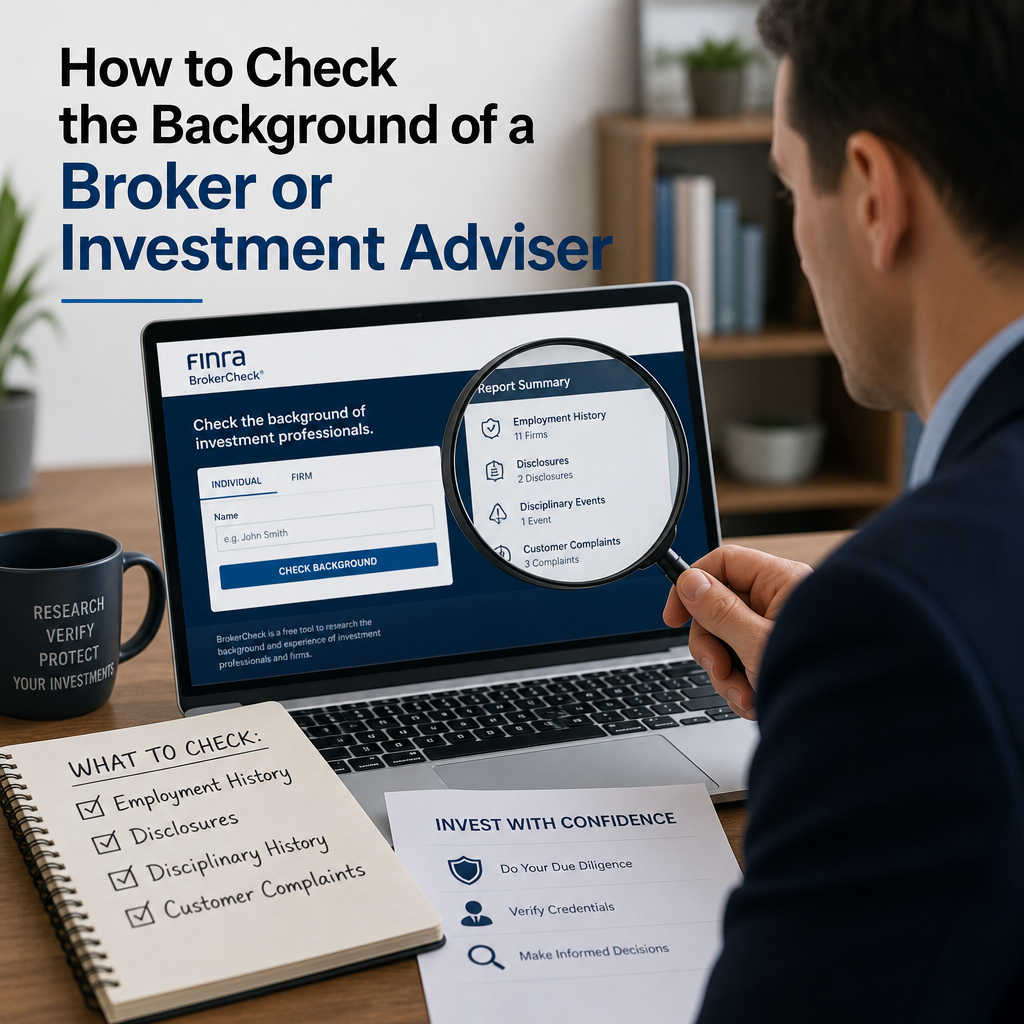
How to Check the Background of a Broker or Investment Adviser
Before you trust someone with your money, it’s smart to check broker background details like registration, employment history, and any disciplinary records. A quick review can help you spot red flags and choose a financial professional with more confidence.
By: Mary Mitchell on August 2, 2026
Anúncios
Choosing someone to help manage your money is a major decision. Whether you’re looking for a broker to place trades or an investment adviser to provide ongoing guidance, you need to know who you’re dealing with before you hand over your accounts. Learning how to check the background of a broker or investment adviser can help you avoid fraud, spot conflicts of interest, and make a more informed choice.
The good news is that it doesn’t take advanced financial knowledge to do a basic background check. With a few trusted tools and a little patience, you can review a professional’s registration, disciplinary history, employment record, and disclosure filings. Here’s how to do it the right way.
Anúncios
Why Background Checks Matter
A polished website or a confident sales pitch does not guarantee that a financial professional is trustworthy. Brokers and investment advisers can legally have different obligations, and not all advice is created equal. Some professionals must act in your best interest, while others may be held to a suitability standard that allows recommendations based on what is appropriate, not necessarily what is best for you.
Checking background information helps you:
Anúncios
Confirm the person is properly registered
Verify their employment history and credentials
Look for disciplinary actions, complaints, or lawsuits
Understand whether they have conflicts of interest
Compare what they say with official records
A few minutes of research can save you from costly mistakes later.
First, Know the Difference Between a Broker and an Investment Adviser
Before you begin your search, it helps to know which type of professional you’re investigating.
Brokers
Brokers, also called broker-dealers or registered representatives, buy and sell securities on behalf of clients or for their own firms. They are typically regulated by the Financial Industry Regulatory Authority (FINRA) and the U.S. Securities and Exchange Commission (SEC).
Investment Advisers
Investment advisers provide advice about securities, financial planning, portfolio management, or wealth management. Many advisers are fiduciaries, meaning they are legally required to act in a client’s best interest. Depending on the size of the firm, they may register with the SEC or with state regulators.
Why the Difference Matters
The background-check process overlaps for both, but the key databases and disclosures can differ. If you know whether you’re checking a broker or an adviser, you can search the right records faster and interpret the results more accurately.
How to Check the Background of a Broker or Investment Adviser
You do not need to rely on a single source. The safest approach is to cross-check information across several official databases and disclosure documents.
1. Start with the SEC’s Investor.gov and BrokerCheck
For brokers, FINRA’s BrokerCheck is one of the most useful tools available. It lets you review licensing status, current and past employment, exams passed, and disclosure events such as customer disputes, regulatory actions, and criminal matters.
For investment advisers, the SEC’s Investment Adviser Public Disclosure database and the Form ADV filing are essential. These records show the adviser’s services, fees, business practices, ownership structure, and disciplinary history.
If the person works for a firm, check the firm as well as the individual. Problems often appear at the firm level even if the individual profile looks clean at first glance.
2. Verify Registration and Licenses
A legitimate broker or adviser should be properly registered with the appropriate regulator.
Look for:
Current registration status
Jurisdiction: federal, state, or both
CRD or SEC file numbers
Expiration or termination dates, if applicable
If registration is missing, inactive, or inconsistent with the person’s claims, that’s a red flag. Someone who says they are licensed should be able to provide their registration details quickly and without hesitation.
3. Review Employment History
Employment history can reveal whether the person has moved frequently between firms, changed industries often, or had unexplained gaps.
Pay attention to:
Previous firms and job titles
Dates of employment
Whether the person left firms voluntarily or was terminated
Whether the history matches the résumé, LinkedIn profile, or website bio
Frequent job changes are not automatically suspicious, but they may deserve follow-up questions. A clean, consistent record is easier to trust than a profile with missing years or vague titles.
4. Check for Disciplinary Disclosures
This is one of the most important parts of learning how to check the background of a broker or investment adviser. Disclosures may include:
Customer complaints or arbitrations
Civil lawsuits
Regulatory sanctions
Criminal charges or convictions
Bankruptcy filings
Internal firm investigations
Do not stop at the existence of a disclosure. Read the details. Some matters are minor, while others may point to serious misconduct. Look for patterns, not just isolated events. One old complaint may be less concerning than repeated issues over several years.
5. Read Form ADV for Investment Advisers
If you’re evaluating an investment adviser, Form ADV is one of the best sources of plain-English information.
It typically covers:
Advisory services offered
Fee structure
Types of clients served
Custody of client assets
Conflicts of interest
Outside business activities
Disciplinary history
Form ADV Part 2, often called the brochure, is especially helpful because it explains the adviser’s business in a more narrative format. Part 3, known as the relationship summary or Form CRS for dual registrants and many firms, gives a brief overview of services, costs, and conflicts.
6. Search State Regulatory Databases
If the professional is registered at the state level, check your state securities regulator’s website. States often publish licensing and enforcement information that may not be obvious in a quick web search.
You can also use state databases to confirm whether a person is allowed to solicit clients in your state. This matters if you live in a state where the adviser is not properly licensed or authorized to operate.
7. Look Up Professional Designations Carefully
Many financial professionals use titles or credentials such as CFP®, CFA, ChFC®, or CPA. Some are respected and require real education, exams, and ethics standards. Others may sound impressive but carry little weight.
To verify designations:
Check the credentialing organization’s official website
Confirm the designation is current
Look for disciplinary actions tied to the designation
Make sure the person is not implying expertise they do not actually have
A title alone does not prove competency or trustworthiness. It should support, not replace, your due diligence.
8. Search for Complaints and News Coverage
Official databases are the best place to begin, but they may not tell the full story. A careful web search can uncover news articles, consumer complaints, lawsuits, or public commentary.
Search the person’s:
Full name
Firm name
City and state
License number, if available
Be cautious with online reviews. A few angry posts do not necessarily prove wrongdoing, and some reviews may be fake or misleading. Still, recurring themes can reveal service problems, communication issues, or aggressive sales tactics.
9. Ask Direct Questions
A background check is not just about databases. It also includes a conversation.
Ask questions such as:
Are you a broker, an investment adviser, or both?
Are you a fiduciary at all times?
How are you compensated?
Do you earn commissions, fees, or both?
Have you ever been disciplined by a regulator or firm?
Do you have any conflicts of interest I should know about?
A trustworthy professional should answer clearly and directly. If someone gets defensive, avoids specifics, or gives vague answers, take that seriously.
Red Flags to Watch For
Some warning signs deserve extra attention when you check a broker or investment adviser’s background.
Missing or Hard-to-Find Registration
If you cannot verify registration through official sources, stop and investigate further.
Too-Good-To-Be-True Promises
Be wary of guaranteed returns, “risk-free” investments, or pressure to act immediately.
Omitted Disclosures
If a website bio leaves out past firms, job dates, or credentials, compare it with official filings.
Frequent Complaints or Regulatory Actions
Multiple complaints, disciplinary actions, or customer disputes may indicate a pattern.
Unclear Fees or Compensation
If you cannot easily tell how the professional gets paid, that lack of transparency is a problem.
Practical Example: A Quick Background Check Workflow
Here’s a simple process you can use for almost any broker or investment adviser:
Get the person’s full legal name and firm name.
Search BrokerCheck or IAPD, depending on the role.
Review registration status and licenses.
Read disclosure items carefully.
Check Form ADV and Form CRS if the person is an adviser.
Verify credentials with the issuing organization.
Search the state regulator and a general web search.
Write down questions before your meeting.
Compare the official record with the person’s sales pitch.
This process takes a little time, but it gives you a much clearer picture of who you may be trusting with your savings.
When to Walk Away
Sometimes the best decision is not to proceed. Consider walking away if:
The person refuses to share their registration details
You find unresolved disciplinary history that concerns you
The compensation structure is confusing or hidden
They pressure you to sign quickly
Their story changes when you compare it to official records
You do not need to prove wrongdoing to say no. If something feels off and the records do not help reassure you, keep looking.
Tips for Safer Due Diligence
A few smart habits can make your background check more effective:
Save screenshots or PDF copies of important records
Check dates carefully, especially registration and employment history
Read disclosures from oldest to newest to spot patterns
Compare what the professional says with what the filings say
Recheck the records periodically if you keep working with them
Background checks are not a one-time task. Financial professionals can change firms, update registrations, and disclose new events over time.
Frequently Asked Questions
How do I check if a broker is licensed?
Use FINRA’s BrokerCheck to search the broker’s name or CRD number. The report shows registration status, employment history, exams, and disclosures. You can also confirm the firm’s registration through FINRA or the SEC, depending on the entity.
Where can I find an investment adviser’s background?
The SEC’s Investment Adviser Public Disclosure database is the best starting point. For state-registered advisers, check your state securities regulator’s website as well. Review Form ADV, which outlines the adviser’s services, fees, conflicts, and disciplinary history.
What is the difference between BrokerCheck and Form ADV?
BrokerCheck is a FINRA tool focused on brokers and brokerage firms. Form ADV is a disclosure document used by investment advisers. BrokerCheck often highlights securities licensing and broker-specific disciplinary records, while Form ADV explains an adviser’s business practices and conflicts.
What should I do if I find a complaint or disciplinary action?
Read the disclosure carefully and look for details such as the outcome, the amount involved, and whether it was isolated or repeated. One issue does not automatically mean the person is untrustworthy, but multiple serious events or a pattern of problems deserve caution.
Can I verify financial credentials like CFP or CFA?
Yes. Most professional designations have official verification tools or member directories on the credentialing organization’s website. That helps you confirm whether the designation is active and whether the person is in good standing.
Knowing how to check the background of a broker or investment adviser is one of the most practical steps you can take before trusting someone with your money. A thorough review helps you confirm registration, understand compensation, verify credentials, and uncover any disciplinary history or conflicts of interest that could affect your decisions.
The process does not have to be complicated. Start with official databases like BrokerCheck and the SEC’s adviser records, then compare those findings with state regulators, credentialing organizations, and the professional’s own disclosures. When you combine these sources, patterns become easier to spot and warning signs are harder to miss.
Most importantly, don’t rush. A legitimate professional should welcome your questions and be transparent about their background. If something does not add up, keep digging or keep looking. Careful due diligence protects more than your portfolio—it protects your confidence and peace of mind as an investor.
Mary S, CFP®, is a Certified Financial Planner with over 12 years of experience in personal finance, retirement planning, and wealth management. She writes educational content that helps readers understand financial concepts and make informed decisions based on reliable information.