2026 VA Disability Compensation Rates and Dependent Allowances
Anúncios
Understanding 2026 VA disability compensation rates and dependent allowances matters for veterans and families who rely on monthly tax-free benefits. Each year, the Department of Veterans Affairs updates compensation amounts to reflect changes in the cost of living, and those updates can affect everything from household budgeting to long-term financial planning.
If you receive VA disability compensation, knowing how the 2026 rates work can help you confirm your payment, understand how dependents affect your monthly amount, and make sure you are not leaving money unclaimed. In this guide, we’ll break down how VA disability compensation is calculated, how dependent allowances work, and what veterans should watch for in 2026.
Anúncios
What VA Disability Compensation Covers
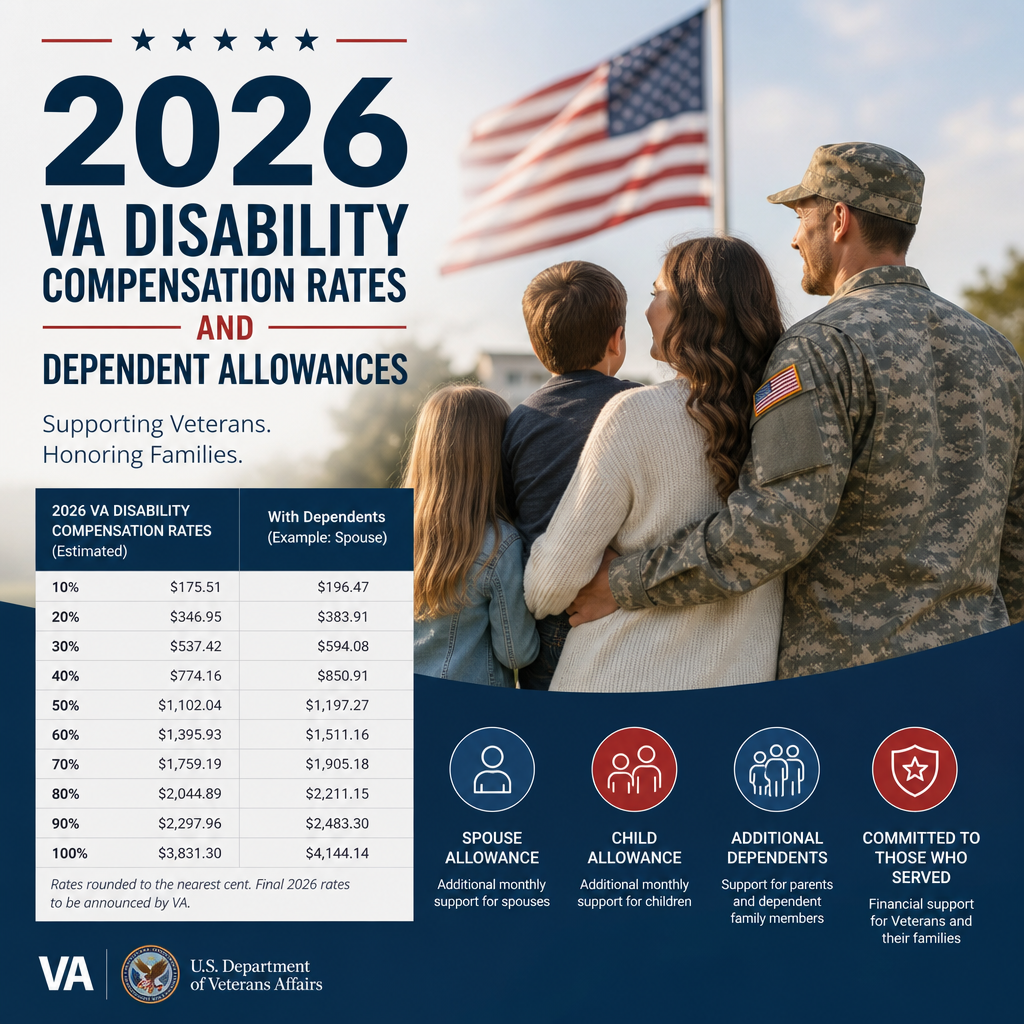
VA disability compensation is a monthly benefit paid to veterans with service-connected disabilities. The amount depends mainly on:
- Your disability rating
- Whether you have eligible dependents
- Your marital status
- The number of dependent children
- Whether you have dependent parents
- Certain special circumstances, such as a spouse needing aid and attendance
The benefit is generally tax-free, which makes it an important source of support for many veteran households.
Anúncios
The VA uses disability ratings in 10% increments, from 0% to 100%. A higher rating usually means a higher monthly payment. If you have a combined rating from multiple service-connected conditions, the VA applies its combined rating table rather than simply adding percentages together.
2026 VA Disability Compensation Rates: What to Expect
The 2026 VA disability compensation rates are based on the annual cost-of-living adjustment, or COLA. The exact monthly amounts are typically released by the VA after the federal COLA is announced.
While the final 2026 payment table should always be confirmed through the official VA rate chart, the structure remains consistent from year to year:
- Veterans with a 10%–20% rating receive a base monthly amount
- Veterans with a 30% or higher rating can receive additional compensation for dependents
- Higher ratings bring higher base compensation
- Additional allowances may apply for spouses, children, and dependent parents
Why the annual adjustment matters
Even a modest increase can make a meaningful difference over a year. For veterans on fixed incomes, updated compensation rates can help offset rising expenses such as:
- Groceries
- Prescription costs
- Utilities
- Housing
- Transportation
- Childcare
That’s why it’s important to review the new year’s VA compensation chart, especially if your family situation has changed.
How Dependent Allowances Work
Dependent allowances increase a veteran’s monthly benefit when the veteran has eligible family members. These allowances are most relevant for veterans rated at 30% or more, though some special rules may apply in unique cases.
Eligible dependents may include:
- A spouse
- Children under 18
- Children ages 18–23 who are in school full time
- Dependent parents
- In some cases, a spouse receiving aid and attendance
The VA requires accurate documentation to add dependents. If you do not report a change in family status, you may miss out on money you should be receiving.
Common situations that affect dependent pay
Your dependent allowance can change if:
- You get married or divorced
- A child is born or adopted
- A child turns 18, graduates, or stops attending school
- A dependent parent becomes financially ineligible
- You add or remove a spouse due to remarriage or death
Because these changes can affect your payment, it’s smart to notify the VA as soon as possible.
Who Qualifies for Dependent Compensation?
The VA has specific rules for who counts as a dependent. Understanding those rules can prevent payment errors and delays.
Spouse
A spouse usually qualifies if the marriage is legally recognized. The VA may also recognize certain common-law marriages if they are valid under state law.
Children
A child may qualify if they are:
- Under age 18
- Between 18 and 23 and enrolled in school full time
- Permanently incapable of self-support before age 18
The VA may ask for school verification or additional medical evidence in some cases.
Dependent parents
Dependent parents may qualify if they rely on the veteran for financial support. This is less common than spouse or child dependents, but it can increase monthly compensation for eligible veterans.
Special cases
Some households include circumstances that require extra review, such as:
- Stepchildren
- Adopted children
- Surviving spouses
- Custody arrangements
In these cases, the VA may need supporting documentation before applying the dependent allowance.
How to Read Your 2026 VA Disability Compensation Rate
The VA compensation table can look confusing at first, but it becomes easier once you know what to look for.
Step 1: Find your disability rating
Your combined disability rating is the starting point. If you are rated at 10% or 20%, your payment is based on the base compensation amount for that level.
If you are rated at 30% or higher, the chart includes dependent allowances.
Step 2: Identify your dependent status
Look for the category that matches your household:
- Veteran with spouse only
- Veteran with spouse and one child
- Veteran with spouse and two children
- Veteran with child only
- Veteran with dependent parent(s)
The monthly amount changes depending on your family size.
Step 3: Check for special allowances
Some veterans qualify for extra compensation if:
- A spouse requires aid and attendance
- One or more children are seriously disabled
- The veteran has multiple eligible dependents
- There are special custody or support circumstances
Step 4: Confirm the official rate
Always compare your expected amount with the official VA rate chart for 2026. If your payment differs, check your award letter or VA account to see whether a status change or processing issue caused the difference.
Practical Examples of Dependent Allowances
Real-life examples make the compensation rules easier to understand.
Example 1: Veteran rated at 30% with a spouse
A veteran with a 30% disability rating and a spouse receives more than the base 30% amount. The spouse is an eligible dependent, so the monthly compensation increases.
Example 2: Veteran rated at 60% with a spouse and two children
This veteran receives a higher rate because the VA adds compensation for the spouse and each eligible child. If one child turns 18 and is no longer in school, the payment may drop unless another qualifying dependent remains.
Example 3: Veteran rated at 100% with a spouse who needs aid and attendance
If the spouse qualifies for aid and attendance, the veteran may receive an additional allowance. This is meant to help offset the cost of care and support.
Example 4: Veteran with a college-age child
A child between 18 and 23 may still count as a dependent if enrolled full time in an approved school. The veteran may need to submit school certification to keep the dependent allowance active.
What to Do If Your Family Situation Changes
Your VA compensation should reflect your current circumstances. If your family changes, update the VA as soon as possible.
Report changes when:
- You marry or divorce
- You have or adopt a child
- A child leaves school
- A dependent parent no longer qualifies
- A spouse dies or remarries
- A child becomes permanently disabled before age 18
Why timely reporting matters
Waiting too long can cause:
- Underpayments
- Overpayments
- Delays in getting the correct monthly amount
- Extra paperwork to fix the issue
The VA may adjust your compensation retroactively in some cases, but it is always better to report changes early.
How to Verify Your VA Payment Amount
If you think your 2026 payment is wrong, start by reviewing your records carefully.
Check these sources:
- Your VA award letter
- Your VA.gov account
- Direct deposit statements
- Recent correspondence from the VA
- The official VA compensation rate chart
Questions to ask
- Is my disability rating correct?
- Are all eligible dependents listed?
- Did a child age out or leave school?
- Was a change in marital status processed?
- Did the annual COLA update apply to my payment?
If the numbers still do not match, contact the VA or a qualified veterans service officer for help.
Tips for Managing VA Compensation and Family Benefits
Good recordkeeping can make it easier to maintain accurate compensation.
Keep these documents handy:
- Marriage certificate
- Divorce decree
- Birth certificates
- Adoption records
- School enrollment verification
- Dependent parent financial records
- VA award letters
Practical habits that help
- Review your VA file at least once a year
- Notify the VA promptly about family changes
- Save copies of anything you submit
- Track dependent school dates and birthdays
- Compare deposits against your expected rate after each annual update
These small steps can prevent payment problems and help you receive the correct benefit amount.
Understanding the Bigger Picture
The 2026 VA disability compensation rates and dependent allowances are more than just numbers on a chart. They help veterans and families cover everyday needs while recognizing the sacrifices tied to military service. For many households, accurate compensation is essential to monthly stability.
Because the VA updates rates periodically and family circumstances can change at any time, it pays to stay organized. Review your disability rating, confirm your dependent status, and make sure the VA has your current information. That simple routine can save time, reduce stress, and protect the benefit you’ve earned.
Frequently Asked Questions
1. When will the 2026 VA disability compensation rates be available?
The VA usually publishes updated compensation rates after the federal cost-of-living adjustment is announced. Veterans should check the official VA website for the final 2026 rate chart and any effective-date details.
2. Do all veterans with disability compensation receive dependent allowances?
No. Dependent allowances generally apply to veterans rated at 30% or higher. Veterans with lower ratings usually receive base compensation only, unless a special rule applies in their case.
3. Who counts as a dependent for VA disability compensation?
Common dependents include a spouse, children under 18, children ages 18–23 in school full time, and dependent parents. In some cases, stepchildren or children with disabilities may also qualify if they meet VA rules.
4. What happens if my child turns 18?
If your child turns 18, they may no longer qualify automatically. However, they can still count as a dependent if they are enrolled full time in an approved school and meet VA requirements. You may need to submit school information to keep the allowance active.
5. What should I do if I think my VA payment is too low?
Start by reviewing your award letter, disability rating, and dependent information. Make sure the VA has current details about your family status. If you still think the payment is wrong, contact the VA or a veterans service officer for help reviewing your file.
Official Resources
- VA Disability Compensation Rates
- VA Dependency and Indemnity Compensation (DIC)
- VA.gov Manage Your Benefits
- Veterans Affairs: Find a VA Regional Office
- U.S. Department of Veterans Affairs Home
Conclusion
The 2026 VA disability compensation rates and dependent allowances are an important part of financial support for many veterans and their families. While the exact monthly amount depends on your disability rating, the number of eligible dependents, and any special circumstances, the system follows a clear structure once you understand the basics.
The most important takeaways are simple: verify your disability rating, confirm every eligible dependent, report family changes promptly, and always check the official VA rate chart for the latest figures. Small updates in your household can significantly affect your monthly compensation, so staying organized can help you avoid payment errors and delays.
If you receive VA disability compensation, take time to review your award letter and make sure your benefit reflects your current situation. Doing so can help you protect the full amount you’ve earned and plan more confidently for the year ahead.