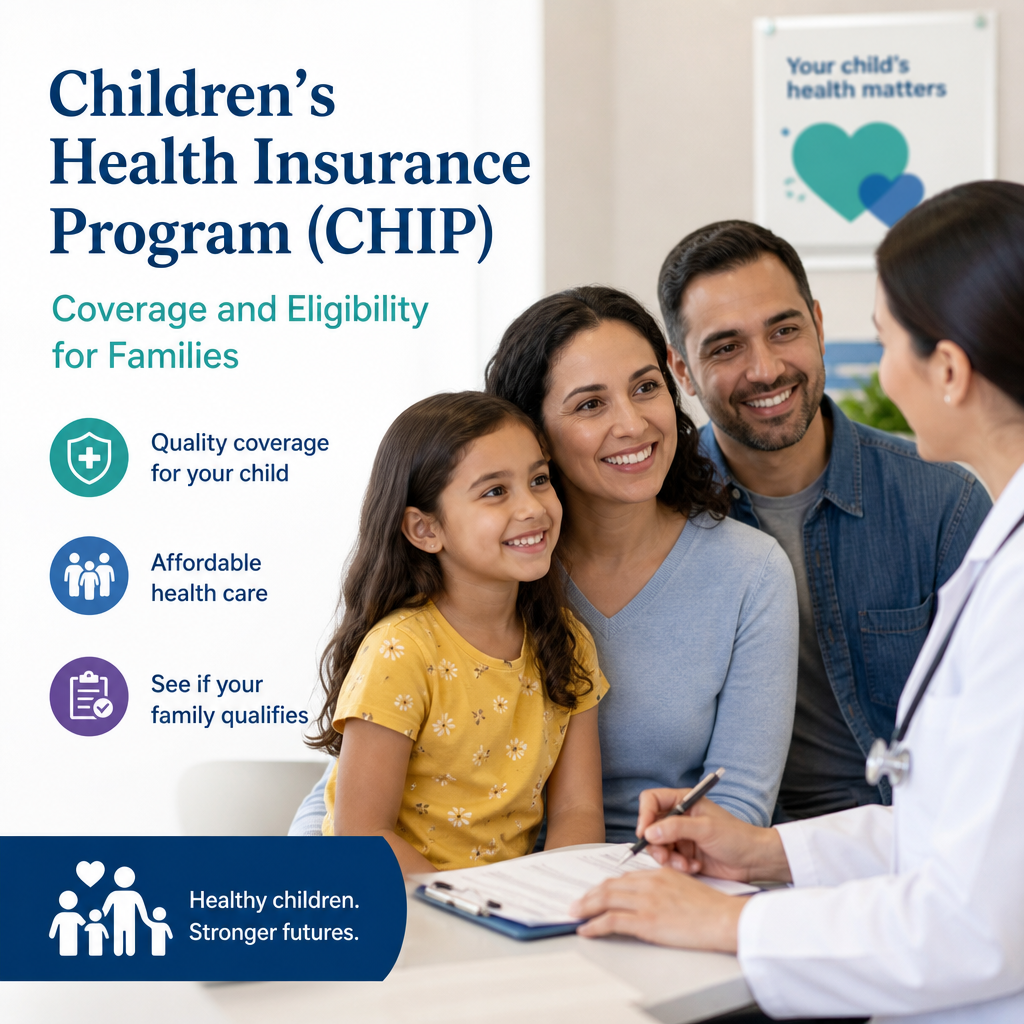
Children’s Health Insurance Program Coverage and Eligibility for Families
The Children’s Health Insurance Program helps families bridge the gap between Medicaid and private insurance by offering affordable coverage for eligible children and teens. From checkups and immunizations to dental care and prescriptions, it gives kids access to the care they need to stay healthy.
By: Emily Adams - Benefits on August 2, 2026
Anúncios
For many families, finding affordable health coverage for children can feel overwhelming. The Children’s Health Insurance Program is designed to make that search easier by providing low-cost or free health insurance for eligible kids and teens. If your household earns too much for Medicaid but not enough to comfortably afford private coverage, the Children’s Health Insurance Program may be an important option.
This program helps millions of children access doctor visits, immunizations, prescriptions, dental care, and other essential services. Just as important, it gives parents peace of mind knowing their children can get care when they need it. Understanding how the Children’s Health Insurance Program works, who qualifies, and what benefits it includes can help families make confident coverage decisions.
Anúncios
What Is the Children’s Health Insurance Program?
The Children’s Health Insurance Program, often called CHIP, is a public health coverage program for children in families with incomes that are too high to qualify for Medicaid in many states, but not high enough to afford private insurance without strain.
Each state administers CHIP within federal guidelines, which means benefits and eligibility rules can vary somewhat depending on where you live. In some states, CHIP is a separate program. In others, it is combined with Medicaid or offered through private insurance plans.
Anúncios
Why CHIP matters for families
CHIP fills a critical coverage gap. It helps families by:
Reducing out-of-pocket health costs
Providing preventive care for children
Supporting early treatment for illness or injury
Helping families avoid medical debt
Improving access to routine and specialized care
For parents, CHIP can make the difference between delaying care and getting a child the help they need promptly.
Children’s Health Insurance Program Coverage: What It Typically Includes
One of the biggest advantages of the Children’s Health Insurance Program is broad coverage for essential pediatric care. While benefits vary by state, CHIP generally covers many of the services children need most.
Common CHIP benefits
Most CHIP plans include:
Well-child visits and routine checkups
Immunizations and preventive screenings
Doctor and specialist visits
Emergency services
Hospital care
Laboratory and X-ray services
Prescription drugs
Dental care
Vision care
Mental health and behavioral health services
Speech, hearing, and developmental services in some cases
These benefits support both immediate health needs and long-term development.
Preventive care and early intervention
CHIP strongly supports preventive care, which is especially important for children. Regular checkups can help doctors:
Track growth and development
Catch vision or hearing problems early
Monitor asthma, allergies, and chronic conditions
Screen for developmental or behavioral concerns
Keep vaccinations up to date
Early care often leads to better outcomes and lower costs over time.
Dental and vision services
Many private plans place extra limits on dental or vision coverage, but CHIP usually includes these services. That matters because children’s oral health and eyesight affect everything from school performance to overall well-being.
For example, a child who cannot see the board clearly may struggle in class, while untreated cavities can lead to pain, missed school days, and more serious health issues.
Children’s Health Insurance Program Eligibility: Who Can Qualify?
Eligibility for the Children’s Health Insurance Program depends on several factors, including household income, the child’s age, and state rules. In most cases, CHIP is meant for children and teens under age 19.
Income requirements
CHIP is typically available to families whose income is above Medicaid limits but still within CHIP guidelines. Income thresholds differ by state and may change over time. Some states cover children in higher-income households than others.
In general, eligibility is based on:
Household size
Annual or monthly income
Whether the child is already eligible for Medicaid
State residency
Age of the child
Because each state sets its own limits within federal rules, it is important to check your local program for exact income guidelines.
Citizenship and immigration status
A child must usually be a U.S. citizen or meet eligible immigration status requirements to qualify for federally funded CHIP coverage. Some states offer additional state-funded options for certain children regardless of immigration status, but those programs vary.
Families should review their state’s rules carefully to understand available options.
Residency requirements
CHIP is state-based, so applicants generally must live in the state where they apply. A child does not usually need a permanent address, but the family must be able to show they are state residents.
Other common eligibility factors
In some states, CHIP may also consider:
Whether the child has access to employer-sponsored coverage
Whether the family can afford private health insurance
Whether the child has other qualifying coverage options
Example of how eligibility can work
Suppose a family of four earns too much to qualify for Medicaid in their state, but buying a marketplace plan would create a financial burden. Their children may qualify for CHIP based on household income and state guidelines. The parents might still need to explore separate coverage options for themselves.
How to Apply for CHIP
Applying for the Children’s Health Insurance Program is usually straightforward, and many states allow online applications. Families can also apply by phone, mail, or through the Health Insurance Marketplace, which will route the application to the right state agency if needed.
Steps to apply
Gather documents
Proof of income
Social Security numbers, if available
Birth certificates or proof of age
Proof of state residency
Immigration documents, if required
Submit an application
Online through your state’s CHIP or Medicaid website
The state will review eligibility and contact you if it needs more information
Choose a plan if required
In some states, you may need to select a managed care plan or insurance provider
Tips to make the process easier
Apply even if you are unsure whether your child qualifies
Report all household members accurately
Keep copies of documents and application confirmations
Respond quickly to requests for verification
Recheck eligibility each year during renewal
How Much Does CHIP Cost?
One of the most family-friendly parts of the Children’s Health Insurance Program is its affordability. Many children receive coverage for free or at a very low cost.
Potential costs
Depending on your state and income, CHIP may include:
Monthly premiums
Enrollment fees
Copayments for some services
Small deductibles in certain plans
However, costs are generally much lower than those in many private plans.
Why low cost matters
Affordable coverage helps families use care before small problems become major ones. A modest copay for a doctor visit is easier to manage than a large bill for an emergency room visit caused by untreated illness.
CHIP vs. Medicaid: What’s the Difference?
Families often compare CHIP and Medicaid because the programs work closely together. Both provide public health coverage, but they are designed for different income levels and sometimes different benefit structures.
Key differences
Medicaid usually covers lower-income children and families
CHIP covers children in families with incomes above Medicaid limits, depending on state rules
Both programs offer strong preventive and primary care coverage
CHIP may have slightly different cost-sharing rules than Medicaid
In many states, children are first screened for Medicaid eligibility. If they do not qualify, they are then evaluated for CHIP.
Why families should check both
It is common for one child in a household to qualify for one program while another family member qualifies for a different option. That is why it helps to submit a single application through your state or the Health Insurance Marketplace.
What If Your Family Has Employer Coverage?
Some families already have access to job-based insurance but still struggle with costs. Whether CHIP is available depends on state policy and whether the employer plan is considered affordable and comprehensive.
Things to consider
Monthly premium costs
Deductibles and copays
Whether the plan covers children well
Access to pediatric specialists and dentists
Prescription drug coverage
Even if an employer plan is available, CHIP may still be worth exploring if it better meets your child’s needs or costs less out of pocket.
Why CHIP Is Important for Child Health
The Children’s Health Insurance Program does more than pay medical bills. It helps children stay healthier, learn better, and get care when it matters most.
Real-world benefits for families
CHIP can help families:
Schedule regular pediatric visits
Manage asthma or allergies
Treat infections early
Address dental problems before they worsen
Support children with mental health needs
Stay current on immunizations and screenings
Children who have reliable coverage are more likely to receive preventive care and less likely to go without treatment due to cost.
How to Find Your State’s CHIP Program
Because CHIP is state-administered, the best source of information is your state’s official website or the federal Marketplace website. These resources can tell you:
Whether your child may qualify
What income limits apply
What services are covered
Whether there are any monthly premiums or copays
How to apply or renew coverage
If your family’s income changes during the year, you should update your application. A change in income can affect CHIP eligibility or shift your child into another program.
Common Mistakes to Avoid When Applying
Families sometimes run into avoidable problems when applying for CHIP. Watching for these issues can save time and reduce stress.
Mistakes that can delay approval
Leaving out household income
Forgetting to include all children in the family
Missing deadlines for document verification
Using outdated contact information
Assuming a child is ineligible without applying
If you are unsure about any part of the application, it is usually better to submit the form and let the agency review it.
Frequently Asked Questions
1. Who is eligible for the Children’s Health Insurance Program?
In most states, CHIP covers children and teens under age 19 in families with incomes too high for Medicaid but still within CHIP limits. Eligibility also depends on state residency, immigration status rules, and other state-specific factors.
2. What services does CHIP usually cover?
CHIP commonly covers doctor visits, vaccines, prescriptions, dental care, vision care, hospital services, emergency care, and preventive screenings. Some plans also include mental health, speech therapy, and developmental services.
3. Is CHIP free?
Not always. Many families pay little or nothing for CHIP, but some states charge modest premiums, enrollment fees, or copays. Costs depend on income and state program rules.
4. Can my child have CHIP and another type of insurance?
Usually, CHIP is designed to be the main health coverage for eligible children. In some cases, a child may have access to other insurance, but CHIP eligibility rules may change depending on the type of coverage and whether it is considered affordable.
5. How do I apply for CHIP?
You can usually apply online through your state’s CHIP or Medicaid agency or through the Health Insurance Marketplace. You will typically need income information, proof of residency, and other basic household details.
The Children’s Health Insurance Program gives families a practical way to secure affordable health coverage for their children when private insurance is out of reach and Medicaid is not an option. It offers meaningful benefits, including preventive care, dental and vision services, doctor visits, prescriptions, and support for many common childhood health needs. Just as importantly, CHIP helps parents act early instead of waiting until a health issue becomes more serious or more expensive.
If you are unsure whether your child qualifies, the best next step is to check your state’s CHIP rules and submit an application. Because eligibility and coverage can vary by state, it is worth taking a few minutes to review the details. A single application may open the door to coverage that protects your child’s health and supports your family’s budget. In the long run, CHIP is more than an insurance program—it is a safeguard that helps children stay healthy, learn well, and thrive.
Emily A, holds a Master's degree in Public Administration (MPA) and has over 7 years of experience researching federal and state assistance programs. She writes educational content focused on government benefits, public policy, and community resources, using information from official agencies to help readers understand available programs and eligibility requirements.