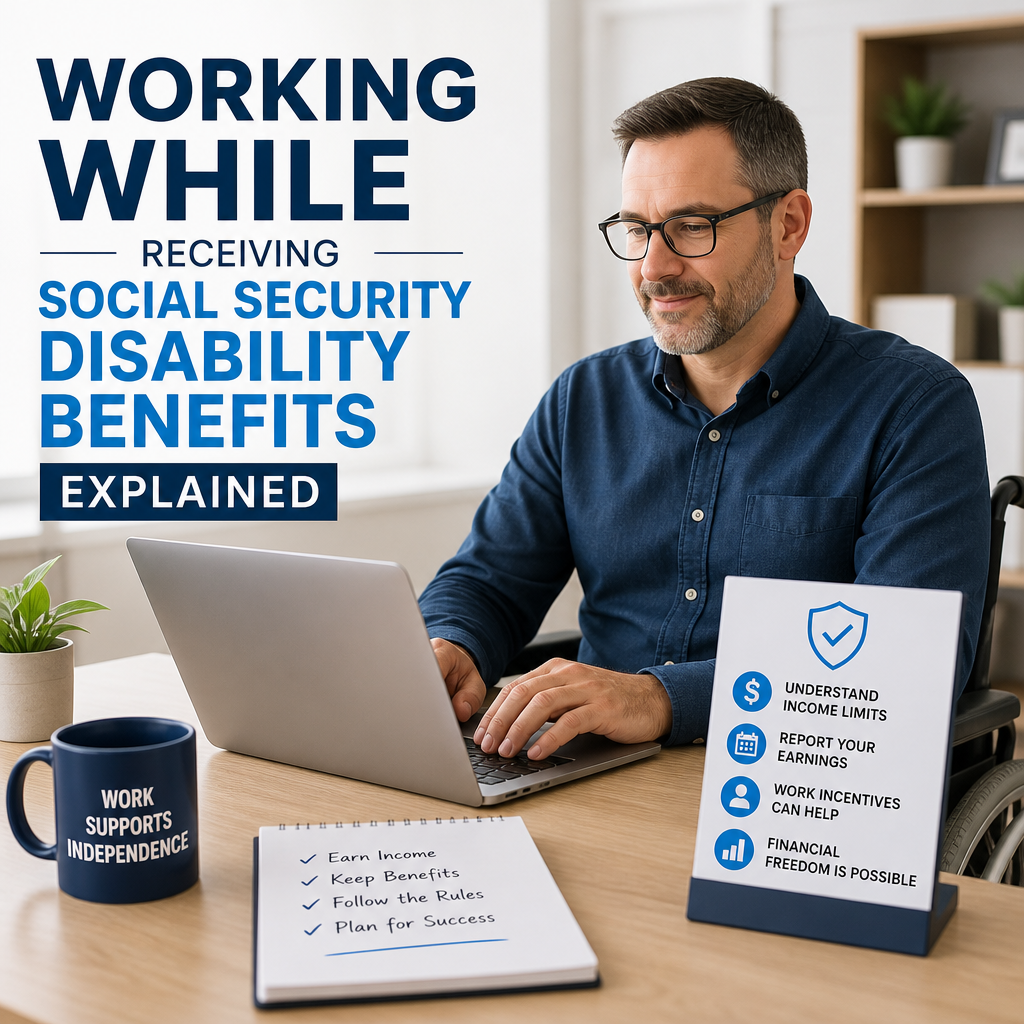
Working While Receiving Social Security Disability Benefits Explained
Working while receiving social security disability benefits can be possible, but the rules depend on whether you get SSDI or SSI and how much you earn. Understanding work incentives, reporting requirements, and income limits can help you protect your benefits while testing your ability to return to work.
By: Emily Adams - Benefits on August 2, 2026
Anúncios
Working while receiving Social Security Disability Benefits can feel confusing, especially if you’re trying to balance your health, your finances, and the rules that come with disability benefits. Many people want to earn extra income without risking the support they depend on, and that’s a reasonable goal. The good news is that the Social Security Administration offers work incentives and trial programs that may let you test your ability to work while protecting your benefits for a period of time.
The key is understanding how the rules work before you start a job, increase your hours, or earn more money. In this guide, we’ll break down the basics of working while receiving Social Security Disability Benefits, explain the difference between SSDI and SSI, and show you where problems can happen if you don’t report work correctly.
Anúncios
Understanding Social Security Disability Benefits and Work Rules
Social Security Disability Benefits generally fall into two main categories:
SSDI (Social Security Disability Insurance): based on your work history and payroll taxes.
SSI (Supplemental Security Income): a needs-based program for people with limited income and resources.
The rules for working while receiving Social Security Disability Benefits depend on which program you receive. SSDI and SSI have different income thresholds, reporting rules, and work incentives.
Anúncios
If you’re not sure which benefit you receive, check your award letter or contact the Social Security Administration. That distinction matters because the same job can affect SSDI and SSI very differently.
Why the rules matter
Social Security does not automatically stop your benefits the moment you return to work. Instead, the agency looks at:
How much you earn
Whether your work is considered substantial
How many hours you work
Whether you report your income
Whether your disability still limits your ability to sustain work
Failing to report work income can lead to overpayments, repayment demands, and possible benefit interruptions. That’s why it’s important to know the system before taking on new work.
Working While Receiving Social Security Disability Benefits: SSDI Basics
If you receive SSDI, the agency focuses on whether your work activity shows that you can perform substantial gainful activity, often called SGA. Social Security uses monthly earnings guidelines to help decide whether your work may count as substantial, but the agency also considers the nature of your work and whether you are self-employed.
The Trial Work Period
One of the most important SSDI work incentives is the Trial Work Period (TWP). This program allows you to test your ability to work for several months without immediately losing SSDI benefits.
During the TWP:
You can work and still receive your full SSDI benefit.
Social Security counts certain months as trial work months when your earnings exceed a set threshold.
The months do not have to be consecutive.
The TWP generally lasts until you use up nine trial work months within a rolling period.
This is helpful if you want to see whether you can return to work consistently without ending up in a financial crisis.
Extended Period of Eligibility
After the trial work period ends, many SSDI recipients enter the Extended Period of Eligibility (EPE). This is another safety net that gives you a grace period if your earnings fluctuate.
During the EPE:
Your benefits may continue in months when your earnings fall below the SGA level.
Benefits may stop in months when your earnings exceed the SGA level.
Social Security reviews your work activity month by month.
For people whose conditions vary, this can be especially useful because work capacity often changes over time.
Expedited Reinstatement
If your SSDI benefits stop because you returned to work but later have to quit again due to your disability, you may qualify for Expedited Reinstatement (EXR). This can let you restart benefits without filing a completely new application.
This protection can be important if:
Your condition worsens
You try to work but cannot keep up
You leave work because of the same disability that qualified you for benefits
Working While Receiving Social Security Disability Benefits: SSI Basics
SSI works differently because it is based on financial need. If you receive SSI, any earned income can affect your monthly payment amount.
How wages affect SSI
Social Security does not count all of your wages dollar for dollar. Instead, it excludes certain amounts and then reduces your benefit based on the remaining countable income. That means part-time work may reduce your SSI payment, but it may not eliminate it entirely.
Important points include:
Your SSI payment may go down as earnings go up.
You must report wages promptly.
Changes in living arrangements can also affect your SSI.
Unearned income, such as pensions or support from family, may matter too.
Because SSI is tied to financial need, even a modest job can change your payment amount. This is not necessarily bad, but you need to budget carefully so you do not end up surprised by a smaller check.
The Student Earned Income Exclusion
If you are under age 22 and regularly attending school, the Student Earned Income Exclusion (SEIE) may allow you to earn money without affecting SSI the same way it would otherwise. This can be a valuable option for students who want part-time jobs while building skills.
Plan to Achieve Self-Support
Some SSI recipients may also benefit from a Plan to Achieve Self-Support (PASS). A PASS lets you set aside income or resources for a work goal, such as education, training, equipment, or transportation. If approved, the money set aside may not count against your SSI eligibility in the same way.
Work Incentives That Can Help
Social Security offers several work incentives designed to support a gradual return to employment. These programs can make working while receiving Social Security Disability Benefits more manageable.
Ticket to Work
The Ticket to Work program connects eligible recipients with free employment services, including:
Career counseling
Job training
Resume help
Placement support
Ongoing assistance after you start work
This program is voluntary, and it may be a useful bridge if you want to explore employment without figuring everything out alone.
Impairment-Related Work Expenses
If you need certain items or services in order to work because of your disability, some costs may be deductible or excluded in Social Security’s calculations. Examples can include:
Specialized transportation
Assistive technology
Medication related to your ability to work
Personal assistance services
These are often called Impairment-Related Work Expenses (IRWEs). If you keep receipts and clear records, these costs may help reduce the impact of earnings on your benefits.
Subsidies and Special Conditions
Sometimes an employer gives you support that makes your productivity look higher than it really is. For example, a supervisor may give you extra help, fewer responsibilities, or a slower pace than other workers receive. Social Security may consider these subsidies or special conditions when deciding how your work should be counted.
Practical Tips for Working Without Losing Track of Your Benefits
If you want to work while receiving Social Security Disability Benefits, staying organized matters as much as understanding the rules.
1. Report your work right away
Tell Social Security when you start or stop working, when your hours change, and when your income changes. Do not wait until tax season or your next review.
2. Keep pay stubs and records
Save:
Pay stubs
Work schedules
Transportation receipts
Notes about job duties
Letters from your employer
These documents can help if Social Security questions your earnings or work activity.
3. Watch your monthly earnings closely
Even if you are only working part-time, your monthly pay can change from month to month. That matters because Social Security often reviews earnings on a monthly basis.
A simple spreadsheet or budgeting app can help you stay on top of:
Gross pay
Taxes withheld
Disability-related work expenses
Net income after work costs
4. Understand the difference between gross and net pay
Social Security often looks at gross earnings before taxes. That means the number on your paycheck after deductions is not always the number that counts for benefit purposes.
5. Ask before making a big work change
If you’re considering:
Increasing your hours
Switching from part-time to full-time
Starting self-employment
Taking on a second job
it’s smart to check how that could affect your benefits before the change happens.
Common Mistakes to Avoid
Working while receiving Social Security Disability Benefits is possible, but certain mistakes can create real problems.
Not reporting income
This is one of the biggest mistakes. Even if you think your earnings are too small to matter, report them anyway. Social Security can later discover unreported wages through wage matching, tax records, or employer reports.
Assuming all programs work the same
SSDI and SSI are not interchangeable. A rule that applies to one program may not apply to the other.
Ignoring self-employment rules
If you work for yourself, Social Security may look at more than your profit. It may also review the hours you spend, how much you do, and the value of your services. Self-employment can be more complicated than a regular paycheck job.
Forgetting that benefits may change later
Some people think they can work indefinitely without a review if they start small. In reality, earnings increases can trigger changes in benefit status over time.
When to Get Professional Help
You do not have to figure everything out alone. A qualified benefits counselor, legal aid organization, or disability attorney can help you understand how work affects your specific situation.
Consider getting help if:
You receive both SSDI and SSI
You are self-employed
Your health fluctuates
You received a notice from Social Security
You are worried about overpayments
You are thinking about ending benefits and returning to work fully
A little guidance early on can prevent costly mistakes later.
Real-World Example
Imagine someone receiving SSDI who wants to work 15 hours a week at a local retail store. During the trial work period, those earnings may not end benefits right away. That person can use the time to see whether the job is physically manageable.
Now compare that with someone receiving SSI who works the same retail job. Their SSI payment may decrease based on earnings, but they may still keep some benefit amount. If they report wages correctly and plan carefully, the job may provide useful income without causing an unexpected crisis.
These examples show why the same work schedule can have different outcomes depending on the type of benefit.
Frequently Asked Questions
Can I work part-time and still receive Social Security Disability Benefits?
Yes, many people can work part-time and still receive benefits, especially during work incentive periods. The impact depends on whether you receive SSDI or SSI, how much you earn, and whether you report your work properly. Part-time work does not automatically end disability benefits.
Will I lose SSDI if I go back to work?
Not necessarily. SSDI includes programs like the Trial Work Period and Extended Period of Eligibility that allow you to test work without immediately losing benefits. If your earnings stay above certain levels after those protections end, your benefits may stop. If you later have to stop working because of your disability, Expedited Reinstatement may help.
How does working affect SSI payments?
Working can reduce your SSI payment because SSI is based on income and financial need. However, Social Security does not count all wages equally. Some income is excluded before the payment amount is adjusted. This means you may still receive a reduced SSI check while working.
Do I need to report every job change to Social Security?
Yes. You should report starting a job, stopping a job, changes in pay, and changes in hours. You should also report changes in living arrangements if you receive SSI. Prompt reporting helps prevent overpayments and keeps your record accurate.
What if my disability gets worse after I try to work?
If you were receiving SSDI and had to stop working because of the same disability, you may qualify for Expedited Reinstatement. If you receive SSI, your payment may be affected by your current income and resources, so you should report any change right away and ask about available protections.
Working while receiving Social Security Disability Benefits is possible, but it works best when you understand the rules before you take action. SSDI and SSI each have different work incentives, reporting requirements, and income effects. That means the same job can have very different consequences depending on the benefit you receive. For many people, work can be a smart way to build independence, gain experience, or supplement income without giving up important protection too quickly.
The most important steps are simple: report your wages, keep good records, learn which work incentives apply to you, and ask for help when the rules get complicated. Programs like the Trial Work Period, Ticket to Work, and Expedited Reinstatement exist to support people who want to try working while living with a disability. With the right information and planning, you can make informed choices that protect your benefits and help you move toward your goals.
Emily A, holds a Master's degree in Public Administration (MPA) and has over 7 years of experience researching federal and state assistance programs. She writes educational content focused on government benefits, public policy, and community resources, using information from official agencies to help readers understand available programs and eligibility requirements.