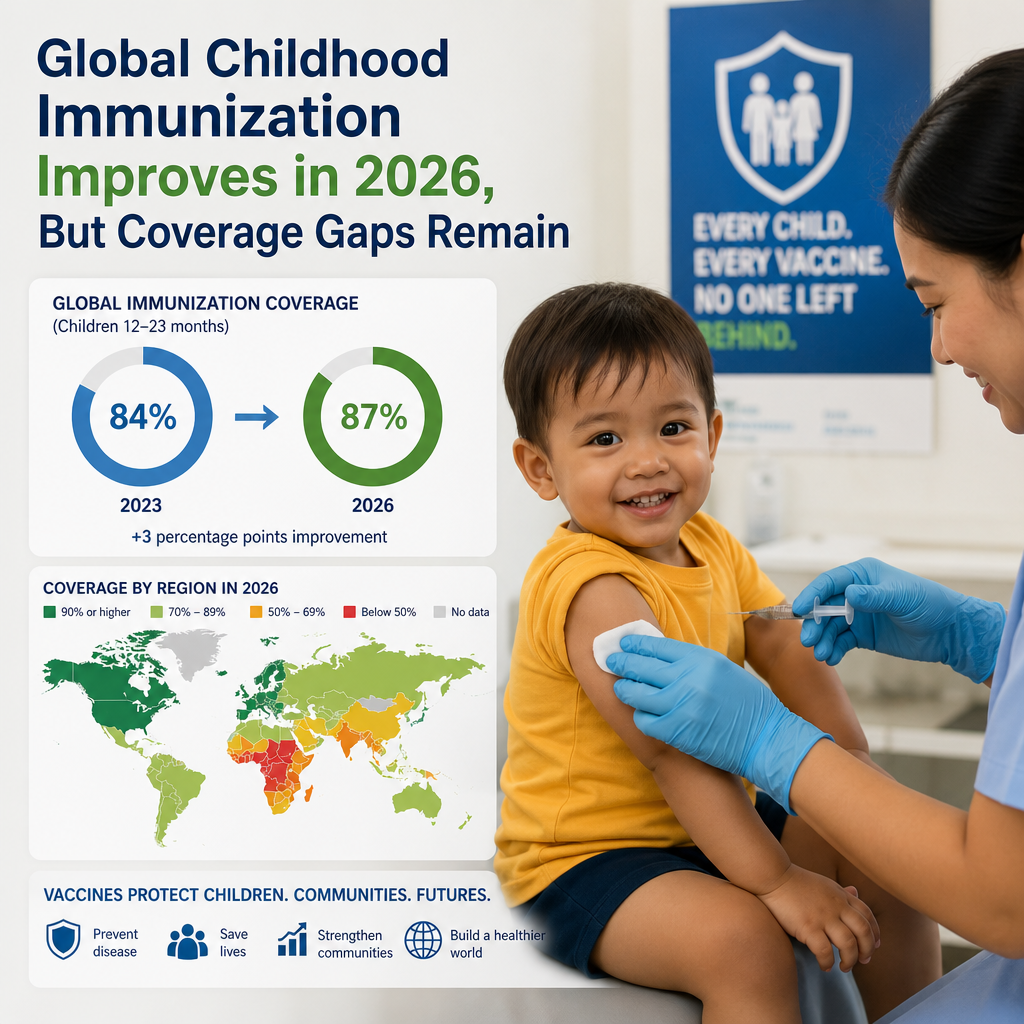
Global Childhood Immunization Improves in 2026, But Coverage Gaps Remain
Global childhood immunization is making encouraging progress in 2026, with more children getting routine vaccines on time and stronger outreach helping close some gaps. But major coverage differences still leave many communities vulnerable to preventable disease, showing that progress is real but far from complete.
By: Peter on July 31, 2026
Global childhood immunization is showing encouraging progress in 2026, with more children reaching routine vaccines than in recent years. That matters because immunization remains one of the most effective ways to prevent serious illness, disability, and death in early childhood. Yet the picture is still uneven. Even as coverage improves in many places, major gaps remain across countries, communities, and income groups.
Those gaps are not just a public health statistic. They shape whether measles spreads in a neighborhood, whether newborns face preventable infections, and whether health systems can stay ahead of outbreaks. In many regions, vaccine access has improved, but trust, logistics, conflict, and workforce shortages still limit childhood immunization. Understanding both the gains and the remaining barriers is essential for parents, health leaders, and policymakers.
Global Childhood Immunization in 2026: What’s Improving
Global childhood immunization has benefited from several positive trends in 2026. Countries have continued rebuilding routine services after pandemic-era disruptions, and many public health programs have strengthened outreach to families who previously missed visits. In some areas, immunization teams are using better data systems, community follow-up, and expanded clinic hours to close gaps.
A few forces are helping drive the improvement:
Restored routine care: More children are returning to well-child visits and vaccination schedules.
Better outreach: Community health workers are reaching families who may not regularly use formal care.
Improved tracking: Digital registries and appointment reminders are helping reduce missed doses.
Stronger local partnerships: Schools, clinics, faith groups, and nonprofits are supporting vaccine awareness.
Focused catch-up campaigns: Some countries are targeting children who fell behind during earlier disruptions.
Even modest progress matters. When more children receive routine vaccines on time, disease outbreaks are less likely to spread quickly. This is especially important for highly contagious illnesses such as measles and pertussis, where a drop in coverage can quickly create clusters of risk.
Why Major Coverage Gaps Still Remain
Despite the gains, global childhood immunization is still far from equitable. In many places, the same children who were least likely to receive vaccines in previous years remain the hardest to reach in 2026.
Access barriers are still real
Families may want vaccines but still struggle to get them. Common barriers include:
Long distances to clinics
Transportation costs
Limited clinic hours
Vaccine stockouts
Shortages of trained staff
Conflict or displacement
Poor cold-chain infrastructure in remote areas
These challenges often affect rural communities, urban informal settlements, refugee populations, and areas affected by instability. For families living paycheck to paycheck, even a small barrier can lead to a missed appointment.
Trust and misinformation continue to affect uptake
Access is only part of the story. Vaccine confidence also plays a major role in childhood immunization. Some parents remain unsure about vaccine safety, while others encounter misleading claims online or through social networks. Misinformation can spread faster than public health corrections, especially when people are already anxious about healthcare systems.
Building trust takes time. Families are more likely to vaccinate when they hear consistent information from doctors, nurses, midwives, and trusted community leaders.
Coverage gaps cluster by geography and income
Vaccination rates often look stronger at the national level than they do on the ground. That can hide deep disparities. A country may appear to be making progress overall while still leaving large pockets of under-immunized children in certain regions or neighborhoods.
This is why child immunization data must be examined carefully. National averages can mask the real problem: a child’s chance of receiving vaccines may depend heavily on where they live, their family’s income, displacement status, or whether local clinics are functioning reliably.
Which Childhood Vaccines Matter Most
Routine childhood immunization protects against several serious diseases that can cause hospitalization, long-term complications, or death. The exact schedule varies by country, but most national programs include vaccines that protect against:
Measles, mumps, and rubella
Polio
Diphtheria, tetanus, and pertussis
Hepatitis B
Haemophilus influenzae type b
Rotavirus
Pneumococcal disease
Influenza in some settings
Other locally recommended vaccines
These vaccines are typically given in a schedule across infancy and early childhood. Staying on time matters because delays can leave children vulnerable during the period when they are most at risk for severe disease.
Why catch-up vaccination is so important
Children who miss one or more doses may still be protected later if they receive catch-up vaccines. This is especially important for families displaced by conflict, affected by migration, or navigating disrupted healthcare access. Catch-up campaigns can prevent small coverage gaps from becoming larger outbreaks.
What the 2026 Immunization Picture Means for Public Health
Improved childhood vaccination coverage is good news, but it does not eliminate public health risk. In fact, uneven progress can create a false sense of security. If some communities have high coverage while others lag behind, outbreaks can still occur and spread rapidly.
Outbreak risk remains concentrated
The highest risk often appears where multiple barriers overlap:
Low routine vaccination coverage
Weak surveillance
Delayed detection of illness
Limited public trust
High population movement or crowding
When these factors combine, a disease like measles can spread before public health teams have time to respond. The result is not just illness in the affected community; it can also strain hospitals and disrupt schools, workplaces, and local services.
Health systems benefit from stronger immunization
Reliable childhood immunization supports the broader healthcare system by reducing preventable disease burdens. That can free up resources for maternal health, nutrition, emergency care, and chronic disease management. In practical terms, vaccination helps clinics spend less time treating avoidable infections and more time on preventive care.
How Families Can Support On-Time Immunization
Parents and caregivers play a central role in protecting children. Even when systems are imperfect, families can take steps to stay on track.
Practical steps for caregivers
Keep a written or digital vaccine record.
Ask your child’s provider for the recommended schedule.
Confirm whether your child needs catch-up doses.
Set reminders for future visits.
Use well-child appointments to review missed vaccines.
Ask about free or low-cost immunization services in your area.
If a child has missed several vaccines, it is usually still possible to catch up safely. A healthcare provider can help identify what is needed based on age and prior doses.
Questions to ask at the clinic
If you are unsure about childhood immunization, consider asking:
Which vaccines is my child due for now?
Are any doses overdue?
What side effects are normal after vaccination?
When should we return for the next dose?
Are there local programs that help with transportation or vaccine access?
Clear communication can reduce anxiety and prevent unnecessary delays.
What Policymakers and Health Systems Need to Do Next
The gains seen in 2026 are important, but they will not last without sustained investment. Closing coverage gaps requires more than reminders to parents. It requires a system built to reach children wherever they live.
Key priorities for improving global childhood immunization
1. Strengthen primary care delivery
Routine vaccination works best when it is integrated into dependable primary care. That means more reliable staffing, better supply chains, and clinic schedules that fit families’ lives.
2. Expand outreach to missed and marginalized children
Outreach programs can help identify children who are not regularly connected to healthcare. Mobile clinics, community health worker visits, and school-based campaigns can all help close gaps.
3. Improve vaccine confidence
Public health leaders should use clear, respectful messaging. People are more likely to listen when they feel heard rather than lectured.
4. Use data to find hidden gaps
Aggregate coverage data is not enough. Health systems need local-level data that shows where children are missing vaccines and why.
5. Invest in workforce and infrastructure
Cold-chain equipment, transport, training, and staffing all shape whether vaccines reach children on time and in usable condition.
The Role of Community Trust
If there is one theme that runs through successful immunization programs, it is trust. Families need confidence that vaccines are safe, that their concerns will be taken seriously, and that health services are accessible.
Community trust grows when health workers:
Listen without judgment
Explain benefits and risks plainly
Respect cultural and language differences
Follow up when families miss appointments
Partner with local leaders and organizations
Trust also helps during outbreaks. Communities that already have strong relationships with health providers are more likely to act quickly when urgent vaccination campaigns are needed.
Frequently Asked Questions
1. Why is global childhood immunization improving in 2026?
Global childhood immunization is improving because many countries have restored routine services, strengthened outreach, improved data systems, and expanded catch-up efforts. These changes are helping more children receive vaccines on time.
2. Why do major coverage gaps still exist?
Coverage gaps remain because many families still face barriers such as distance to clinics, staffing shortages, vaccine stockouts, conflict, displacement, and misinformation. National averages can also hide large local disparities.
3. What happens if a child misses routine vaccines?
If a child misses routine vaccines, they may remain vulnerable to preventable diseases for longer than recommended. The good news is that many children can receive catch-up vaccines safely, even if they are behind schedule.
4. How can parents tell if their child is up to date?
Parents can review their child’s immunization record and compare it with the recommended schedule from their healthcare provider or local public health agency. If anything is missing, a clinician can explain the next steps.
5. What is the most effective way to improve vaccination rates?
The most effective approach combines reliable primary care, community outreach, trust-building, accurate data, and strong vaccine supply systems. No single solution works everywhere, so programs need to address local barriers directly.
Global childhood immunization in 2026 shows real progress, but the work is far from finished. More children are receiving routine vaccines, catch-up efforts are expanding, and many communities are benefiting from better outreach and stronger primary care. At the same time, major coverage gaps continue to leave millions of children vulnerable to diseases that vaccines can help prevent.
The biggest lesson is that national progress does not automatically mean local success. Families still face access barriers, health systems still struggle with logistics, and misinformation still undermines confidence. To move forward, countries need more than enthusiasm for vaccines; they need dependable delivery systems, trusted communication, and detailed data that reveals who is still being missed.
For parents, the next step is simple: stay informed, keep records updated, and talk with a healthcare provider about any overdue doses. For health leaders and policymakers, the challenge is equally clear: build immunization programs that reach every child, not just the easiest ones to serve. That is how global childhood immunization becomes not only better in 2026, but more equitable and resilient in the years ahead.
Peter B holds a degree in Journalism and has 5 years of experience covering U.S. economic policy, labor markets, and financial news. He writes data-driven news content on topics like inflation, interest rates, and employment trends.