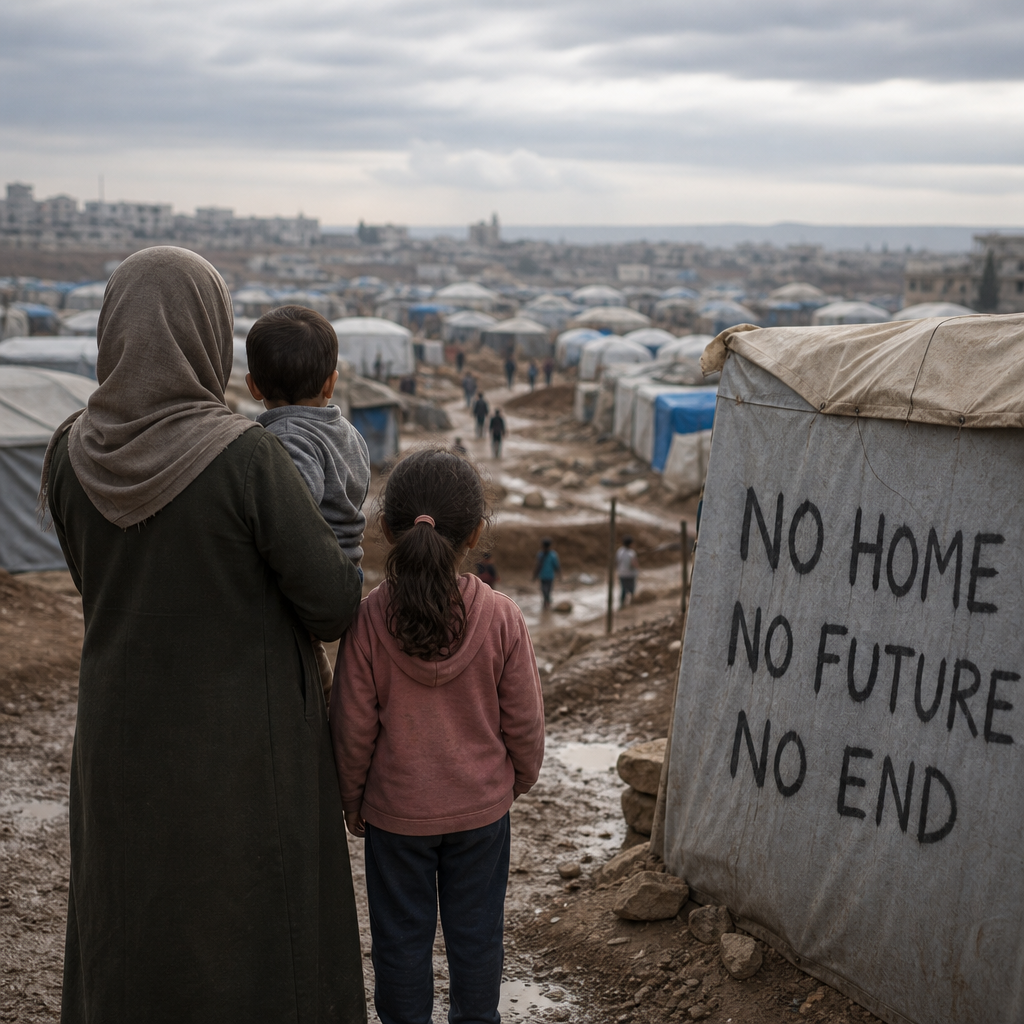
Why Millions of Refugees Remain Trapped in Long-Term Displacement
Millions of people are stuck in long-term displacement because the conflicts that forced them to flee often drag on, while safe return, local integration, and resettlement remain out of reach. This article explains how legal barriers, strained host countries, and limited opportunities keep refugees in limbo for years.
By: Peter on August 1, 2026
Anúncios
Refugee crises are often discussed as temporary emergencies, but for millions of people, displacement becomes a long-term reality. Families spend years, sometimes decades, waiting for safety, stability, and a path forward. Understanding why millions of refugees remain trapped in long-term displacement is essential for anyone trying to grasp the scale of today’s humanitarian challenges.
This is not only a story about conflict. It is also about legal barriers, overwhelmed host countries, shrinking resettlement options, poverty, and the difficulty of rebuilding a life after being forced to flee. When these factors combine, refugees can become stuck in a state of uncertainty that lasts far longer than most people expect.
Anúncios
Why Millions of Refugees Remain Trapped in Long-Term Displacement
Long-term displacement happens when refugees cannot safely return home, integrate permanently in their host country, or move onward to a third country. In other words, all the usual “solutions” are blocked.
That leaves many people in limbo.
Anúncios
The conflicts that forced them to flee often do not end quickly
The biggest reason displacement becomes prolonged is simple: the conditions that caused people to flee often continue for years. Civil wars, ethnic violence, persecution, and state collapse can make return impossible.
Even when active fighting slows, people may still face:
Political instability
Targeted discrimination
Destruction of homes and infrastructure
Unclear property rights
Fear of retaliation
A family may want to return home, but going back without safety, housing, or documentation is not a real solution.
Host countries often cannot absorb large refugee populations
Many refugees are hosted by neighboring countries that already face their own economic and political pressures. These countries may open their borders in an emergency, but long-term support becomes harder over time.
Host governments may struggle with:
Limited jobs and housing
Strained schools and healthcare systems
Rising public frustration
Weak infrastructure in border regions
Political pressure to restrict refugee rights
As a result, refugees may face movement limits, work restrictions, or gaps in access to public services. This makes self-reliance difficult and can trap families in poverty for years.
Legal and bureaucratic barriers slow everything down
Refugees often need documentation to work, travel, enroll children in school, access healthcare, or apply for asylum and resettlement. But displacement can wipe out identity papers, education records, and property documents.
Even when legal pathways exist, they may move slowly because of:
Backlogged asylum systems
Complex paperwork requirements
Limited legal assistance
Frequent policy changes
Language barriers
A refugee who cannot prove identity or status may be unable to access basic rights. Without legal stability, it is very hard to plan for the future.
The three limited “solutions” to refugee displacement
Humanitarian experts often describe three durable solutions for refugees: voluntary return, local integration, and resettlement. In practice, each one is difficult to achieve at scale.
1. Voluntary return is not always safe or realistic
Returning home sounds like the most natural solution, but it only works if conditions are safe and sustainable. Refugees should never be pushed to return to danger.
Common obstacles to return include:
Ongoing insecurity
Destroyed homes and services
Land disputes
Missing family members
Lack of legal protections
Some families return and then flee again because life at home is still unstable. That creates repeated cycles of displacement.
2. Local integration is often politically sensitive
Local integration means refugees can settle permanently in the country where they sought safety. This can work well when host governments support it, but many countries are reluctant to grant full rights or citizenship.
Barriers to integration may include:
Restrictions on legal work
Limits on property ownership
Resistance from local communities
Concerns about long-term demographic change
Fear that integration will encourage more arrivals
Without the ability to work legally, rent safely, or access public systems, refugees remain dependent on aid and unable to fully contribute to the economy.
3. Resettlement reaches only a small fraction of refugees
Resettlement to a third country can save lives, especially for people with urgent protection needs. But the number of available resettlement places is far smaller than the global refugee population.
That means most refugees will never be resettled, even if they qualify. For many families, resettlement becomes a distant hope rather than a realistic plan.
Poverty deepens long-term displacement
Displacement is expensive. Refugees often arrive with little money and few belongings. They may need to pay for transportation, rent, food, medical care, and school supplies while also trying to navigate unfamiliar systems.
Over time, poverty becomes both a cause and consequence of displacement.
How poverty traps refugees in place
Refugees may be unable to:
Afford legal fees or travel costs
Pay for private housing
Replace lost documents
Keep children in school
Start a business or find stable work
When aid is limited and jobs are scarce, families can become dependent on informal labor or short-term support. That makes it hard to save money, move, or rebuild a secure life.
Children pay a heavy price
Long-term displacement often disrupts education. Some children miss years of school because of conflict, language barriers, costs, or overcrowded classrooms. Others face child labor, early marriage, or trauma-related learning difficulties.
A child who falls behind in education may carry those setbacks into adulthood, reducing future opportunities and reinforcing the cycle of displacement.
Global politics shapes refugee outcomes
Refugee displacement is not only a humanitarian issue. It is also deeply political. Decisions made by governments influence whether refugees can move, work, study, and settle safely.
Border policies can lock people out
Some countries tighten border controls, reduce asylum access, or push neighboring countries to stop migrants and refugees before they arrive. These measures can leave people stuck in transit countries or informal settlements with little protection.
Donor fatigue reduces support
Emergency funding often increases when a crisis is new and visible. But as years pass, public attention fades. Humanitarian appeals may go underfunded, and host countries may be left to carry most of the burden.
When resources shrink, services often decline:
Food assistance may be reduced
Health programs may close
Cash support may become irregular
Protection services may be cut
This makes long-term displacement even harder to survive.
Refugees are often caught in geopolitical bargaining
In some cases, refugees become part of larger political negotiations between countries. Their safety and rights can be affected by trade deals, migration agreements, or regional power struggles. That leaves displaced people with very little control over their own futures.
Why protracted displacement is hard to solve
“Protracted refugee situation” is a term often used when refugees have been displaced for five years or more without a durable solution. These situations persist because each possible solution depends on multiple actors acting together.
For a solution to work, you need:
Peace or improved security in the country of origin
Political will from the host country
International funding and support
Legal pathways for work, education, and movement
Resettlement options for the most vulnerable
If even one piece is missing, progress stalls.
Humanitarian aid alone is not enough
Emergency relief saves lives, but it does not create lasting stability. Refugees need more than food and shelter. They need the ability to rebuild.
That means investing in:
Schools
Healthcare
Jobs and livelihoods
Civil documentation
Housing
Legal support
Without these systems, displacement remains a holding pattern.
What helps refugees move toward stability?
There is no single fix, but evidence-informed policies can reduce long-term displacement and improve lives.
Expand legal right-to-work policies
Allowing refugees to work legally helps families support themselves and contribute to host economies. It also reduces dependence on aid and improves dignity.
Improve access to education
When refugee children can attend school safely and consistently, they gain skills that matter whether they return home, integrate locally, or resettle elsewhere.
Strengthen legal assistance and documentation
Refugees need help replacing papers, understanding asylum procedures, and navigating local systems. Documentation can unlock access to jobs, services, and mobility.
Increase responsibility-sharing among countries
No single host country should carry the entire burden of a large refugee crisis. More equitable financing, resettlement opportunities, and regional planning can reduce pressure on frontline states.
Support peacebuilding and recovery
Long-term solutions depend on reducing the reasons people cannot return. That requires sustained diplomatic efforts, conflict resolution, and reconstruction support.
Why this issue matters to everyone
Long-term displacement is often seen as a problem far away, but it has global implications. It affects regional stability, public health, education systems, labor markets, and international cooperation.
It also raises a basic moral question: what happens when people have no safe place to go, and no country fully accepts responsibility for them?
When millions remain displaced for years, the issue is no longer an emergency alone. It becomes a test of collective commitment to human rights, protection, and shared responsibility.
Frequently Asked Questions
What does long-term displacement mean?
Long-term displacement refers to situations where refugees are forced to remain outside their home country for years, often because they cannot safely return, integrate where they are, or resettle elsewhere. It usually involves ongoing uncertainty, limited rights, and dependence on humanitarian support.
Why can’t refugees just go home?
Many refugees cannot return safely because conflict, persecution, or political instability continues in their home country. Even if violence decreases, their homes may be destroyed, property may be occupied, or they may still face threats if they return.
What is the difference between a refugee and an internally displaced person?
A refugee crosses an international border to seek safety in another country. An internally displaced person has been forced from home but remains within their own country. Both groups face serious risks, but refugees are protected under international refugee law.
Why do refugees stay in camps for so long?
Some refugees live in camps for years because they have no legal right to work or settle elsewhere, and because durable solutions are not available. Camps are intended as temporary protection, but in prolonged crises they can become long-term places of residence.
How can governments reduce long-term displacement?
Governments can help by expanding asylum access, allowing refugees to work legally, investing in education and healthcare, supporting resettlement, and working diplomatically to address the causes of conflict. Shared international responsibility is also essential.
Millions of refugees remain trapped in long-term displacement because the path to safety is blocked on nearly every side. Conflict continues, host countries face strain, legal systems move slowly, and resettlement options are limited. For families caught in these conditions, displacement is not a brief interruption. It is a prolonged struggle to find security, income, education, and dignity.
The good news is that long-term displacement is not inevitable. Policies that expand legal work, strengthen schools, improve documentation, and share responsibility more fairly can make a real difference. So can serious efforts to resolve conflicts and support rebuilding in countries of origin. Refugees do not need pity. They need practical solutions and consistent commitment.
If you want to understand global displacement more clearly, start by looking beyond the headlines. The real story is not only why people flee, but why they are kept waiting for years without a stable future. That is where meaningful change begins.
Peter B holds a degree in Journalism and has 5 years of experience covering U.S. economic policy, labor markets, and financial news. He writes data-driven news content on topics like inflation, interest rates, and employment trends.