Global Food Prices Shift in 2026 as Commodity Markets Face New Pressures
Global food prices are entering a new phase in 2026, and households, businesses, and policymakers are all feeling the pressure. After years of supply-chain disruption, weather-related shocks, and changing trade patterns, the next wave of global food prices movement is being shaped by a different mix of forces: tighter commodity markets, evolving energy costs, shifting fertilizer availability, and continued climate-related volatility.
For consumers, this often shows up in the grocery aisle as higher prices for staples like bread, cooking oils, dairy, coffee, and meat. For food producers and retailers, it means sharper input-cost planning and more uncertainty around sourcing. And for governments, it raises a familiar but urgent question: how do you keep food affordable without distorting markets?
Understanding why global food prices are shifting in 2026 requires looking beyond headline inflation. The story is not just about one crop or one region. It is about how global commodity markets interact with climate, transport, policy, and demand across the entire food system.
What Is Driving Global Food Prices in 2026?
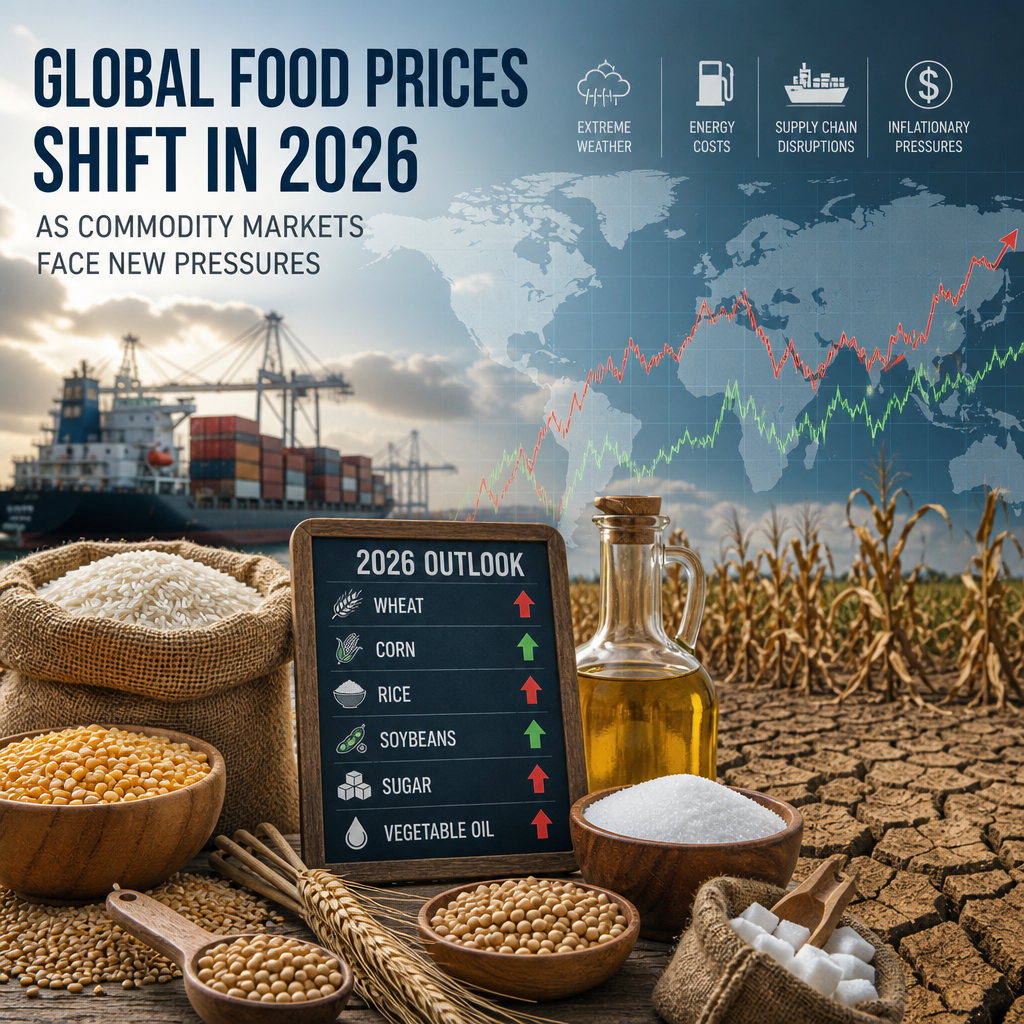
The price of food rarely moves for a single reason. In 2026, several factors are stacking together at once, making commodity markets more sensitive than usual.
Weather volatility is affecting crop yields
Extreme weather remains one of the biggest forces behind food price changes. Drought, flooding, heat stress, and untimely storms can cut yields or delay harvests. When major exporters face problems at the same time, prices can rise quickly.
Common examples include:
- Lower wheat output from prolonged dry conditions
- Reduced corn yields during heat waves
- Supply stress in vegetable oil markets after poor harvests
- Coffee and cocoa volatility from climate-related crop stress
Even when a local weather event happens far from a major consumer market, the impact can spread globally. That is because agricultural commodities are traded internationally, and shortages in one region can tighten supply everywhere.
Energy costs still matter
Food production depends heavily on energy. Farmers use fuel for tractors, irrigation, and transport. Fertilizer manufacturing also relies on natural gas and other energy inputs. If energy prices rise, food prices often follow.
This link is especially important for:
- Grain production
- Meat and dairy processing
- Refrigerated storage
- International shipping and freight
When transportation becomes more expensive, import-dependent countries can feel the impact quickly.
Fertilizer and input markets remain tight
Fertilizer, feed, and crop-protection products are essential for modern agriculture. When those inputs become scarce or more expensive, farmers may plant less, switch crops, or pass costs along to buyers.
In 2026, input markets are still influenced by:
- Geopolitical tensions affecting supply routes
- Trade restrictions or export controls
- Currency fluctuations
- Manufacturing bottlenecks
These pressures can be subtle at first, but they accumulate across the food chain.
Demand is changing, not just supply
It is easy to focus only on shortages, but demand also matters. Global diets are shifting as incomes rise in some regions and populations grow in others. More demand for meat, dairy, processed foods, and packaged goods increases pressure on grains, oils, and feed markets.
At the same time, consumer behavior in higher-income markets can amplify price swings. For example, if buyers panic over a crop shortage, they may rush to secure supplies early, pushing prices up even further.
Why Commodity Markets Are More Sensitive Now
Commodity markets have always been volatile, but several structural changes make them more reactive in 2026.
Lower buffer stocks can magnify shocks
When inventories are tight, there is less room to absorb a disruption. A bad harvest, a port delay, or a policy change can have a bigger market impact if there is no surplus available to cushion the shock.
This is why stock levels matter for:
- Wheat
- Rice
- Corn
- Soybeans
- Edible oils
A market with thin buffers tends to overreact to new information, even before physical shortages appear.
Global trade is more interconnected
Today’s food system moves quickly across borders. A shipping delay or export policy in one region can affect prices in many others. That interdependence improves efficiency, but it also spreads risk.
For example:
- A drought in one exporting country can affect bread prices elsewhere
- A shipping bottleneck can raise seafood or grain costs
- An export tax can change global price expectations overnight
The result is a market that responds not only to actual supply shortages but also to the expectation of future disruptions.
Speculation and sentiment can move prices
Commodity markets are influenced by traders, hedgers, and investors who respond to forecasts and signals. When uncertainty is high, sentiment can push prices beyond what physical supply alone would justify.
That does not mean markets are artificial. It means prices reflect both real-world fundamentals and the expectations built around them. In a year like 2026, where multiple risks overlap, expectations can become a powerful price driver.
Which Food Categories Are Most at Risk?
Not every product responds the same way to changes in commodity markets. Some categories are more exposed because they depend on specific crops, processing steps, or trade routes.
Grains and bread staples
Wheat, rice, and corn remain central to global food affordability. They are consumed directly and also used for livestock feed, sweeteners, and processing.
Price pressure in these markets can affect:
- Bread and baked goods
- Pasta
- Breakfast cereals
- Animal feed
- Ethanol and industrial uses
Even small changes in grain supply can ripple across multiple industries.
Vegetable oils
Palm, soy, sunflower, and canola oils are widely used in home cooking and food manufacturing. Because they are traded globally, disruptions in one oil market can lead buyers to substitute another, lifting prices across the category.
Meat and dairy
Animal protein prices are affected by feed costs, fuel, labor, and refrigeration. When feed grains become more expensive, livestock producers often face margin pressure. That can lead to higher retail prices for beef, poultry, pork, milk, cheese, and eggs.
Coffee, cocoa, and specialty crops
These products are especially exposed to climate and trade risks. They also have less flexibility in sourcing because growing conditions are limited to specific regions. Consumers may see sharp price changes when weather problems hit a key production area.
How Businesses Can Respond to Food Price Volatility
For food manufacturers, retailers, restaurants, and importers, the best response is not panic. It is preparation.
Strengthen sourcing strategies
Relying on a single supplier or one geographic region increases risk. Businesses can reduce exposure by:
- Diversifying suppliers across regions
- Building contingency plans for transport delays
- Reviewing contract terms for price adjustments
- Monitoring crop reports and trade policy updates
A more flexible sourcing model can help companies absorb shocks without immediate cost spikes.
Improve inventory planning
Too little inventory can leave a business exposed to sudden market jumps. Too much inventory can tie up cash and increase spoilage risk. The right balance depends on product type, shelf life, and lead times.
Perishables need tighter management, while shelf-stable products may benefit from strategic stock coverage.
Use hedging carefully
Some companies use futures, options, or forward contracts to manage price risk. These tools can help, but they also require expertise and discipline. Hedging works best when it is part of a broader risk-management strategy, not a guess about where prices are headed.
Communicate with customers early
When price increases are unavoidable, transparency matters. Consumers usually respond better when businesses explain why costs are changing and what steps they are taking to reduce the impact.
What Consumers Can Expect from Global Food Prices in 2026
For households, the main concern is simple: how much will groceries cost month to month? While prices may not rise evenly across every category, some patterns are likely.
Expect uneven inflation across food categories
Food inflation does not move in a straight line. Some items may stabilize while others rise quickly. Fresh produce, grains, and imported products can respond to supply shocks faster than processed goods with longer contracts.
Watch for substitution effects
When a staple becomes expensive, shoppers often switch to lower-cost alternatives. For example:
- Buying chicken instead of beef
- Choosing store brands over premium brands
- Using different cooking oils
- Replacing imported products with local alternatives
These shifts can ease household budgets, but they can also change demand patterns and influence future prices.
Budgeting matters more in uncertain periods
In a volatile food market, small household strategies can make a difference:
- Plan meals around seasonal produce
- Compare unit prices, not just package prices
- Stock up selectively on shelf-stable essentials
- Reduce waste by storing food properly
These habits may not eliminate inflation, but they can help families manage it more effectively.
Policy Responses That Could Ease Pressure
Governments and international institutions have several tools they can use to reduce instability in global food prices, though each comes with trade-offs.
Trade policy can either calm or worsen markets
Export bans and sudden restrictions sometimes protect domestic consumers in the short term, but they can raise global prices and prompt retaliation. Clear, predictable trade policy usually supports more stable markets.
Strategic reserves can soften shocks
Public grain reserves and emergency stocks can help bridge temporary shortages. However, reserves must be managed carefully to avoid market distortion or waste.
Support for farmers is critical
Investments in irrigation, drought-resistant seeds, logistics, and crop insurance can strengthen resilience. Over time, these measures may reduce the severity of future price spikes.
Data transparency improves market confidence
Accurate, timely reporting on crop conditions, inventories, and trade flows helps prevent panic buying and misinformation. In commodity markets, uncertainty often drives volatility as much as physical scarcity.
What the 2026 Outlook Means for the Global Economy
Food prices affect more than the grocery bill. They influence monetary policy, social stability, wage negotiations, and consumer confidence. When global food prices rise sharply, low-income households are hit hardest because they spend a larger share of income on food.
This can lead to:
- Reduced discretionary spending
- Higher pressure on wages
- Greater demand for food assistance programs
- Political stress in import-dependent countries
For central banks, persistent food inflation can complicate broader inflation management. While food prices are often seen as “temporary” shocks, repeated supply disruptions can make inflation harder to contain.
Conclusion
The shift in global food prices in 2026 reflects a food system under pressure from many directions at once. Weather extremes, energy costs, tight input markets, trade disruptions, and changing demand are all shaping commodity markets in ways that can quickly reach consumers and businesses. The result is not simply higher prices, but more uncertainty about where prices will move next.
For households, that means paying closer attention to budgets, substitutions, and food waste. For businesses, it means improving sourcing, inventory planning, and risk management. And for policymakers, it means supporting more resilient agricultural systems while keeping trade channels open and transparent.
The key takeaway is that food price volatility is not going away, but it can be managed better with preparation and informed decision-making. Understanding the forces behind the market is the first step toward responding to them wisely. As 2026 unfolds, staying alert to commodity trends will matter for everyone who buys, sells, or depends on the global food system.
Frequently Asked Questions
Why are global food prices changing in 2026?
Global food prices are changing in 2026 because several forces are acting at the same time. Climate-related disruptions, energy costs, fertilizer markets, trade policy shifts, and tight inventories are all influencing commodity markets. When these pressures overlap, prices can rise or become more volatile.
Which foods are most affected by commodity market pressure?
Staples like wheat, corn, rice, cooking oils, meat, dairy, coffee, and cocoa are often most affected. These products depend on global supply chains and are sensitive to weather, transport costs, feed prices, and export conditions.
Can consumers do anything to reduce the impact of food inflation?
Yes. Consumers can reduce the impact by planning meals, buying seasonal produce, comparing unit prices, choosing store brands, and avoiding food waste. Small changes in shopping and storage habits can help households manage higher prices more effectively.
How do energy prices affect food prices?
Energy affects food prices through farming, fertilizer production, processing, refrigeration, and transportation. When fuel or natural gas prices rise, the cost of producing and moving food usually increases as well.
Are higher food prices always caused by shortages?
Not always. Shortages are one cause, but expectations, speculation, trade policy, and currency movements can also influence prices. Commodity markets respond to both current supply conditions and what traders believe may happen next.
Official Resources
- FAO Food Price Index
- U.S. Department of Agriculture Economic Research Service
- World Bank Commodity Markets Outlook
- OECD-FAO Agricultural Outlook
- U.S. Bureau of Labor Statistics Consumer Price Index
Conclusion
The outlook for global food prices in 2026 shows how interconnected the modern food system has become. A drought in one region, a shipping delay in another, or a shift in energy markets can affect prices thousands of miles away. That is why consumers, businesses, and policymakers need to think beyond short-term headlines and pay attention to the broader forces shaping commodity markets.
While no one can predict every price movement, people can prepare for volatility. Households can shop smarter and waste less. Businesses can diversify suppliers and improve risk planning. Governments can support stronger agricultural systems and more transparent trade. The more clearly we understand the drivers of food inflation, the better equipped we are to respond without panic.
In a year defined by market pressure and uncertainty, knowledge is a practical advantage. Staying informed about supply conditions, crop trends, and policy changes will help everyone make better decisions in a food system that remains essential, complex, and increasingly sensitive to change.