Medicare Advantage Enrollment Periods and Plan Change Opportunities
Anúncios
Understanding Medicare Advantage enrollment periods and plan change opportunities can save you time, money, and a lot of confusion. If you already have a Medicare Advantage plan—or you’re thinking about joining one—the timing of when you can enroll, switch, or leave matters just as much as the plan itself.
Many people focus on premiums, networks, and drug coverage, but miss the deadlines that control when changes are allowed. Those deadlines are important because Medicare Advantage plans do not let you change coverage whenever you want. Instead, Medicare sets specific enrollment windows that determine your options.
Anúncios
This guide explains the major enrollment periods, when you can make changes, and how to choose the right time to act.
What Are Medicare Advantage Enrollment Periods?
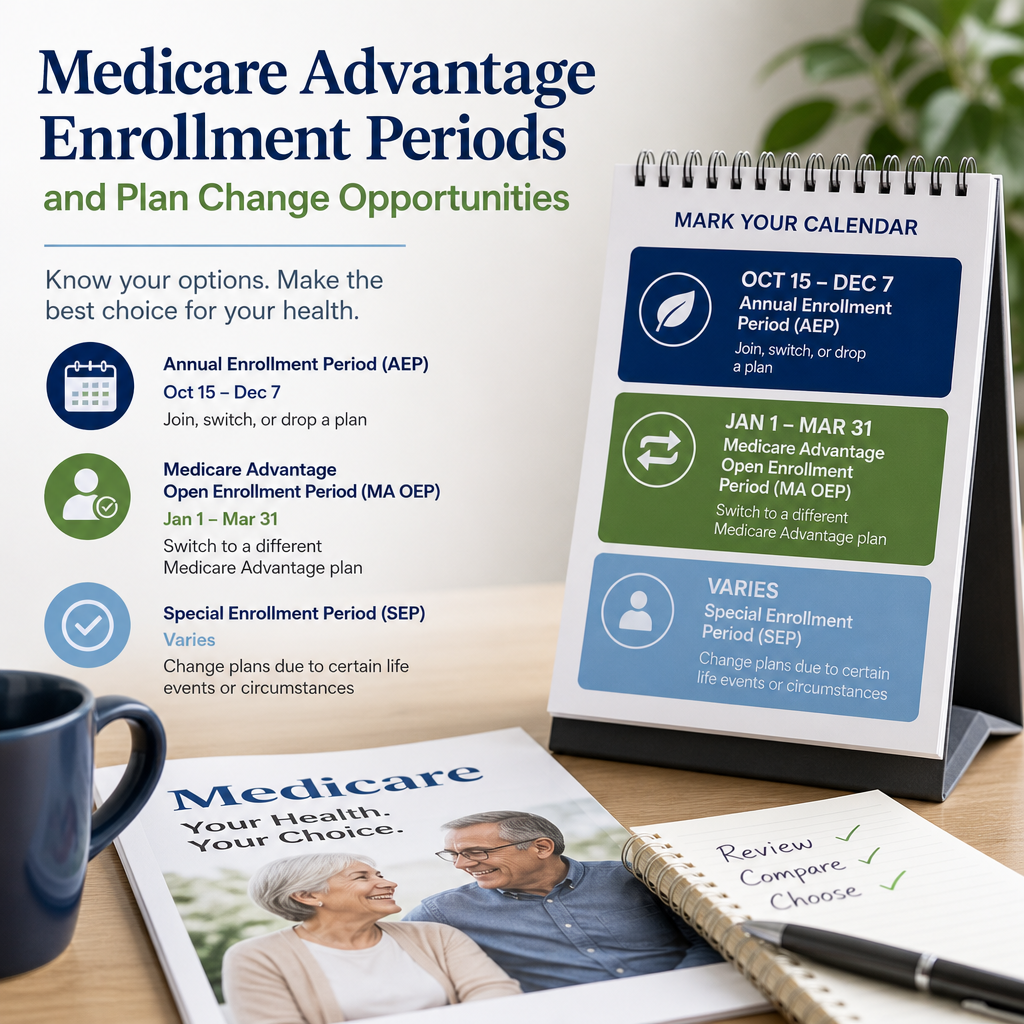
Medicare Advantage enrollment periods are the specific times when you can join, switch, or drop a Medicare Advantage plan. These periods help keep coverage changes organized and ensure people enroll during defined windows.
Anúncios
Medicare Advantage, also called Part C, is an alternative to Original Medicare. These plans are offered by private companies approved by Medicare and usually bundle Part A, Part B, and often Part D prescription drug coverage.
Because Medicare Advantage plans can differ in:
- Provider networks
- Prescription drug formularies
- Premiums and out-of-pocket costs
- Extra benefits like dental, vision, and hearing
…knowing your enrollment window is essential before making a move.
The Main Medicare Advantage Enrollment Periods
Several enrollment periods may apply depending on your situation. Some are for first-time enrollment, while others are for making changes later.
Initial Enrollment Period
Your Initial Enrollment Period (IEP) is the first opportunity most people have to enroll in Medicare, including a Medicare Advantage plan.
It lasts seven months:
- 3 months before the month you first qualify for Medicare
- The month you qualify
- 3 months after
For example, if you become eligible for Medicare in June, your Initial Enrollment Period runs from March through September.
During this time, you can:
- Join a Medicare Advantage plan
- Join a Medicare Advantage plan with prescription drug coverage
- Choose Original Medicare instead
This is often the easiest time to enroll because you are not limited by many of the later restrictions.
Medicare Advantage Open Enrollment Period
The Medicare Advantage Open Enrollment Period runs every year from January 1 through March 31.
This period is only for people who already have a Medicare Advantage plan. If you’re enrolled, you can make one change during this window.
You can:
- Switch to a different Medicare Advantage plan
- Drop Medicare Advantage and return to Original Medicare
- Join a separate Medicare Part D prescription drug plan if you return to Original Medicare
You cannot use this period to switch from Original Medicare into a Medicare Advantage plan if you are not already enrolled in one.
This window is useful if your plan no longer fits your needs after the new year begins.
Annual Open Enrollment Period
The Annual Open Enrollment Period runs from October 15 through December 7 each year.
This is one of the most important Medicare Advantage enrollment periods because it allows almost anyone with Medicare to review and change coverage for the next year.
During this time, you can:
- Switch from Original Medicare to Medicare Advantage
- Switch from Medicare Advantage back to Original Medicare
- Change from one Medicare Advantage plan to another
- Join, switch, or drop a Medicare Part D plan
Any changes made during this period take effect on January 1 of the following year.
This is a great time to compare your current plan with others, especially if your medications, doctors, or budget have changed.
Medicare Advantage Open Enrollment vs. Annual Open Enrollment
These two periods are easy to confuse, but they serve different purposes.
Annual Open Enrollment
- Dates: October 15 to December 7
- Available to most Medicare beneficiaries
- Allows broad changes for the upcoming year
Medicare Advantage Open Enrollment
- Dates: January 1 to March 31
- Available only to people already in a Medicare Advantage plan
- Allows one plan change or a return to Original Medicare
If you miss the fall window, the January-to-March period can still give you one chance to make a change if you’re already in Medicare Advantage.
Special Enrollment Periods: When Life Changes Your Coverage Options
Sometimes you can change your Medicare Advantage coverage outside the standard enrollment windows. These opportunities are called Special Enrollment Periods (SEPs).
A Special Enrollment Period usually happens after a qualifying life event. The event opens a limited time to make a change.
Common reasons include:
- Moving to a new service area
- Losing other health coverage
- Entering or leaving a long-term care facility
- Gaining or losing Medicaid or Extra Help
- Your plan leaving Medicare or ending service in your area
- Certain mistakes or issues with enrollment
Depending on the event, you may be able to join, switch, or drop a plan.
Examples of Special Enrollment Periods
Here are a few practical examples:
- You move to another state. Your current Medicare Advantage plan may not operate in your new area, so you may qualify for a new plan choice.
- Your employer coverage ends. If you had health insurance through work and lose it, you may get a chance to enroll in a Medicare Advantage plan.
- Your plan’s network changes. If your doctors leave the network or the plan stops serving your county, you may qualify for a change.
Special Enrollment Periods are highly situation-specific, so it helps to confirm the details as soon as your circumstances change.

When You Can Join Medicare Advantage for the First Time
If you want to join a Medicare Advantage plan for the first time, you generally need:
- Medicare Part A
- Medicare Part B
- To live in the plan’s service area
Most people enroll during:
- Their Initial Enrollment Period
- Annual Open Enrollment
- A Special Enrollment Period if they qualify
There is also a specific opportunity for people who get Medicare when they first turn 65 or become eligible due to disability. If you’re new to Medicare, compare plans carefully before enrolling because the first plan you choose may shape your coverage and provider access.
How to Change Medicare Advantage Plans
Changing plans is not just about moving to a cheaper premium. A good switch should consider your doctors, medications, and total annual costs.
Before You Switch, Review These Factors
Ask yourself:
- Are my doctors in the new plan’s network?
- Are my prescriptions covered?
- What are the copays and deductibles?
- Does the plan include extra benefits I use?
- Are referrals required?
- What’s the maximum out-of-pocket limit?
A plan with a low premium can still cost more overall if it has higher copays or a narrower network.
Simple Steps to Compare Plans
A practical way to compare plans is to:
- Make a list of your current doctors and medications
- Check whether each plan covers them
- Compare monthly premiums and out-of-pocket costs
- Review drug tiers and pharmacy rules
- Confirm the plan’s service area
- Read the Summary of Benefits and Evidence of Coverage
This process takes some time, but it can prevent unpleasant surprises later.
Common Reasons People Change Medicare Advantage Plans
People switch plans for many reasons. Some of the most common include:
- A doctor leaves the network
- Prescription costs increase
- Monthly premiums rise
- Needed services are no longer covered the same way
- They move to another area
- They want broader provider access
- They need a plan with stronger dental, vision, or hearing benefits
It’s also common to switch after reviewing annual notices from the plan. These documents explain changes in benefits, costs, and network rules for the next year.
What Happens If You Miss an Enrollment Period?
Missing an enrollment period does not always mean you’re stuck forever, but it can limit your options.
If you miss the Annual Open Enrollment Period, for example, you may need to wait until the next year unless you qualify for a Special Enrollment Period.
If you’re already in a Medicare Advantage plan, the Medicare Advantage Open Enrollment Period gives you another chance early in the year to make one change.
However, if you don’t qualify for any special exception, you may need to keep your current plan until the next valid window.
That’s why it helps to:
- Mark key Medicare dates on your calendar
- Review plan notices each fall
- Track changes in your doctors, medications, or coverage needs
A little planning can prevent a year of frustration.
Tips for Making the Most of Medicare Advantage Enrollment Periods
Smart timing and careful review can make a big difference in your healthcare costs and experience.
1. Start Reviewing Plans Early
Don’t wait until the final week of open enrollment. Plan details can be complex, and comparing benefits takes time.
2. Check for Annual Changes
Plans often update:
- Premiums
- Copayments
- Prescription drug lists
- Provider networks
- Prior authorization rules
Even if you liked your plan this year, it may not be the best fit next year.
3. Use Official Plan Tools
Medicare’s online tools can help you compare coverage and estimate drug costs. These resources are especially useful if you take several prescriptions or see multiple specialists.
4. Confirm Your Doctors and Medications
A plan may look great on paper but still fail if it doesn’t include your preferred doctors or medications. Always verify this before enrolling.
5. Ask Questions Before Submitting an Application
If something is unclear, call the plan directly or speak with a licensed insurance professional. It’s better to ask questions now than to discover a coverage issue after enrollment.
Medicare Advantage Enrollment Periods at a Glance
Here’s a quick summary:
- Initial Enrollment Period: First chance to join Medicare and Medicare Advantage
- Annual Open Enrollment: October 15 to December 7; broad coverage changes for the next year
- Medicare Advantage Open Enrollment: January 1 to March 31; one change if you already have Medicare Advantage
- Special Enrollment Periods: Triggered by qualifying life events
Knowing which period applies to you makes the process much easier.
Frequently Asked Questions
Can I switch Medicare Advantage plans anytime I want?
No. In most cases, you can only switch during a valid enrollment period. The main times are the Annual Open Enrollment Period, the Medicare Advantage Open Enrollment Period, or a Special Enrollment Period if you qualify. Outside those windows, your options are limited.
What is the difference between Original Medicare and Medicare Advantage enrollment?
Original Medicare enrollment gets you Part A and Part B through the federal government. Medicare Advantage enrollment means you choose a private plan that provides your Medicare-covered benefits, often with extra features like dental or vision. The deadlines are related, but the plan choices and rules can differ.
Can I join Medicare Advantage if I already have Original Medicare?
Yes, but usually only during the Annual Open Enrollment Period or if you qualify for a Special Enrollment Period. You must also have Medicare Part A and Part B and live in the plan’s service area.
What if my Medicare Advantage plan drops my doctor?
If your doctor leaves the network, check whether the plan still meets your needs. Depending on the situation, you may be able to switch plans during an enrollment period or qualify for a Special Enrollment Period. Always confirm network status directly with both the doctor and the plan.
Does Medicare Advantage cover prescription drugs?
Many Medicare Advantage plans include Part D drug coverage, but not all do. If prescription coverage matters to you, review the plan details carefully before enrolling. Drug formularies, pharmacy rules, and copays can vary widely.
Official Resources
- Medicare.gov: Joining a health or drug plan
- Medicare.gov: Medicare Advantage Plans
- Medicare.gov: Medicare Advantage Open Enrollment Period
- Medicare.gov: Special Enrollment Periods
- Medicare & You Handbook
Conclusion
Choosing the right Medicare Advantage plan is only part of the equation. Knowing the Medicare Advantage enrollment periods and plan change opportunities is just as important because timing determines what actions you can take and when you can take them. Whether you are enrolling for the first time, comparing plans during the fall Annual Open Enrollment Period, or making a mid-year change after a life event, the key is to stay alert to deadlines and review your options carefully.
The best decisions usually come from a mix of preparation and attention to detail. Check your doctors, prescriptions, service area, and total costs before you switch. Read your plan’s annual notice each year, and keep an eye out for changes that affect your care. If your circumstances change, see whether you qualify for a Special Enrollment Period.
With a clear understanding of your enrollment windows, you can make smarter coverage choices and avoid unnecessary gaps or surprises. Take the time to review your options now so you’re ready when the next opportunity opens.