U.S. Initiative to Strengthen Critical Infrastructure Against Major Disruptions
Anúncios
The U.S. depends on critical infrastructure every day, often without giving it much thought. Power grids keep homes running, water systems protect public health, transportation networks move goods, and communications systems connect emergency responders and businesses. When any of these systems face a major disruption, the impact can ripple across entire communities.
That is why the new U.S. initiative aimed at strengthening critical infrastructure against major disruptions matters. It reflects a growing recognition that resilience is no longer optional. Whether the threat comes from extreme weather, cyberattacks, aging equipment, supply chain failures, or cascading system outages, infrastructure planning now has to account for more than just routine maintenance.
Anúncios
This article breaks down what the initiative means, why it matters, and how it could affect public agencies, businesses, and everyday Americans.
What the New U.S. Initiative Is Trying to Solve
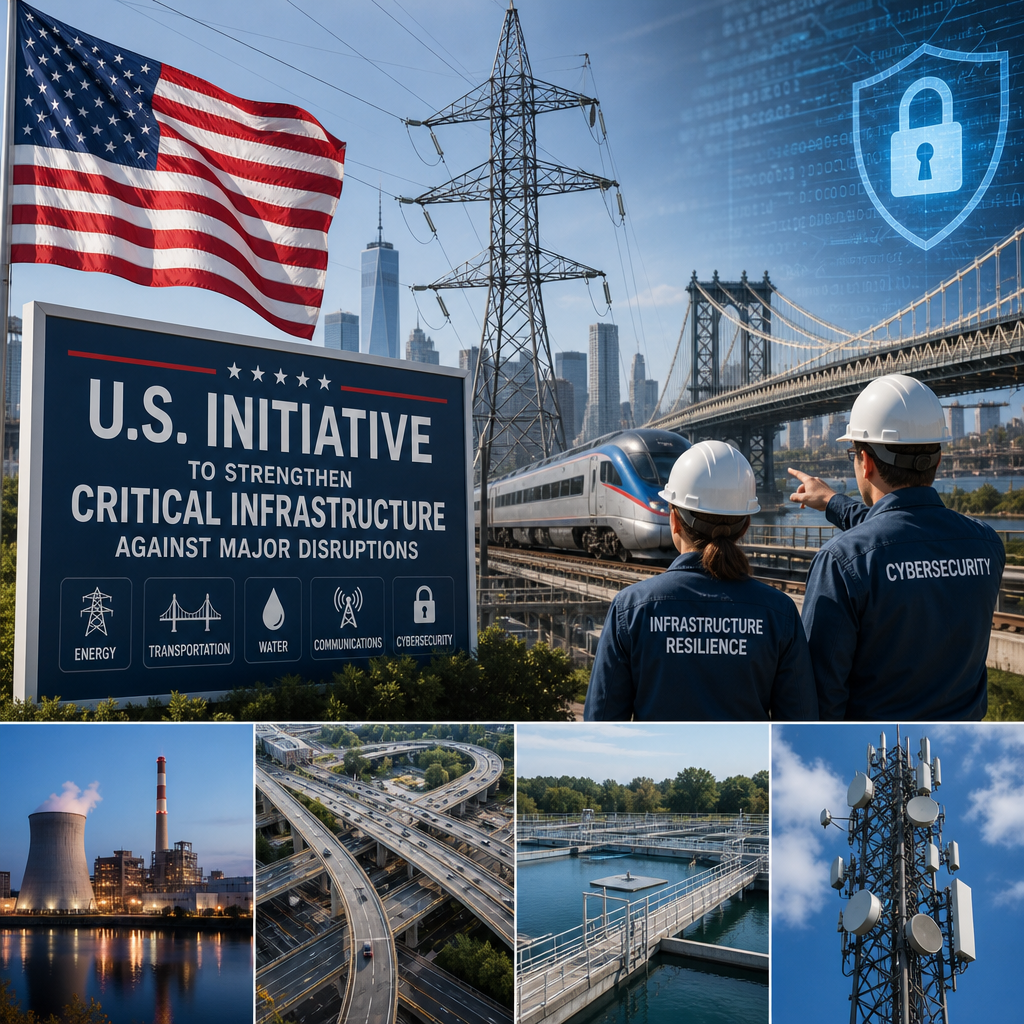
The core goal of the new U.S. initiative is straightforward: reduce the chance that a single disruption turns into a widespread crisis. In practice, that means improving the resilience of systems that people rely on for electricity, water, transportation, healthcare, communications, and food distribution.
Anúncios
Critical infrastructure is interconnected. A power outage can disable communications. A cyber incident can slow port operations. A flood can shut down roads, utilities, and emergency services all at once. The initiative recognizes that these systems can no longer be protected in isolation.
Why resilience matters now
Several trends have made infrastructure vulnerability a bigger national concern:
- More frequent and severe weather events
- Increasing cyber threats targeting public and private systems
- Aging infrastructure in many parts of the country
- Greater dependence on digital control systems
- Complex supply chains with limited backup capacity
The initiative is designed to help agencies and infrastructure operators prepare for these realities, not just react to them.
How Critical Infrastructure Threats Create Cascading Effects
One of the most important ideas behind the initiative is the concept of cascading disruption. A single event can trigger failures in multiple sectors.
For example:
- A storm knocks out power to a water treatment facility
- Communication towers lose backup power during the same outage
- Traffic signals stop working, slowing emergency response
- Fuel deliveries are delayed because transportation routes are blocked
This kind of chain reaction is why infrastructure resilience must be coordinated across sectors. Protecting one system helps, but protecting the connections between systems is just as important.
Common disruption scenarios
The initiative is likely to focus on a wide range of risk scenarios, including:
- Extreme weather
Hurricanes, floods, wildfires, winter storms, and heat waves can damage physical assets and strain emergency response. - Cyberattacks
Ransomware, phishing, and other attacks can compromise operational technology and business systems. - Physical sabotage or accidents
Deliberate attacks or unexpected failures can interrupt service quickly. - Supply chain shocks
Delays in replacement parts, fuel, chemicals, or equipment can slow restoration efforts. - Aging systems
Deteriorating bridges, pipelines, electrical equipment, and control systems are more likely to fail under stress.
What Strengthening Critical Infrastructure Looks Like in Practice
A strong initiative does more than set goals. It helps organizations take concrete action. For critical infrastructure, that usually means combining planning, technology, training, and partnerships.
1. Risk assessment and scenario planning
Before agencies or companies can protect infrastructure, they need to know where the weak points are. That means conducting risk assessments that identify:
- Single points of failure
- Vulnerable assets and dependencies
- Backup capabilities
- Restoration priorities
- Likely threat scenarios
Scenario planning is especially useful because it forces decision-makers to think through realistic emergencies before they happen.
2. Redundancy and backup systems
Resilient systems need backups. That might include:
- Alternate power sources
- Redundant communications channels
- Duplicate data storage and recovery systems
- Diversified suppliers
- Spare parts inventory for critical equipment
Backup systems are not glamorous, but they are often the difference between short disruption and prolonged outage.
3. Cybersecurity improvements
Because so much infrastructure depends on digital systems, cybersecurity is now a core part of physical infrastructure protection. Best practices may include:
- Multi-factor authentication
- Network segmentation
- Regular software patching
- Employee security training
- Monitoring for unusual system activity
- Incident response planning
Cybersecurity for critical infrastructure is not only an IT issue. It is an operational reliability issue.
4. Physical hardening and modernization
Some risks require structural upgrades. Depending on the sector, that could involve:
- Elevating equipment above flood levels
- Reinforcing facilities against wind or fire
- Replacing outdated control systems
- Improving drainage around utility sites
- Updating materials and components that are prone to failure
Modernization is expensive, but delaying upgrades often increases long-term costs.
5. Better coordination across agencies and sectors
No infrastructure system operates alone. Power companies coordinate with water utilities, transit authorities, hospitals, telecom providers, and emergency managers. A strong initiative should support:
- Information sharing
- Joint exercises and drills
- Mutual aid agreements
- Clear restoration priorities
- Communication protocols during emergencies
Coordination helps reduce confusion when time matters most.
Why This Initiative Matters for Businesses
Critical infrastructure disruptions do not just affect government agencies. Businesses of all sizes depend on stable power, transportation, internet access, and supply chains. A prolonged outage can halt production, delay deliveries, and create safety risks for employees and customers.
Business impacts may include
- Lost revenue from downtime
- Disrupted logistics and inventory shortages
- Cybersecurity exposure during emergency recovery
- Increased insurance and compliance costs
- Damage to customer trust
For many organizations, resilience planning is becoming a competitive advantage. Companies that can continue operating during disruptions often recover faster and serve customers more reliably.
Steps businesses can take now
Even before a national initiative rolls out fully, businesses can strengthen their own readiness by:
- Mapping critical dependencies
- Reviewing backup power and internet options
- Testing business continuity plans
- Training employees on emergency procedures
- Improving vendor and supplier resilience
- Coordinating with local emergency management agencies
Preparedness does not eliminate risk, but it reduces surprise and speeds recovery.
The Role of State and Local Governments
State and local governments often sit closest to the infrastructure and the communities that depend on it. They are also among the first to respond when something goes wrong. That makes them essential partners in any national effort to strengthen critical infrastructure.
What local resilience can include
- Updating emergency operation plans
- Strengthening building and zoning standards
- Hardening public facilities like schools and libraries
- Expanding backup power for shelters and hospitals
- Supporting utility continuity planning
- Investing in green infrastructure to reduce flood risk
Local leaders also play a key role in public communication. During major disruptions, clear, timely information can reduce panic and help residents make safer decisions.
How Federal Agencies May Support the Initiative
Although the details of the initiative may evolve, federal agencies typically support infrastructure resilience in a few key ways:
- Setting national priorities and guidance
- Funding grants and modernization programs
- Sharing threat intelligence and best practices
- Coordinating interagency response
- Supporting public-private partnerships
- Helping define resilience standards and benchmarks
The federal role is especially important because many infrastructure systems cross state lines or depend on national supply chains. A coordinated federal approach can help ensure that one region’s weak point does not become a nationwide problem.
Public-private partnerships matter
Most critical infrastructure in the U.S. is owned or operated by private entities. That means the government cannot solve the problem alone. Public-private partnerships can help align incentives, improve information sharing, and speed up investment in resilience.
How Technology Can Improve Infrastructure Resilience
Technology will play a major role in the success of any critical infrastructure initiative. Smart sensors, predictive analytics, and remote monitoring can help operators spot problems earlier and respond faster.
Useful technologies may include
- Digital twins to model infrastructure performance under stress
- Remote monitoring systems for early warning signs
- AI-assisted maintenance tools to predict equipment failures
- Secure cloud backups for continuity of operations
- Geospatial mapping to identify risk zones and dependencies
These tools are most effective when they support practical decision-making, not when they create more complexity than operators can manage.
Technology is only part of the solution
Tools are valuable, but resilience also depends on people, procedures, and planning. A sophisticated system still needs trained staff, tested response plans, and leadership that understands operational risk.
What a Stronger Infrastructure Future Could Look Like
If the initiative succeeds, Americans may not notice dramatic changes day to day. That is often how resilience works. The biggest sign of success is that services keep running, or recover quickly, when disruptions occur.
A stronger infrastructure future could mean:
- Faster power restoration after storms
- Safer water systems with better backup capabilities
- More reliable transportation during emergencies
- Stronger cybersecurity for public services
- Better communication between agencies and private operators
- Reduced economic losses from avoidable outages
That kind of progress is not built in a single budget cycle. It requires sustained attention, investment, and accountability.
What Communities Can Do to Prepare
Even though much of the initiative operates at the national or sector level, communities also have a role to play. Public awareness matters, especially when residents understand local risks and know what to do in an emergency.
Community preparedness actions
- Keep emergency kits ready
- Sign up for local alerts and warnings
- Know backup shelter and evacuation options
- Learn how to shut off utilities if needed
- Support local resilience planning meetings
- Check on vulnerable neighbors during outages
Community preparedness does not replace infrastructure investment, but it helps people cope when systems are stressed.
Frequently Asked Questions
What is critical infrastructure?
Critical infrastructure includes the systems and assets that support essential public services and economic activity, such as energy, water, transportation, communications, healthcare, and food supply networks. These systems are considered critical because major disruptions can affect public safety, national security, and daily life.
Why is the U.S. focusing more on infrastructure resilience now?
The U.S. is placing more emphasis on resilience because infrastructure faces multiple growing threats, including severe weather, cyberattacks, aging equipment, and supply chain interruptions. These risks can interact and create cascading failures, so the focus has shifted from basic protection to broader continuity and recovery planning.
How does a disruption in one sector affect others?
Infrastructure sectors are closely connected. For example, a power outage can affect water treatment, telecommunications, traffic systems, and hospital operations. When one sector fails, it can slow or disrupt others, which is why cross-sector planning is so important.
What can businesses do to prepare for infrastructure disruptions?
Businesses can review backup power and communication options, identify critical suppliers, test continuity plans, train employees, and coordinate with local emergency officials. They should also assess their dependence on utilities, internet access, transportation routes, and cloud-based systems.
Will this initiative improve cybersecurity too?
It should, because cybersecurity is now a major part of infrastructure resilience. Many critical systems rely on digital controls and networks, so better authentication, monitoring, patching, and incident response planning are essential to protecting operations from cyber threats.
Official Resources
- Cybersecurity and Infrastructure Security Agency (CISA)
- U.S. Department of Homeland Security: Critical Infrastructure Sectors
- Federal Emergency Management Agency (FEMA)
- National Institute of Standards and Technology (NIST)
- U.S. Department of Energy: Grid Resilience and Security
Conclusion
The new U.S. initiative to strengthen critical infrastructure against major disruptions reflects a simple but important reality: modern life depends on systems that must be prepared for more than ordinary wear and tear. From power and water to transportation and communications, these networks are deeply connected, which means a failure in one area can quickly spread to others.
The most effective resilience strategies combine planning, redundancy, cybersecurity, physical upgrades, and coordination across public and private sectors. Businesses, local governments, and communities all have a role in making sure essential services continue when conditions become difficult. While no system can be made fully immune to disruption, smarter investment and better preparedness can reduce damage and speed recovery.
For Americans, that means stronger communities, more reliable services, and fewer surprises when crises occur. For decision-makers, it is a reminder that resilience is not a one-time project. It is an ongoing responsibility. The more we invest in preparedness now, the better positioned we will be to handle whatever comes next.