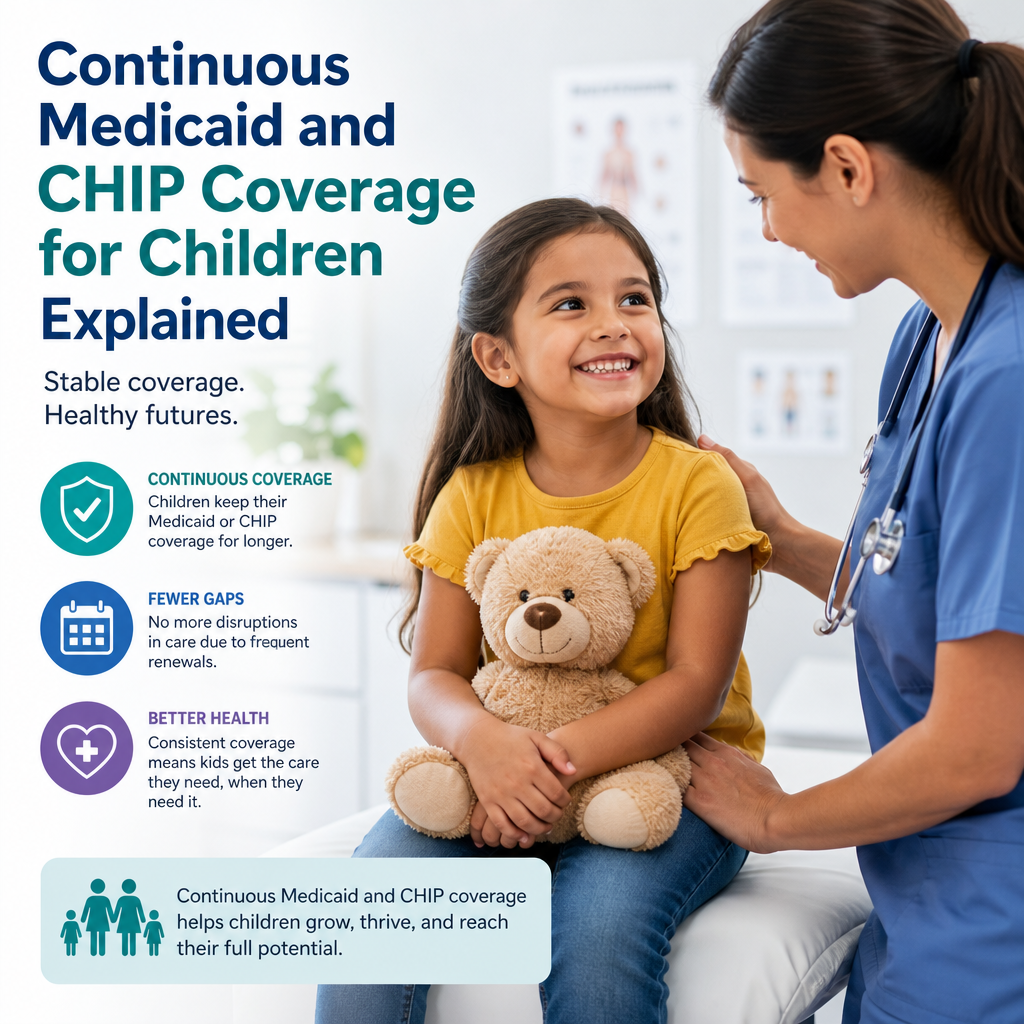
Continuous Medicaid and CHIP Coverage for Children Explained
Continuous Medicaid and CHIP coverage helps children stay insured even when family circumstances change, reducing gaps in care and making it easier to keep up with doctor visits, prescriptions, and preventive services. It’s a simple protection that can make a big difference for parents and kids alike.
By: Emily Adams - Benefits on August 2, 2026
Anúncios
Keeping a child covered by health insurance can be harder than it should be. Families move, jobs change, paperwork gets missed, and renewal notices are easy to overlook. That is why continuous Medicaid and CHIP coverage for children matters so much. It helps reduce gaps in insurance and gives parents more peace of mind that a child can keep seeing doctors, getting prescriptions, and staying on track with preventive care.
If you are trying to understand how this protection works, you are not alone. Many parents want a clear, practical explanation of what continuous coverage means, who qualifies, and what to do if a child’s Medicaid or CHIP case changes. This guide breaks it down in plain language.
Anúncios
What Is Continuous Medicaid and CHIP Coverage for Children?
Continuous Medicaid and CHIP coverage for children means that a child can stay enrolled in Medicaid or the Children’s Health Insurance Program for a set period of time, even if the family’s income changes or other circumstances shift during that period.
In simple terms, once a child qualifies and is enrolled, they generally remain covered for the full continuous eligibility period unless they move out of state, age out, or no longer meet certain other program rules.
Anúncios
This policy is designed to:
Reduce gaps in health coverage
Make it easier for families to keep care consistent
Limit “churn,” which happens when children lose coverage and then re-enroll soon after
Support regular doctor visits, immunizations, dental care, and treatment for chronic conditions
For children, continuity matters. A skipped checkup can become a missed diagnosis. A short lapse in coverage can delay medication or therapy. Continuous coverage helps avoid those problems.
Why Continuous Coverage Matters for Children
Children’s health needs do not pause just because a family’s circumstances change. A parent might change jobs, move to a new apartment, or miss a renewal form during a busy month. Without continuous coverage, one small administrative issue can cause a child to lose insurance unnecessarily.
The practical impact on families
Continuous Medicaid and CHIP coverage for children can help families:
Keep the same doctor or clinic
Maintain access to prescriptions
Avoid interruptions in specialist care
Stay current on vaccines and preventive screenings
Reduce medical bills caused by coverage gaps
It can also ease stress for caregivers. Instead of worrying that a temporary income fluctuation will lead to an immediate loss of coverage, parents have more stability and time to focus on their child’s health.
How Continuous Medicaid and CHIP Coverage Works
The exact rules can vary by state, but the basic idea is similar. A child who is found eligible for Medicaid or CHIP can usually remain covered for a certain continuous eligibility period, often 12 months.
During the coverage period
During that time, the child typically stays enrolled even if:
Family income increases above the normal limit
A parent starts a new job
Hours of work change
The family’s monthly income fluctuates
That does not mean families should ignore mail from the state Medicaid or CHIP agency. They still need to respond to requests for information, renew on time, and report certain major changes. But continuous eligibility is meant to protect children from losing coverage too quickly because of temporary changes.
When coverage may still end early
Continuous eligibility is helpful, but it is not unlimited. A child may lose coverage sooner if:
They move to another state
They no longer meet age rules for the program
They are no longer considered a resident of the state
The state discovers the child was not actually eligible when enrolled
The family does not complete required paperwork or renewal steps
Medicaid vs. CHIP: What Parents Should Know
Medicaid and CHIP are related, but they are not the same program.
Medicaid
Medicaid is a joint federal and state program that provides health coverage for eligible low-income individuals, including children, pregnant people, parents in some states, and others who meet specific criteria.
CHIP
CHIP covers children in families who earn too much to qualify for Medicaid but still need affordable coverage. In some states, CHIP is offered as a separate program. In others, it works closely with Medicaid or uses the same enrollment system.
Why this matters for continuous coverage
Children may move between Medicaid and CHIP as family income changes. Continuous coverage helps reduce the chances that a child will fall through the cracks during that transition.
For example:
A child qualifies for Medicaid at age 5.
The family’s income later rises, and the child may now fit CHIP rules instead.
The state reviews the case.
Instead of losing coverage immediately, the child may stay insured under continuous coverage rules or transition smoothly to CHIP.
That smoother handoff can make a major difference for ongoing care.
Continuous Medicaid and CHIP coverage helps keep kids protected and families supported for healthier tomorrows.
What Families Need to Do to Keep Coverage Active
Continuous eligibility does not eliminate all responsibilities. Families still need to stay organized and watch for notices from the state.
Key tasks for parents and caregivers
Open and read all Medicaid or CHIP mail
Keep contact information up to date
Respond to renewal requests on time
Report changes if your state requires it
Submit documents by the deadline if asked
A simple habit can help: keep a folder, paper or digital, for all health coverage letters. Set calendar reminders for renewal dates so important mail does not get missed.
Common mistakes to avoid
Families often lose coverage because of avoidable issues, such as:
Mailing forms late
Forgetting to update an address
Missing a phone call or notice from the state
Assuming coverage renews automatically without checking
Ignoring requests for proof of income or residency
If you receive a notice that looks confusing, call the number on the letter right away. It is better to ask questions early than to wait until coverage has already ended.
How Continuous Coverage Helps Children With Ongoing Health Needs
Children with asthma, diabetes, attention disorders, developmental delays, or other ongoing needs benefit especially from stable insurance. A coverage gap can interrupt treatment plans and create setbacks that are hard to undo.
Examples of how continuous coverage helps
A child with asthma can keep filling inhalers and see a pediatrician regularly.
A child receiving speech therapy can continue sessions without having to restart the approval process.
A child with frequent ear infections can get follow-up care without delay.
A child needing vaccines can stay on schedule with preventive visits.
Even for healthy children, continuity matters. Routine care catches problems early and helps families avoid bigger issues later.
What Happens at Renewal Time?
Renewal, sometimes called redetermination, is when the state checks whether a child still qualifies for Medicaid or CHIP.
What the state may review
Depending on the program and state rules, the agency may look at:
Household size
Address
Income
Age
Residency
Other eligibility factors
Some states can review information electronically using data they already have. Others may ask families to send documents.
Tips for a smoother renewal
Watch your mail and email carefully.
Respond before the deadline.
Send clear copies of requested documents.
Keep proof of what you submitted.
Follow up if you do not hear back.
If your family no longer qualifies for Medicaid, the state may help connect the child to CHIP or another coverage option.
What to Do If Coverage Ends or a Child Is Denied
Sometimes children lose coverage even when the family believes they should still qualify. If that happens, do not assume the decision is final.
Steps to take
Read the notice carefully
Check the reason for the denial or closure
Gather documents that support your case
Call the state Medicaid or CHIP office
Ask whether you can appeal
Ask whether you qualify for CHIP or another plan
Many families can fix a simple issue, such as missing paperwork or an outdated address. If the child truly is not eligible for Medicaid anymore, CHIP may still be available.
How States Use Continuous Eligibility Differently
States have some flexibility in how they apply continuous eligibility for children. That means the exact duration and rules can vary. Some states offer a 12-month period, while others may have additional protections or different administrative processes.
Why state rules vary
Medicaid and CHIP are federal-state programs. Federal guidelines set the framework, but states manage day-to-day enrollment. Because of that, families should always check their own state’s Medicaid or CHIP website for the most current rules.
If you recently moved or your family’s situation changed, it is important to confirm whether the child must reapply in the new state.
Practical Tips for Parents and Caregivers
Staying covered is easier when you make the system work for you.
A simple checklist
Save your Medicaid and CHIP ID cards
Write down renewal dates
Update your address after moving
Keep copies of pay stubs or documents that may be needed
Use the state website or helpline if you are unsure about something
Ask your child’s doctor’s office if they need updated insurance information
If your child needs care right now
If you are worried about a lapse, contact the provider’s billing office and ask what they need to keep the visit on record. Some clinics can help you understand whether the child is still active in the system.
If your child takes medicine regularly, refill prescriptions before the coverage period ends whenever possible.
Frequently Asked Questions
1. What does continuous Medicaid and CHIP coverage for children mean?
It means a child can stay enrolled in Medicaid or CHIP for a set period, even if the family’s income or circumstances change during that time, as long as they still meet the program’s basic rules and complete required paperwork.
2. Does continuous coverage mean I do not have to renew my child’s insurance?
No. Families still need to renew coverage when asked and respond to notices from the state. Continuous coverage helps protect children from losing insurance too quickly, but it does not remove renewal requirements.
3. Can my child keep Medicaid if our income goes up?
In many cases, yes, at least until the continuous eligibility period ends. After that, the state may review whether the child still qualifies for Medicaid or should move to CHIP or another option.
4. What if I missed a renewal notice?
Contact your state Medicaid or CHIP office as soon as possible. In many cases, a missed notice can be corrected if you act quickly. Keep records of your call and ask what documents you need to send.
5. Is CHIP only for children who do not qualify for Medicaid?
Usually, yes. CHIP is designed for children in families who earn too much for Medicaid but still need affordable health coverage. However, eligibility rules vary by state, so it is best to check your state’s program details.
Continuous Medicaid and CHIP coverage for children gives families something they need most: stability. When coverage continues through temporary income changes or other routine life disruptions, children are less likely to miss care, lose prescriptions, or fall behind on preventive services. That stability is especially valuable for kids with ongoing health needs, but it helps every child by making access to care more consistent and less stressful.
The most important thing parents can do is stay alert to renewal notices, keep contact information current, and respond quickly when the state asks for documents. If your child’s coverage changes, do not panic. Review the notice, ask questions, and check whether CHIP or another option is available. A little organization can prevent a lot of coverage problems later.
If you want to protect your child’s access to care, start by reviewing your state’s Medicaid or CHIP rules today and marking your next renewal date on the calendar.
Emily A, holds a Master's degree in Public Administration (MPA) and has over 7 years of experience researching federal and state assistance programs. She writes educational content focused on government benefits, public policy, and community resources, using information from official agencies to help readers understand available programs and eligibility requirements.