How Ocean Acidification Threatens Marine Ecosystems and Coastal Economies
Anúncios
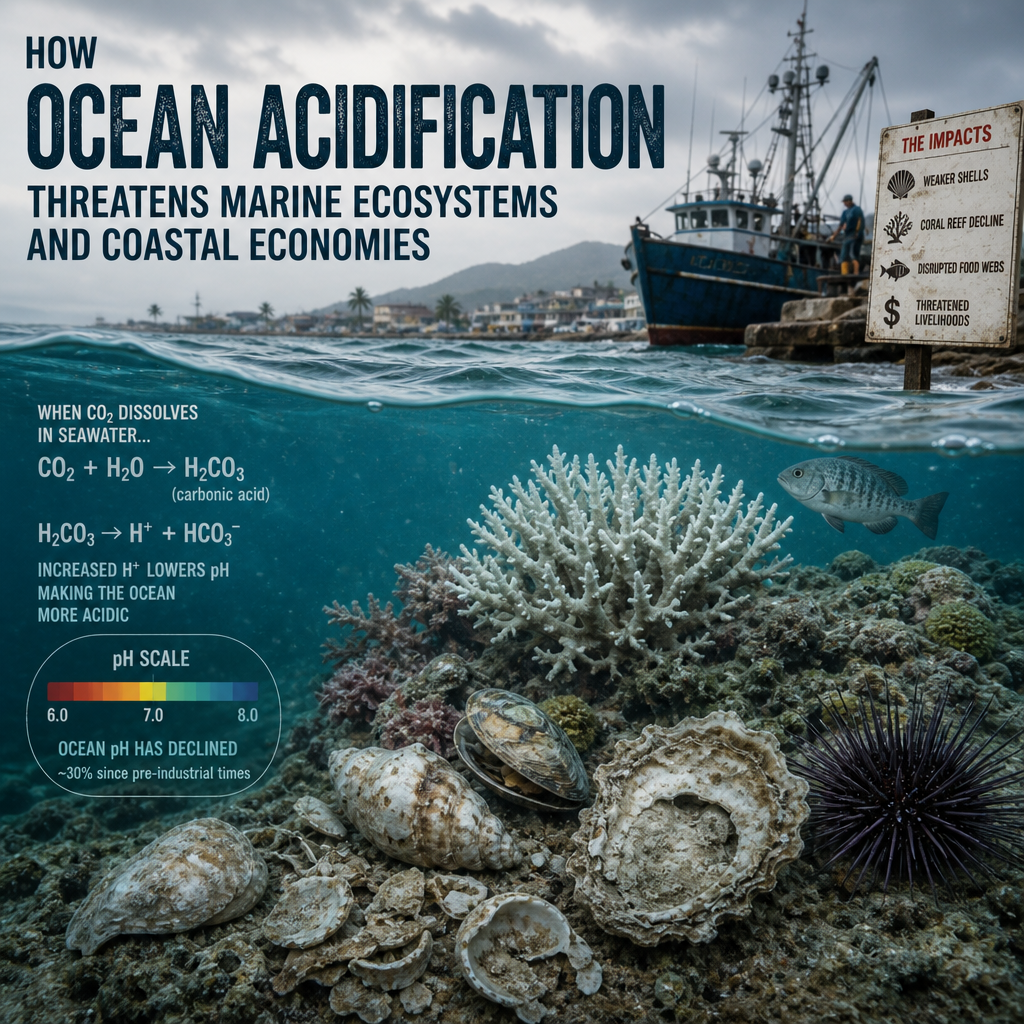
Ocean acidification is one of the most important environmental issues affecting the planet’s seas today. As carbon dioxide levels rise in the atmosphere, more of that carbon dioxide is absorbed by the ocean, changing seawater chemistry and making it harder for many marine organisms to survive. For communities that rely on fisheries, tourism, and healthy coastal waters, the consequences of ocean acidification extend far beyond marine science. It can reshape entire marine ecosystems and create serious risks for coastal economies.
Anúncios
Understanding how ocean acidification works—and why it matters—is essential for policymakers, business owners, fishers, and anyone who depends on the ocean. The issue is not abstract. It affects shellfish growers, reef-based tourism, food security, and the long-term resilience of coastal communities. This article explains the science, explores the ecological and economic impacts, and highlights practical steps that can help reduce the damage.
What Is Ocean Acidification?
Ocean acidification refers to the gradual decrease in the pH of seawater caused by the ocean absorbing carbon dioxide from the atmosphere. When carbon dioxide dissolves in water, it forms carbonic acid, which lowers pH and reduces the availability of carbonate ions. Those carbonate ions are essential for many marine organisms that build shells and skeletons.
Why the ocean’s chemistry matters
A small shift in pH can have major consequences because seawater chemistry is tightly balanced. Many species depend on carbonate minerals to form:
Anúncios
- Shells
- Coral skeletons
- Plankton structures
- Larval protective coverings
When carbonate becomes harder to access, these organisms must expend more energy to grow, reproduce, and survive. In some cases, their shells become thinner or weaker, making them more vulnerable to predators and environmental stress.
Ocean acidification and climate change
Ocean acidification is closely linked to climate change because both are driven by excess carbon dioxide emissions. While warming seas get more attention, acidification is a separate but equally serious threat. Together, warming, deoxygenation, and acidification can intensify stress on marine ecosystems and reduce their ability to adapt.
How Ocean Acidification Threatens Marine Ecosystems
The most visible effects of ocean acidification often appear in species that build calcium carbonate structures. But the impacts spread through the food web, affecting predators, prey, habitat formation, and ecosystem stability.
Shell-building species face direct stress
Mollusks such as oysters, clams, mussels, scallops, and some snails are among the most vulnerable. Their larvae are especially sensitive because they are tiny and developing quickly. When acidification reduces carbonate availability, larvae may grow more slowly or fail to form shells properly.
This can lead to:
- Lower survival rates
- Reduced harvest yields
- Weaker adult populations
- Greater susceptibility to disease and predation
For species already dealing with warming waters, pollution, and habitat loss, acidification can push them closer to local collapse.
Coral reefs lose their foundation
Coral reefs are often described as the rainforests of the sea because they support incredible biodiversity. Corals build rigid structures from calcium carbonate, creating habitat for countless fish and invertebrates. Ocean acidification makes it harder for corals to build and maintain these structures.
Over time, reefs may:
- Grow more slowly
- Become more brittle
- Erode faster than they can recover
- Support fewer reef-dependent species
This matters not only for marine life but also for people. Healthy reefs protect shorelines from waves and storms, sustain fisheries, and attract tourists. When reefs decline, coastal communities lose natural infrastructure that is difficult and expensive to replace.
Plankton and food webs are disrupted
Some of the smallest organisms in the ocean have outsized importance. Certain plankton species form the base of marine food webs, and some use calcium carbonate in their shells. If ocean acidification weakens these organisms, the effects can ripple upward to fish, seabirds, and marine mammals.
A disrupted base of the food web can mean:
- Less food for juvenile fish
- Shifts in species composition
- Changes in migration and breeding patterns
- Reduced ecosystem productivity
Because marine ecosystems are interconnected, a change affecting one group can alter the balance of many others.
Fish behavior and development may change
Not all fish are affected in the same way, but research shows that acidification can influence behavior, sensory function, and early development in some species. Fish larvae may have a harder time detecting predators or finding suitable habitat. In turn, this can affect survival rates and long-term population health.
Even when fish do not die directly from acidification, subtle changes in growth and behavior can still affect fisheries and ecosystem stability.
Why Ocean Acidification Threatens Coastal Economies
The economic impacts of ocean acidification are often felt first in coastal regions. These areas depend on marine resources for jobs, food, tourism, and local revenue. When ocean conditions change, the effects can spread across entire communities.
Fisheries and shellfish industries are at risk
Commercial fisheries and aquaculture operations depend on stable ocean conditions. Shellfish growers, in particular, face direct exposure because oysters, clams, mussels, and scallops are sensitive to changing chemistry during early life stages.
Economic risks include:
- Lower production
- Higher mortality in hatcheries
- Increased operational costs
- Greater uncertainty in planning and investment
For small businesses and family-run operations, even a single bad season can be damaging. In regions where shellfish harvesting is a major employer, ocean acidification can threaten livelihoods and local tax bases.
Tourism tied to reefs and marine life can decline
Coastal tourism often depends on healthy waters, thriving reefs, and abundant marine wildlife. Divers, snorkelers, anglers, and beach visitors are drawn to places with vibrant ecosystems. If reefs degrade or fish populations decline, destinations may lose appeal.
Tourism impacts can include:
- Fewer visitors
- Reduced spending at hotels, restaurants, and charters
- Lower demand for local services
- Damage to the community’s brand as a destination
Because tourism supports so many related jobs, the economic impact often extends well beyond the shoreline.
Shoreline protection becomes more expensive
Coral reefs and other marine habitats help absorb wave energy and reduce storm damage. When these natural barriers weaken, coastal communities may face higher repair and adaptation costs.
That can mean more spending on:
- Sea walls and engineered defenses
- Beach nourishment
- Infrastructure repairs
- Emergency response after storms
In this way, ocean acidification can increase the financial burden of coastal resilience planning.
Food security may worsen in vulnerable regions
Many communities depend on seafood as a primary source of protein and income. If marine ecosystems become less productive or fisheries become less reliable, food security can suffer. This is especially concerning in island nations and communities with limited access to alternative resources.
Ocean acidification can also interact with other stressors, making local seafood supplies less predictable over time.
The Hidden Costs: Long-Term Risk and Uncertainty
One of the biggest challenges posed by ocean acidification is uncertainty. Businesses and governments plan around expected conditions, but changing ocean chemistry introduces new risks that are hard to forecast precisely. That uncertainty can discourage investment, strain insurance systems, and make resource management more difficult.
Compounding environmental stress
Ocean acidification does not act alone. It often combines with:
- Rising ocean temperatures
- Overfishing
- Pollution
- Habitat destruction
- Low oxygen conditions
When multiple stressors occur together, ecosystems may recover more slowly or fail to recover at all. A coral reef weakened by acidification may also be less able to withstand heat stress. A shellfish bed under chemical stress may also be more vulnerable to disease.
Unequal impacts on communities
Not every coastal community faces the same level of risk. Areas with high dependence on shellfish, reef tourism, or subsistence fishing are often more exposed. Communities with limited resources may have fewer options to adapt, which can deepen existing economic inequalities.
What Can Be Done to Reduce the Impact of Ocean Acidification?
Although ocean acidification is a global problem, there are still meaningful actions that can reduce its severity and help ecosystems adapt.
Cut carbon dioxide emissions
The most important long-term solution is reducing greenhouse gas emissions. Because excess carbon dioxide drives acidification, emission reductions are essential. This means supporting cleaner energy, more efficient transportation, and policies that lower carbon pollution across sectors.
Protect and restore marine habitats
Healthy ecosystems are generally more resilient. Protecting seagrass beds, mangroves, salt marshes, coral reefs, and oyster reefs can improve water quality, support biodiversity, and help buffer local conditions.
Benefits of habitat restoration can include:
- Better nursery areas for fish
- Improved water filtration
- More stable coastal ecosystems
- Greater natural protection from storms
Improve monitoring and early warning systems
Local monitoring helps communities detect harmful changes in ocean chemistry before they cause major losses. This is especially useful for shellfish hatcheries, fisheries managers, and coastal resource planners.
Effective monitoring can support:
- Hatchery adjustments
- Fishery management decisions
- Public advisories
- Better long-term planning
Support adaptation in fisheries and aquaculture
Producers can reduce risk by adopting adaptive practices, such as:
- Monitoring water chemistry regularly
- Timing shellfish seed production more carefully
- Improving water intake systems in hatcheries
- Diversifying species raised in aquaculture
- Using selective breeding where appropriate
These strategies do not solve ocean acidification, but they can help reduce losses and improve resilience.
Strengthen coastal policy and community planning
Local governments can prepare by incorporating ocean chemistry into resilience plans, economic development strategies, and conservation policies. That may include supporting science-based fisheries management, protecting habitat, and funding adaptation for vulnerable industries.
Real-World Significance for Coastal Communities
The effects of ocean acidification are already influencing decisions in shellfish farming, reef conservation, and coastal planning. For many communities, the question is not whether the ocean is changing, but how quickly they can adapt.
Example: shellfish hatcheries
Hatcheries that monitor seawater chemistry can respond faster when conditions become unfavorable. By adjusting intake systems or scheduling production around lower-risk periods, they may protect vulnerable larvae and reduce losses.
Example: reef-dependent tourism towns
Communities centered on diving, snorkeling, and fishing tourism may invest in reef restoration, pollution reduction, and visitor education to preserve the natural attractions that support local businesses.
Example: regional fisheries management
Fishery managers may use ecosystem-based approaches that consider ocean acidification alongside temperature, habitat quality, and prey availability. This creates a more realistic picture of long-term stock health.
Why Public Awareness Matters
Ocean acidification is not always visible, which makes it easy to overlook. But its effects can be profound, especially when combined with other marine stressors. Public awareness helps build support for science, policy action, and community adaptation.
When people understand that ocean acidification threatens marine ecosystems and coastal economies, they are more likely to support:
- Emissions reduction
- Habitat protection
- Sustainable seafood practices
- Coastal resilience investments
- Research funding
In other words, awareness is a practical tool for prevention and preparedness.
Frequently Asked Questions
1. What causes ocean acidification?
Ocean acidification is primarily caused by the ocean absorbing carbon dioxide from the atmosphere. The dissolved carbon dioxide reacts with seawater, forming carbonic acid and lowering pH. This reduces carbonate ions, which many marine organisms need to build shells and skeletons.
2. Which marine animals are most affected by ocean acidification?
Shell-building organisms are often the most vulnerable. This includes oysters, clams, mussels, scallops, some plankton, and coral species. Early life stages are especially sensitive, and impacts can spread through the food web to fish, seabirds, and marine mammals.
3. How does ocean acidification affect the fishing industry?
Ocean acidification can reduce the survival and growth of shellfish, alter fish behavior in some species, and damage habitats that support fisheries. These changes can lower yields, raise costs, and create uncertainty for commercial fishing and aquaculture operations.
4. Can coastal communities adapt to ocean acidification?
Yes, in part. Communities can improve monitoring, protect marine habitats, support adaptive aquaculture practices, and plan around changing conditions. However, adaptation works best when paired with global efforts to reduce carbon dioxide emissions.
5. Is ocean acidification the same as global warming?
No. They are related but different problems. Global warming refers to rising temperatures caused by greenhouse gases, while ocean acidification refers to the chemical changes in seawater caused mainly by carbon dioxide absorption. Both are driven by emissions and often happen at the same time.
Official Resources
- NOAA Ocean Acidification Program
- National Ocean Service: Ocean Acidification
- Environmental Protection Agency: Climate Change Indicators
- National Academies of Sciences, Engineering, and Medicine: Ocean Acidification Resources
- UNESCO-IOC: Ocean Acidification International Coordination Centre
Conclusion
Ocean acidification is more than a chemistry issue. It is a growing threat to the health of marine ecosystems and the economic stability of coastal communities. As seawater becomes more acidic, shell-building species struggle, coral reefs weaken, and food webs become less stable. Those ecological changes translate into real-world consequences for fisheries, aquaculture, tourism, shoreline protection, and food security.
The good news is that the problem is understandable, measurable, and partially manageable. Reducing carbon dioxide emissions remains the most important long-term action, but local steps also matter. Habitat restoration, better monitoring, stronger coastal planning, and adaptive management can help communities reduce losses and build resilience.
For business owners, fishery managers, policymakers, and coastal residents, the key takeaway is clear: the sooner we respond, the more options we preserve. Learning about ocean acidification is not just about protecting marine life. It is about safeguarding the economies and communities that depend on a healthy ocean for their future.