What NOAA’s Atlantic Hurricane Outlook Means for Coastal Communities
Anúncios
Each spring and summer, many people along the Atlantic and Gulf coasts watch for the release of the NOAA Atlantic hurricane outlook. For coastal communities, this forecast is more than a seasonal update. It helps emergency managers, homeowners, business owners, and local leaders prepare for the months ahead.
But what does the outlook actually tell you? And just as important, what does it not tell you? Understanding the NOAA Atlantic hurricane outlook can help communities make smarter decisions, reduce risk, and respond faster when a storm threatens.
Anúncios
What Is NOAA’s Atlantic Hurricane Outlook?
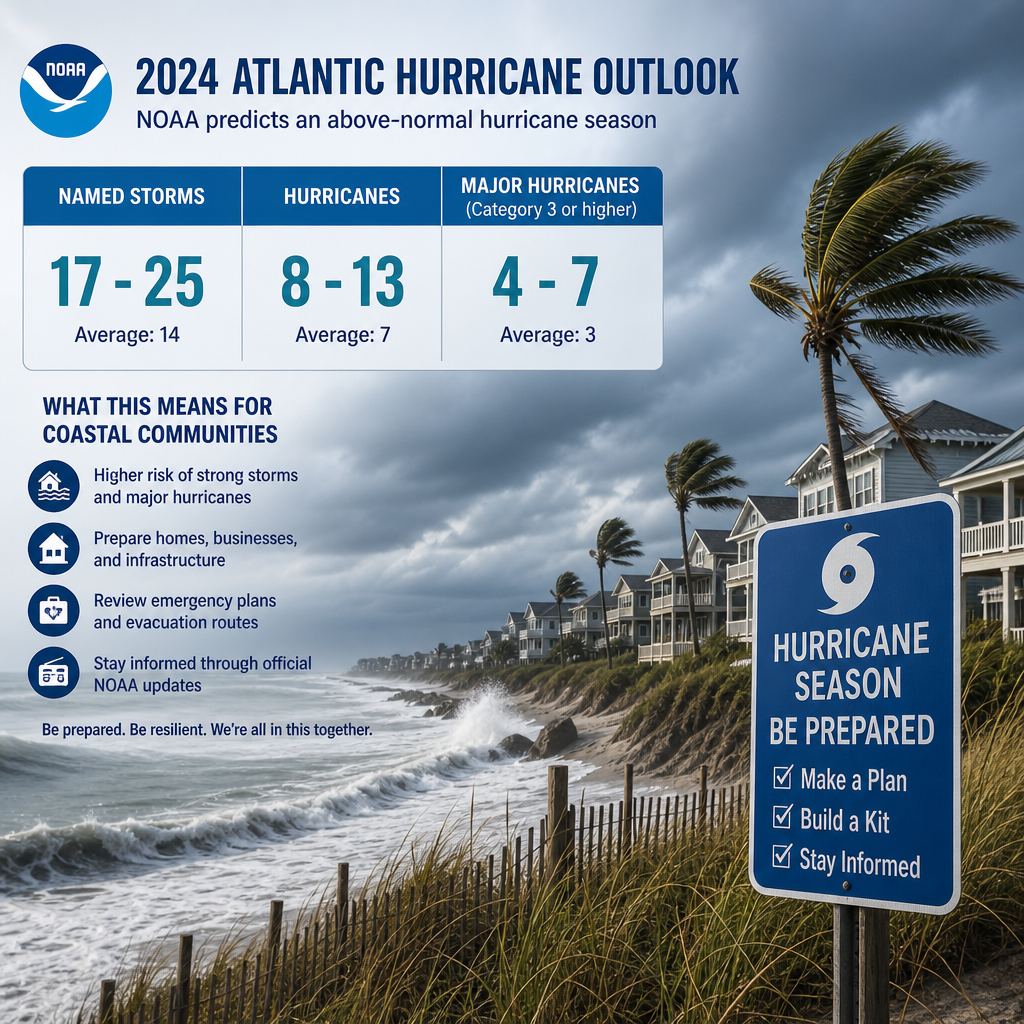
The NOAA Atlantic hurricane outlook is a seasonal forecast issued by the National Oceanic and Atmospheric Administration. It estimates how active the Atlantic hurricane season may be based on climate patterns, ocean temperatures, wind conditions, and other atmospheric signals.
NOAA typically releases the outlook before and during hurricane season to give people a broader sense of what to expect. The Atlantic hurricane season officially runs from June 1 through November 30.
Anúncios
The outlook usually includes:
- The expected number of named storms
- The number of hurricanes
- The number of major hurricanes
- An assessment of whether the season is likely to be below-normal, near-normal, or above-normal
This forecast is about seasonal activity, not landfall. A busy season does not guarantee a direct strike on your community, and a quiet season does not mean you are safe.
Why the NOAA Atlantic Hurricane Outlook Matters for Coastal Communities
For coastal communities, this outlook plays a practical role in planning and preparedness. It gives public officials and residents an early signal to review emergency plans, inspect infrastructure, and make needed improvements before storms form.
Helps communities prepare early
When the outlook suggests a more active season, local governments may:
- Check evacuation routes
- Stock emergency supplies
- Review shelter plans
- Test communication systems
- Coordinate with utility providers and first responders
Businesses can also use the outlook to prepare backup systems, protect inventory, and confirm insurance coverage.
Supports risk awareness
Even when the forecast is uncertain, the NOAA Atlantic hurricane outlook reminds people that hurricane season is not a distant concern. It creates an opportunity to think about flood risk, wind damage, power outages, and storm surge before a hurricane is on the radar.
Encourages long-term resilience
Seasonal forecasts are useful for more than immediate preparation. They can guide investments in stronger building codes, drainage improvements, shoreline protection, and emergency management planning. Communities that use outlooks well tend to recover faster when storms hit.
What the Outlook Can Tell You — and What It Can’t
One of the most important things to understand is the difference between seasonal outlooks and storm-specific forecasts.
What it can tell you
The NOAA Atlantic hurricane outlook can indicate whether the season may be more or less active than average. It can also help explain why certain weather patterns are increasing or reducing hurricane formation.
This information helps communities answer questions like:
- Should we prepare for a higher number of storms this year?
- Do we need to refresh emergency messaging?
- Is now the time to update our preparedness plans?
What it cannot tell you
The outlook cannot predict:
- Exactly where storms will form
- Which storms will make landfall
- When a specific hurricane will hit
- How severe the impacts will be in your town
That means a below-normal outlook should never lead to complacency. One storm can still cause major destruction. Coastal communities should prepare every season, no matter what NOAA predicts.
How NOAA Develops the Atlantic Hurricane Outlook
NOAA uses a combination of historical data, climate trends, and current ocean-atmosphere conditions to build the forecast.
Key factors NOAA studies
Some of the main influences include:
- Sea surface temperatures in the Atlantic and surrounding basins
- Wind shear, or changes in wind speed and direction with height
- El Niño and La Niña conditions in the tropical Pacific
- Atmospheric stability and moisture patterns
- Ocean heat content and broader climate signals
These factors help meteorologists estimate how favorable the environment will be for storm development.
Why seasonal forecasts are not exact
Hurricanes are complex and influenced by many moving parts. Conditions can change quickly over the course of a season. That is why seasonal hurricane outlooks are best used as planning tools rather than precise predictions.
Think of the NOAA Atlantic hurricane outlook like a weather briefing for the season ahead. It helps you understand the level of risk, but it does not replace daily forecasts, watches, and warnings.
How Coastal Communities Should Use the Outlook
The smartest response to a seasonal forecast is preparation. Communities that turn the NOAA Atlantic hurricane outlook into action are better positioned to protect lives and property.
1. Review emergency plans
Local governments, schools, healthcare facilities, and businesses should revisit emergency procedures at the start of hurricane season.
Key questions to ask include:
- Who makes evacuation decisions?
- How will residents receive alerts?
- Where are shelters located?
- How will people with disabilities or limited transportation get help?
2. Check flood and storm surge risk
Hurricane damage is not limited to wind. Flooding and storm surge often cause some of the worst destruction. Communities should review flood maps, drainage systems, and evacuation zones before storms begin forming.
3. Strengthen communication plans
Reliable communication saves time and lives. Coastal communities should make sure alerts can reach people through:
- Wireless emergency alerts
- Local news and radio
- Social media
- Community text systems
- Multilingual outreach when needed
4. Encourage household preparedness
Residents should not wait for a named storm to prepare. A family emergency plan should include:
- A meeting place
- An evacuation route
- Backup charging methods
- Medications and documents
- Food, water, and supplies for several days
5. Protect critical infrastructure
Utilities, hospitals, water systems, ports, and transportation networks often face major strain during hurricane season. The outlook can help leaders prioritize maintenance and resilience upgrades before severe weather arrives.
Practical Examples of How Communities Respond
Different communities use the NOAA Atlantic hurricane outlook in different ways, depending on their exposure and resources.
Small coastal towns
A small town may use the outlook to launch a preparedness campaign, reminding residents to trim trees, secure boats, and review evacuation plans. Local officials might also inspect public buildings that could serve as shelters.
Tourist destinations
Beach towns and resort areas often depend on tourism, so they may use the outlook to coordinate with hotels, rental owners, and marina operators. This can include checking emergency messaging for visitors who are unfamiliar with local risks.
Large metropolitan areas
Larger coastal cities may use seasonal forecasts to review transit shutdown plans, drainage capacity, and mutual aid agreements. They may also work with hospitals and emergency management agencies to plan for extended power outages or mass evacuations.
Tribal and rural communities
Some communities face unique challenges, such as limited transportation, long distances to shelters, or language barriers. A seasonal outlook can help them secure supplies, coordinate with state agencies, and plan for local needs well before a storm threatens.
How Residents Can Stay Prepared All Season
The NOAA Atlantic hurricane outlook is only useful if people act on it. Preparation should be ongoing throughout hurricane season.
Build a basic supply kit
Keep essentials on hand, including:
- Water
- Nonperishable food
- Flashlights
- Batteries
- First aid supplies
- Medications
- Phone chargers or power banks
- Important documents in waterproof storage
Make your home more resilient
Simple steps can reduce damage:
- Install storm shutters or board windows if recommended
- Clear gutters and drains
- Bring in outdoor furniture
- Trim weak tree limbs
- Secure loose items around your property
Know your evacuation zone
If you live near the coast, find out whether your home is in an evacuation zone or flood-prone area. Do not wait until a storm is approaching to learn the route out of town.
Follow official alerts
Use trusted sources like NOAA, the National Hurricane Center, and local emergency management offices. Social media can be helpful, but it should not replace official guidance.
Common Misunderstandings About Hurricane Outlooks
Seasonal forecasts are often misunderstood, which can lead to poor decisions.
“A quiet season means no danger.”
False. Even one hurricane can be devastating. A single landfalling storm can cause flooding, storm surge, tornadoes, and long power outages.
“A busy season means my town will definitely be hit.”
Not necessarily. The outlook measures overall basin activity, not landfall risk for a specific location.
“I only need to prepare when a storm is named.”
Waiting is risky. Supplies sell out, roads close, and decisions become harder once a storm is close.
“If my area was spared last year, I’m probably safe this year.”
Hurricane risk changes each season. Past outcomes do not predict future impacts.
Why Clear Communication Matters
The NOAA Atlantic hurricane outlook is most effective when community leaders explain it clearly. Residents need to know how to interpret seasonal risk without panicking or dismissing it.
Good communication should:
- Use plain language
- Explain uncertainty honestly
- Focus on actions people can take
- Reach audiences in multiple formats and languages
- Reinforce that preparedness is a season-long responsibility
When people understand the forecast, they are more likely to take it seriously and act early.
Frequently Asked Questions
What does the NOAA Atlantic hurricane outlook predict?
It predicts the likely overall activity of the Atlantic hurricane season, including the number of named storms, hurricanes, and major hurricanes. It does not predict exactly where storms will go or whether a specific town will be hit.
How should coastal communities use the outlook?
Communities should use it as a planning tool. It can guide emergency drills, evacuation planning, shelter preparation, public outreach, and infrastructure checks before storms develop.
Does a below-normal outlook mean coastal residents can relax?
No. A below-normal season still can produce dangerous hurricanes. One landfalling storm can cause severe flooding, wind damage, and storm surge impacts.
When is hurricane season in the Atlantic?
The Atlantic hurricane season runs from June 1 through November 30. Storm risk can continue throughout that entire period.
Where can I get the most reliable hurricane updates?
The best sources are NOAA, the National Hurricane Center, and your local emergency management office. These sources provide official watches, warnings, and storm track information.
Official Resources
- NOAA Climate Prediction Center – Atlantic Hurricane Season Outlook
- National Hurricane Center
- Ready.gov Hurricane Safety
- Federal Emergency Management Agency (FEMA)
- National Weather Service
Conclusion
The NOAA Atlantic hurricane outlook is an important tool for coastal communities because it turns seasonal uncertainty into a chance to prepare. It does not tell you exactly where a storm will strike, but it does help explain the level of risk for the months ahead. That makes it valuable for city planners, emergency managers, business owners, and families who live near the coast.
The key lesson is simple: use the outlook as a prompt to act, not as a reason to relax or panic. Review your emergency plan, prepare your supplies, check evacuation routes, and stay connected to official updates throughout hurricane season. Communities that prepare early usually respond more effectively when storms threaten and recover more quickly afterward.
Hurricane readiness is not just about surviving the next forecast. It is about building a culture of preparedness that protects lives, reduces damage, and strengthens resilience year after year. Staying informed today can make all the difference when the weather turns tomorrow.