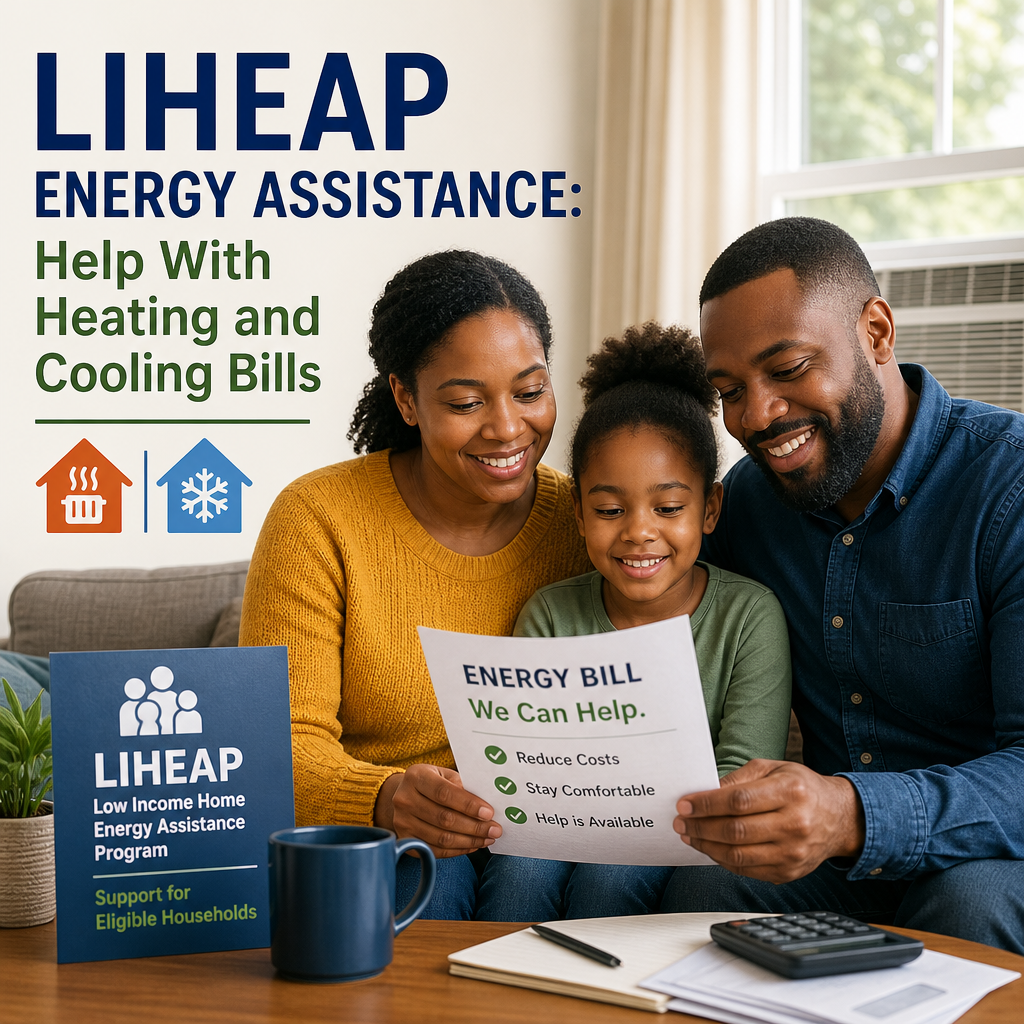
LIHEAP Energy Assistance: Help With Heating and Cooling Bills
LIHEAP energy assistance can help lower the stress of rising utility bills by offering support for heating, cooling, and emergency energy needs. If you’re struggling to keep your home comfortable, this program may provide the relief you need to get through extreme weather safely.
By: Emily Adams - Benefits on August 2, 2026
Anúncios
When utility bills start climbing, LIHEAP energy assistance can make a real difference for households trying to stay warm in winter and cool in summer. The Low Income Home Energy Assistance Program is a federal program designed to help eligible families pay energy costs, avoid shutoff notices, and improve home comfort during extreme weather. For many people, LIHEAP is not just a short-term fix—it can be the support that keeps a household stable during a difficult season.
If you’ve ever wondered whether you qualify, what the program covers, or how to apply, this guide breaks it down in plain language. You’ll learn how LIHEAP works, who it helps, what documents you may need, and how to increase your chances of getting assistance.
Anúncios
What Is LIHEAP Energy Assistance?
LIHEAP stands for the Low Income Home Energy Assistance Program. It is a federally funded program administered by states, tribes, and territories. While the federal government provides the funding, local agencies decide how to run the program, what benefits to offer, and how to set application rules.
In many places, LIHEAP energy assistance can help with:
Anúncios
Heating bills
Cooling bills
Past-due energy balances
Utility shutoff prevention
Crisis situations involving broken heating or cooling systems
Limited energy-related home repairs or weatherization referrals
Because the program is managed locally, benefits vary by state and community. Some areas offer direct payments to utility companies, while others provide a one-time credit or emergency help when a household is facing disconnection.
How LIHEAP Helps With Heating and Cooling Costs
Energy costs can spike quickly during extreme weather. LIHEAP helps reduce that burden in two main ways: regular energy assistance and crisis assistance.
Heating Assistance
In colder months, LIHEAP may help pay for:
Natural gas
Electricity
Heating oil
Propane
Wood or other delivered fuel sources
This type of support is especially helpful for households on fixed incomes, families with young children, older adults, and people with disabilities who are more vulnerable to cold temperatures.
Cooling Assistance
Not every state offers cooling help, but many do. In hot climates, LIHEAP may assist with:
Electricity bills tied to air conditioning
Emergency cooling repairs
Window AC units in certain circumstances
Help during dangerous heat waves
Cooling assistance can be especially important for people with medical conditions, older adults, and households without reliable access to fans or AC.
Crisis Assistance
Some LIHEAP programs also provide emergency help when a household faces:
A utility shutoff notice
Fuel delivery shortages
A malfunctioning furnace or AC system
A household emergency tied to unsafe indoor temperatures
This is often the fastest route to help, but it usually requires proof of urgency and may have additional documentation requirements.
Who Qualifies for LIHEAP Energy Assistance?
Eligibility rules are set at the state or local level, but most programs base approval on household income, household size, and energy burden.
Common Eligibility Factors
You may qualify if your household:
Meets income limits based on federal poverty guidelines or state standards
Pays for heating or cooling costs, either directly or through rent
Includes a vulnerable household member, such as an older adult, child, or person with a disability
Is facing an energy crisis or shutoff notice
Some states give priority to households with the highest need, such as:
Families with very low incomes
Seniors
People with disabilities
Households with children under 6
Those using high-cost fuel sources like heating oil or propane
Income Rules
LIHEAP income limits vary widely. In some states, the limit may be set at a percentage of the federal poverty level. In others, the program uses a broader income cap. Because the rules differ, it’s best to check with your local LIHEAP office rather than assume you earn too much to qualify.
Renters and Homeowners
Both renters and homeowners may qualify. Renters can often receive help if utility costs are included in rent or if they pay some energy bills separately. Homeowners may qualify for bill payment help, fuel assistance, or limited repair support depending on local rules.
What LIHEAP Energy Assistance Usually Covers
LIHEAP is designed to support energy needs, but the exact benefits depend on your location.
Typical Uses of LIHEAP Funds
LIHEAP energy assistance may be used for:
Paying a utility bill directly
Helping with overdue energy costs
Preventing a disconnection
Restoring service after shutoff
Paying for delivered fuel such as propane or heating oil
Providing emergency furnace or AC repair referrals
Offering weatherization services or energy-saving support
What It Usually Does Not Cover
LIHEAP typically does not cover:
Non-energy household expenses
Rent payments unless energy costs are bundled into housing charges in a way the program allows
Cable, internet, or phone bills
Full home remodeling
Ongoing monthly bills for an unlimited period
Think of LIHEAP as targeted support for energy-related needs, not a broad financial aid program.
How to Apply for LIHEAP Energy Assistance
Applying for LIHEAP energy assistance is usually straightforward, but the exact process depends on your state or local agency.
Step 1: Find Your Local LIHEAP Office
Start with your state’s LIHEAP website or local community action agency. These offices manage applications and can explain deadlines, documents, and benefit amounts.
Step 2: Gather Your Documents
You’ll usually need:
Proof of identity
Social Security numbers for household members, if required
Proof of income for all adults in the household
Recent utility bills
Shutoff notice, if applying for crisis help
Lease or mortgage information in some cases
Proof of residence
Heating fuel account information if you use delivered fuel
Having these ready can speed up your application.
Step 3: Submit the Application
Many agencies allow you to apply:
Online
By mail
In person
By phone or through a local partner organization
If you have a utility emergency, let the agency know right away. Crisis applications are often handled differently from regular seasonal assistance.
Step 4: Follow Up
After applying, check your mail, email, and phone messages. Agencies may request more information or schedule an appointment. If you miss a deadline or fail to submit documents, your application may be delayed or denied.
Tips for Improving Your LIHEAP Application
A complete application is more likely to move quickly. A few simple steps can help.
1. Apply Early
LIHEAP funds can be limited, and many programs open on a seasonal schedule. Applying early improves your chances before funds run low.
2. Read the Instructions Carefully
Each program has its own requirements. Even if you received help last year, rules may have changed.
3. Provide Accurate Income Information
Report all required household income, including wages, benefits, and other counted sources. Incomplete or inaccurate information can slow the process.
4. Keep Copies of Everything
Save copies of:
Your application
Utility bills
Income documents
Shutoff notices
Emails or letters from the agency
This makes it easier to resolve problems later.
5. Ask About Crisis Help
If you are facing a shutoff or unsafe indoor temperatures, ask whether your case qualifies for emergency processing. You may not have to wait for the regular seasonal timeline.
LIHEAP and Other Energy-Saving Programs
LIHEAP energy assistance is helpful on its own, but it often works best when paired with other programs.
Weatherization Assistance
Some households can also benefit from weatherization services that help reduce future energy use. This may include:
Insulation
Air sealing
Furnace tune-ups
Duct repairs
Energy-efficiency upgrades
Weatherization can lower energy costs over time and make your home more comfortable.
Utility Payment Plans
Many utility companies offer:
Budget billing
Deferred payment plans
Shutoff protections for certain situations
Medical hardship programs
If you’re approved for LIHEAP, ask your utility provider whether you qualify for any additional help.
Community Resources
Local nonprofits, faith-based groups, and community action agencies may offer:
Emergency utility grants
Furnace repair help
Portable fan or AC distribution
Deposit assistance for new utility accounts
These programs are often small, but combined with LIHEAP they can make a meaningful difference.
Common Reasons Applications Get Delayed
Even eligible households sometimes run into delays. The most common issues include:
Missing income documents
An expired utility bill or shutoff notice
Incomplete household information
Applying after the program deadline
Not responding to follow-up requests
Incorrect account numbers or utility provider details
If your application is delayed, contact the agency directly. A quick correction may be enough to get things moving again.
Practical Example: How LIHEAP Can Help
Consider a family that rents an apartment and pays electricity separately. During a summer heat wave, their bill rises sharply, and they receive a shutoff notice. Because their income falls within program limits, they apply for LIHEAP crisis assistance through their local agency.
After submitting proof of income, identification, and the shutoff notice, the agency pays a portion of the balance directly to the utility company. The household keeps its electricity on, and the family also learns about a local weatherization program that can help lower future usage.
This kind of support is exactly why LIHEAP matters: it addresses immediate danger while also pointing households toward longer-term stability.
Why LIHEAP Matters for Household Stability
Energy bills are not optional. When heating or cooling costs become unmanageable, families may be forced to choose between utilities and other essentials like groceries, medication, or transportation. LIHEAP energy assistance helps reduce that pressure.
It can also protect health and safety. Extreme cold and extreme heat can be dangerous, especially for:
Infants and young children
Older adults
People with chronic illness
Individuals with disabilities
Households living in inefficient homes
By helping people maintain safe indoor temperatures, LIHEAP supports more than comfort—it supports well-being.
Frequently Asked Questions
1. Is LIHEAP energy assistance a loan?
No. LIHEAP is generally a grant-based assistance program, not a loan. In most cases, you do not repay the benefit. The program pays part of your energy cost directly or provides emergency support according to local rules.
2. Can renters apply for LIHEAP?
Yes. Renters can often apply if they pay energy costs directly or if their housing situation meets the state’s eligibility rules. Some renters may qualify even when utilities are included in rent, depending on how local agencies define energy responsibility.
3. Does LIHEAP help with air conditioning?
In many states, yes. Cooling assistance may be available in hot-weather regions or during extreme heat emergencies. Coverage can include electricity costs, cooling system repairs, or other limited support, but not every state offers the same benefit.
4. How long does it take to get approved?
Processing times vary by location, application volume, and whether you’re applying for regular or crisis assistance. Some emergency cases move faster, especially when a shutoff notice or fuel shortage is involved. Missing documents can slow everything down.
5. Can I receive LIHEAP and other benefits at the same time?
Often, yes. LIHEAP may be combined with utility company programs, weatherization services, or local nonprofit assistance. It’s a good idea to ask about other available resources when you apply so you can maximize support.
LIHEAP energy assistance can be a lifeline for households struggling to keep up with heating and cooling bills. Whether you need help preventing a shutoff, paying for delivered fuel, or managing seasonal energy costs, the program exists to make home energy more affordable and safer. Because eligibility rules and benefits vary by state, the best first step is to check your local LIHEAP office, gather your documents, and apply as early as possible.
If you’re facing extreme temperatures or a utility emergency, don’t wait until the problem gets worse. Ask about crisis assistance, utility payment plans, and related support programs like weatherization. A little research now can help protect your household later. For families living paycheck to paycheck, that support can mean the difference between an urgent crisis and a manageable month.
Emily A, holds a Master's degree in Public Administration (MPA) and has over 7 years of experience researching federal and state assistance programs. She writes educational content focused on government benefits, public policy, and community resources, using information from official agencies to help readers understand available programs and eligibility requirements.