How NASA Technology for Space Is Improving Life on Earth
Anúncios
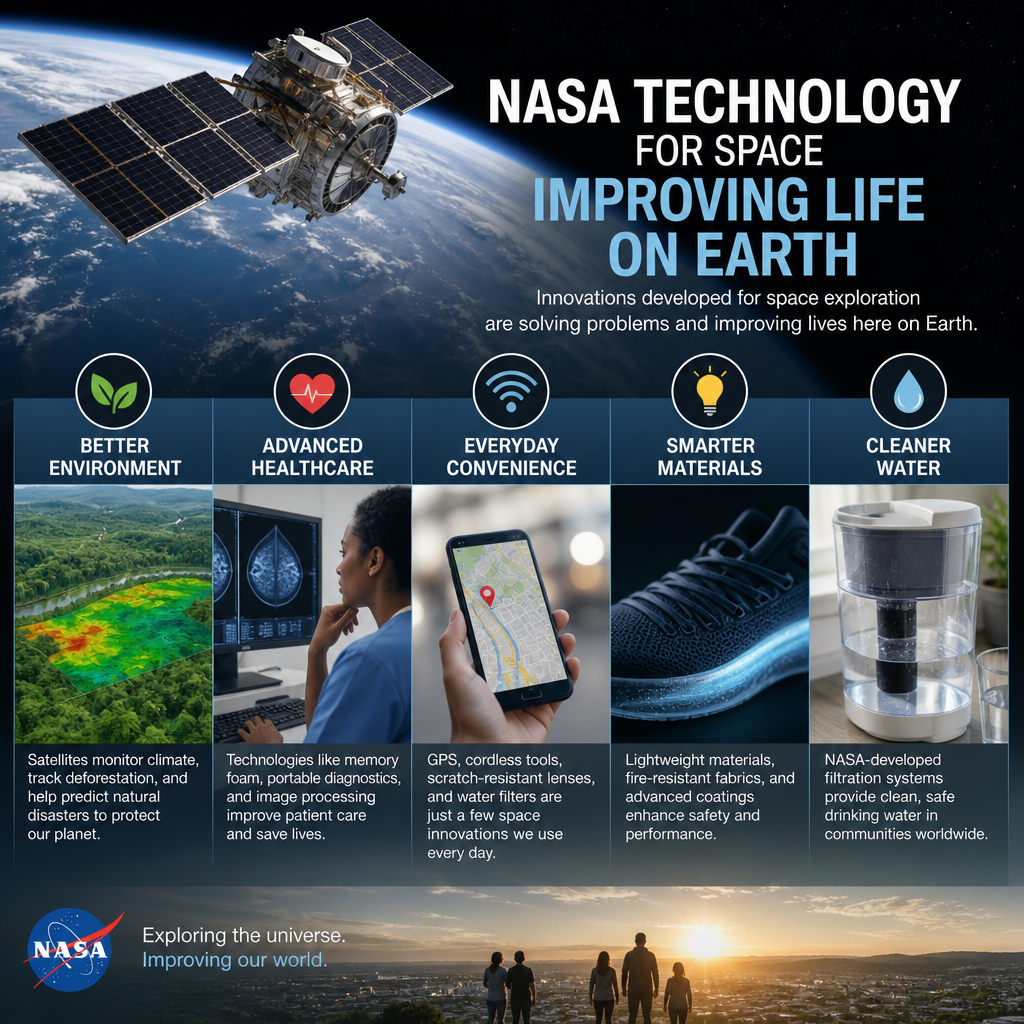
NASA technology is often associated with rockets, astronauts, and missions beyond our planet, but some of its most valuable innovations are making everyday life safer, healthier, and more efficient right here on Earth. From medical devices to improved building materials, NASA technology developed for space has found practical uses in industries that affect millions of people.
What makes this especially interesting is that many of these advances were not invented for consumer convenience. They were designed to solve extreme problems: how to keep humans alive in space, how to communicate across vast distances, and how to protect equipment in harsh environments. Those same solutions now help doctors, engineers, athletes, and commuters solve real-world challenges at home.
Anúncios
Why NASA Technology Developed for Space Often Works on Earth
Space is one of the most demanding environments imaginable. Any tool or system used there must be lightweight, durable, energy-efficient, and highly reliable. That pressure to perform leads to innovations that are often useful in ordinary life too.
Space Constraints Drive Better Design
When engineers build for space, they must think carefully about:
Anúncios
- Weight reduction
- Energy conservation
- Durability under extreme temperatures
- Reliability with little or no maintenance
- Compact, efficient performance
Those priorities frequently result in products that are better engineered than typical alternatives. That is why NASA spinoff technologies often show up in medicine, transportation, public safety, and consumer products.
Innovation Benefits Multiple Industries
A single NASA breakthrough can be adapted across different fields. For example, a material created to protect astronauts may later help firefighters, patients, or construction workers. The result is a ripple effect: research designed for exploration becomes a source of broader social and economic value.
Medical Advancements Inspired by Space Research
One of the most important ways NASA technology developed for space helps people is through healthcare. Space medicine has led to technologies that improve diagnosis, monitoring, and treatment on Earth.
Infrared Thermometers and Non-Contact Health Monitoring
NASA supported research that helped advance infrared temperature measurement. Today, non-contact thermometers are commonly used in hospitals, clinics, and homes because they can measure body temperature quickly and reduce the risk of contamination.
This is especially useful when:
- Checking temperatures in children
- Monitoring contagious illnesses
- Screening patients efficiently in medical settings
Digital Imaging Improvements
NASA’s work in image processing helped improve methods used to sharpen digital images. Similar techniques have been applied in medical imaging, making it easier for clinicians to analyze scans and identify abnormalities.
In practical terms, that means better tools for:
- Detecting tumors
- Analyzing X-rays and MRIs
- Improving image clarity in diagnostic systems
Artificial Limbs and Mobility Solutions
Space research has contributed to advances in robotics, lightweight materials, and precision engineering, all of which influence prosthetics. Modern prosthetic limbs can be more responsive, more comfortable, and more functional thanks in part to technologies refined through aerospace work.
Water Purification for Medical and Emergency Use
Astronauts need clean water in space, so NASA has helped develop efficient water filtration and purification systems. These technologies have found uses in disaster relief, remote communities, and medical environments where clean water is essential.
Materials That Protect People and Improve Products
Many people encounter NASA technology without realizing it because the innovation is built into everyday materials. These products are often more durable, more comfortable, or safer because they originated in space research.
Memory Foam
Memory foam is one of the most familiar examples of NASA technology developed for space. Originally created to improve cushioning and pressure absorption in aircraft seating, the material later became widely used in mattresses, pillows, helmets, and protective equipment.
Its benefits include:
- Pressure relief
- Better support
- Shock absorption
- Improved comfort during long periods of use
Scratch-Resistant Lenses and Coatings
NASA needed durable coatings to protect equipment and astronaut helmets. Similar coating technologies now help make eyeglass lenses, face shields, and protective visors more resistant to scratching and wear.
This matters in daily life because it extends the life of products and improves visibility and safety.
Heat-Resistant Materials
Materials created to withstand the intense heat of space operations have influenced products used in firefighting, industrial work, and insulation. These materials help protect people and equipment when temperatures rise.
Examples include:
- Fire-resistant clothing
- Thermal insulation systems
- Protective coatings for machinery
Transportation and Safety Improvements
NASA research has also helped make travel safer and more efficient. The same engineering principles that support spacecraft can improve vehicles, aircraft, and roadway systems.
Better Tire Technology
One well-known example is the use of NASA-inspired materials in tire design. Strong, lightweight components and advanced rubber compounds have helped improve traction, wear resistance, and performance in certain applications.
This kind of improvement can support:
- Longer-lasting tires
- Better road handling
- Increased safety in difficult conditions
Aviation Safety and Efficiency
NASA has long contributed to aeronautics research, helping engineers improve aircraft design, fuel efficiency, and flight control systems. These advances matter because air travel depends on precision, safety, and efficiency.
NASA’s work has influenced:
- Aircraft wing design
- Noise reduction
- Air traffic management research
- Safety testing and simulation tools
Firefighting Equipment
Heat-resistant technologies from NASA research have helped improve gear used by firefighters. Better protective materials allow first responders to operate more safely in dangerous environments.
That can mean:
- More effective thermal protection
- Better mobility in heavy gear
- Greater confidence in extreme conditions
Clean Water and Environmental Solutions
Clean water is one of the most vital resources on Earth, and NASA technology developed for space has helped improve how water is filtered, monitored, and recycled.
Advanced Filtration Systems
In space, water must be reused and purified efficiently. NASA’s research into filtration, recycling, and contamination control has influenced systems used on Earth in:
- Emergency response
- Rural water treatment
- Portable purification units
- Military and humanitarian operations
Monitoring Environmental Conditions
Satellites and remote sensing tools developed through NASA research help scientists monitor Earth’s atmosphere, oceans, forests, and weather patterns. While these are not consumer products, they improve life on Earth by supporting:
- Storm tracking
- Climate research
- Drought monitoring
- Disaster response planning
This is one of the clearest examples of space technology delivering public value at a global scale.
Consumer Products You May Already Use
Some of the most surprising examples of NASA spinoff technologies are hiding in everyday items. People often use them without knowing they came from space research.
Cordless Tools
The technology behind battery-powered tools used in space missions contributed to improvements in cordless drills and other handheld equipment. These tools are now common in homes and construction sites.
Thermal Blankets
Emergency blankets and space blankets reflect body heat efficiently. Their design is related to materials and concepts used to regulate temperature in spacecraft. They are now useful in emergency kits, camping, and disaster relief.
Smoke Detectors
NASA research has played a role in improving fire detection and monitoring systems used in homes and businesses. Early warning systems save lives by giving people time to escape dangerous conditions.
Baby Formula and Nutritional Research
NASA’s work on understanding nutrition in isolated, controlled environments helped inform research related to food science and supplementation. One widely known example is the development of DHA and ARA supplements used in some infant formulas, based on nutrient research linked to long-duration space travel.
Agriculture and Food Technology
Space missions require reliable food systems, and that has led to advances that can also benefit farmers and food manufacturers on Earth.
LED Lighting for Plant Growth
NASA’s research into plant growth in space contributed to the use of LED lighting in controlled agriculture. These lighting systems help growers produce food in indoor farms, greenhouses, and vertical farms.
Benefits include:
- Lower energy use
- Better control over plant growth
- Year-round production
- Improved crop consistency
Food Preservation and Packaging
Keeping food safe and nutritious over long missions led to better preservation methods and packaging strategies. Similar ideas are now used in food logistics and emergency food supplies.
Communication and Remote Monitoring
Space exploration depends on advanced communication systems, sensors, and data analysis. Those technologies now support remote monitoring in many fields.
Telemedicine and Remote Care
NASA helped develop systems that allow health data to be collected and transmitted over long distances. These principles support telemedicine, remote diagnostics, and patient monitoring, especially in rural or underserved areas.
Sensors and Wearable Technology
The need to monitor astronauts led to compact sensors that measure vital signs and environmental conditions. Today, similar technology appears in:
- Fitness trackers
- Heart monitors
- Sleep tracking devices
- Occupational safety gear
These tools help people make informed decisions about their health and safety.
The Economic Value of NASA Spinoffs
The benefits of NASA technology developed for space go beyond convenience. They support jobs, innovation, and business growth.
Research Turns Into Real-World Markets
When aerospace research becomes commercially useful, startups and established companies can build products around it. That creates opportunities in manufacturing, healthcare, consumer goods, and clean energy.
Public Investment Can Lead to Broad Benefits
NASA’s mission is exploration, but its research often spreads into the private sector. That means public investment in science can produce practical returns that improve daily life, strengthen industries, and encourage new discoveries.
What Makes NASA Technology Different from Ordinary Innovation
Many organizations innovate, but NASA faces unusually strict requirements. The technology must perform in a place where failure is not an option. That standard creates a unique path to innovation.
Key Characteristics of NASA-Driven Innovation
NASA technology often stands out because it is:
- Highly reliable
It must work in mission-critical conditions. - Efficient
Spacecraft cannot waste space, weight, or power. - Adaptable
Solutions often translate well to multiple industries. - Tested under pressure
Extreme conditions reveal weaknesses early.
That combination makes NASA-developed solutions especially valuable when adapted to life on Earth.
How to Recognize Space-Inspired Technology in Daily Life
You may be using NASA-inspired products right now without noticing. If a product is lightweight, durable, highly efficient, or designed for extreme conditions, there is a chance it has roots in aerospace research.
Look for technologies used in:
- Medical equipment
- Protective clothing
- Home insulation
- Sports and fitness gear
- Water filtration systems
- Electronics and sensors
The connection between space and everyday life is often closer than people expect.
Frequently Asked Questions
1. What is NASA technology developed for space?
NASA technology developed for space refers to tools, materials, systems, and methods created to solve problems in space missions. Many of these technologies are later adapted for use on Earth in medicine, transportation, consumer products, and environmental monitoring.
2. Why do space technologies often work well on Earth?
Space technologies must meet extremely high standards for reliability, efficiency, and durability. Because they are built to function in harsh conditions, they often perform very well in everyday environments too.
3. What are some common examples of NASA spinoff technologies?
Common examples include memory foam, infrared thermometers, scratch-resistant coatings, cordless tools, water purification systems, and certain fire-resistant materials. These products all trace part of their development to aerospace research.
4. How does NASA technology help medicine?
NASA technology has contributed to medical imaging, non-contact temperature measurement, prosthetics, telemedicine, and health monitoring sensors. These tools improve diagnosis, treatment, and patient comfort.
5. Does NASA only create technology for astronauts?
No. While the primary goal is often space exploration, NASA also conducts aeronautics and engineering research that benefits people on Earth. Many of its innovations are transferred to other industries through commercial partnerships and spinoff applications.
Official Resources
- NASA Spinoff
- NASA Technology Transfer Program
- NASA Earth Science Division
- U.S. National Institutes of Health (NIH)
- U.S. Department of Transportation
Conclusion
NASA technology developed for space has had a lasting impact far beyond the launch pad. What begins as a solution for astronauts often becomes a practical tool for doctors, firefighters, engineers, commuters, farmers, and families. From memory foam and infrared thermometers to advanced filtration systems and environmental monitoring, these innovations show how exploration can improve daily life in meaningful ways.
The real value of NASA’s work is not only in reaching the Moon, Mars, or deep space. It is also in the technologies that return home and solve problems on Earth. That makes space research more than a scientific achievement—it becomes a source of better health, greater safety, and smarter design across many industries.
As technology continues to evolve, the connection between space exploration and life on Earth will likely grow even stronger. Learning how these innovations work can help us better appreciate the role of science in shaping a safer, more efficient future.