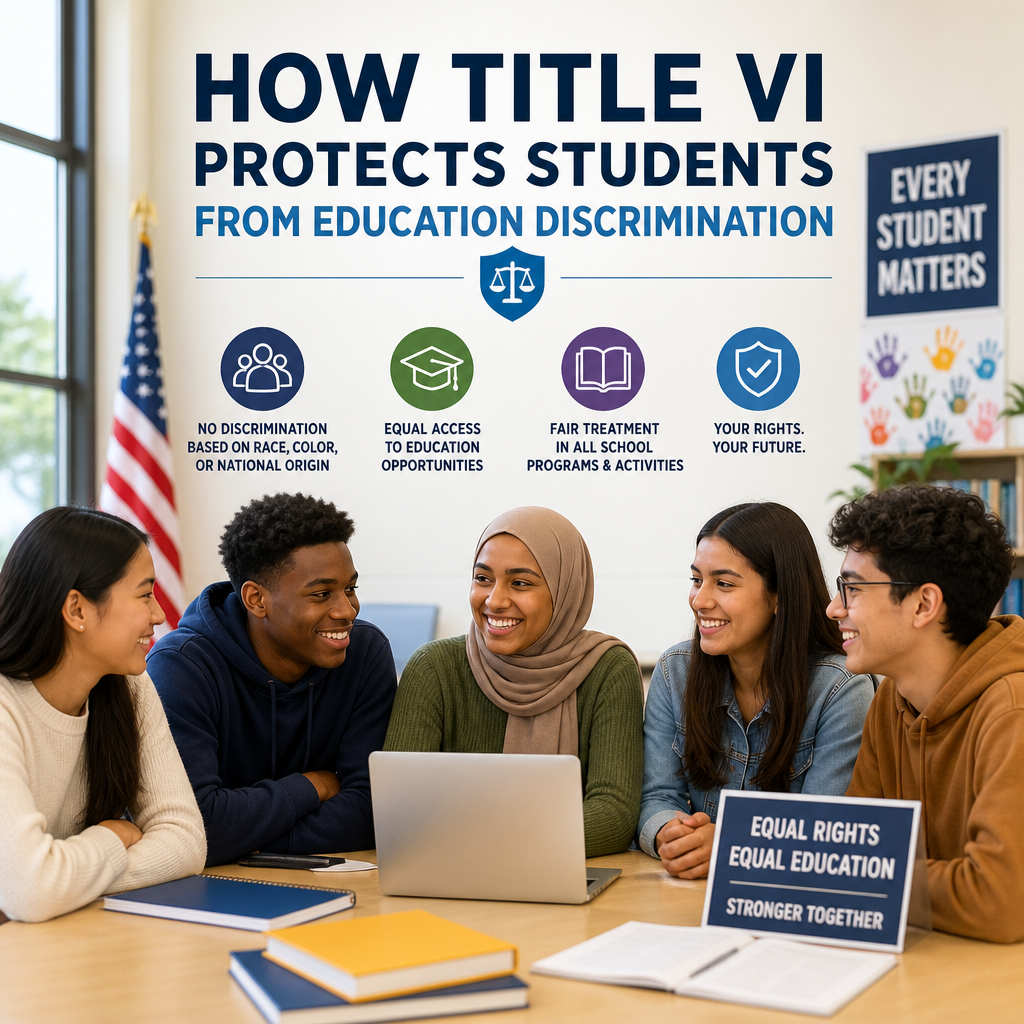
How Title VI Protects Students From Education Discrimination
Title VI discrimination helps ensure students are treated fairly in schools, colleges, and education programs that receive federal funding. By protecting against bias based on race, color, or national origin, the law supports equal access to learning, opportunity, and safety for every student.
By: Jennifer Collins on August 1, 2026
Anúncios
Education should open doors for every student, not close them because of race, color, or national origin. That is the core promise behind Title VI, a federal civil rights law that helps protect students from discrimination in education. Whether a student is facing unfair treatment in the classroom, unequal access to school programs, or harassment tied to identity, Title VI plays a major role in ensuring schools remain safe and equitable learning environments.
Understanding how Title VI works matters for students, parents, educators, and school leaders. It helps families recognize when conduct may cross the line, and it gives schools a framework for preventing discrimination before it harms a student’s learning experience. In this article, we’ll break down what Title VI covers, how it applies in schools, what discrimination can look like, and what steps to take if a student’s rights are violated.
Anúncios
What Is Title VI?
Title VI is part of the Civil Rights Act of 1964. It prohibits discrimination on the basis of race, color, or national origin in any program or activity receiving federal financial assistance. Because most schools, colleges, and education programs receive federal funding, Title VI applies widely across the education system.
In practical terms, Title VI means schools cannot treat students differently because of who they are or where they come from. They must provide equal access to educational opportunities, school activities, and resources.
Anúncios
Why Title VI Matters in Education
Title VI matters because discrimination can affect nearly every part of a student’s school experience:
classroom participation
grading and discipline
access to advanced classes
extracurricular activities
language access and support services
safety from harassment and hostile environments
Even when discrimination is subtle, it can still harm a student’s ability to learn and succeed. Title VI exists to prevent schools from allowing those barriers to persist.
How Title VI Protects Students From Discrimination in Education
The phrase How Title VI Protects Students From Discrimination in Education is really about equal access. Title VI requires schools to avoid discriminatory practices and take action when their policies or responses create unequal treatment.
Direct Discrimination
Direct discrimination happens when a student is treated worse because of race, color, or national origin. Examples may include:
a teacher ignoring one student’s participation while calling on others
a coach excluding students from a team for discriminatory reasons
a school denying access to a program based on stereotypes
harsher discipline for students of a certain racial background
These actions may violate Title VI if they are based on protected characteristics rather than legitimate educational reasons.
Disparate Impact and School Policies
Sometimes a policy appears neutral but affects some students more than others. For example, a rule that seems fair on its face might create unequal outcomes for students from certain racial or national origin groups.
In education, this can happen with:
disciplinary policies
attendance rules
dress code enforcement
testing and placement procedures
language access practices
Schools should review policies carefully to make sure they do not create unnecessary barriers or unequal treatment.
Harassment and Hostile Learning Environments
Title VI can also come into play when a student is subjected to racial harassment or a hostile environment. If bullying, slurs, threats, or repeated discriminatory conduct become severe enough to interfere with a student’s education, the school may have a legal duty to respond.
A school cannot simply ignore repeated harassment if it knows about the problem and has the ability to act. Students have the right to learn in an environment free from abuse and intimidation tied to protected characteristics.
Schools and Programs Covered by Title VI
Title VI applies to a broad range of educational institutions and activities that receive federal funds. That usually includes:
public K–12 schools
public charter schools
school districts
colleges and universities
vocational and technical programs
school lunch and transportation programs
after-school programs funded by federal dollars
Private schools may also be affected if they receive federal financial assistance through specific programs. The key question is whether the school or program receives federal support.
Common Examples of Title VI Violations in Schools
Discrimination in schools does not always look obvious. Often, it shows up in everyday decisions that affect student experience and opportunity. Here are some common examples.
Unequal Discipline
One of the most discussed issues in education is unequal discipline. If students from certain racial groups are punished more harshly for similar behavior, that can raise Title VI concerns.
Examples include:
suspensions for minor infractions while others receive warnings
selective enforcement of classroom rules
referral to administrators based on stereotypes
punishment without meaningful investigation
Schools should apply discipline consistently and fairly, with attention to context and due process.
Discriminatory Admissions or Program Access
Title VI also protects students from being excluded from programs because of race, color, or national origin. This can affect:
gifted and talented programs
advanced placement classes
magnet schools
extracurricular clubs
honors opportunities
If students are steered away from opportunities based on assumptions rather than objective criteria, the school may be engaging in discriminatory practices.
Language-Based Barriers
National origin discrimination can include failing to provide meaningful language access for students and parents with limited English proficiency. Schools may need to offer translation or interpretation services so families can participate in school life and understand important communications.
Examples of problems include:
sending critical notices only in English when families need another language
failing to provide interpreters for meetings about student issues
misclassifying English learners
denying support services that help students access instruction
Retaliation
Students and families should be able to report discrimination without fear of punishment. Retaliation against someone who files a complaint or participates in an investigation can also violate civil rights protections.
Retaliation may look like:
lowering a student’s participation grade after a complaint
increasing scrutiny on a family that reports bias
isolating a student from activities after raising concerns
What Schools Are Required to Do Under Title VI
Schools cannot just avoid obvious discrimination. They also need systems that reduce risk, identify concerns, and respond appropriately when issues arise.
Prevent Discrimination
Schools should create and enforce policies that prohibit discrimination and harassment. That includes training staff to recognize bias and understand reporting procedures.
A strong prevention approach may include:
clear anti-discrimination policies
staff training on civil rights obligations
student conduct rules applied consistently
accessible complaint procedures
communication with families in understandable languages
Respond Promptly and Effectively
When a school learns about possible discrimination, it should investigate and take appropriate action. Delays or dismissive responses can make the harm worse.
An effective response often includes:
documenting the complaint
speaking with the student and witnesses
reviewing relevant records
stopping ongoing harassment or unequal treatment
applying corrective action when necessary
following up to ensure the problem does not continue
Ensure Equal Access
Title VI also supports equal educational opportunity. That means schools should not create unnecessary barriers to classes, services, activities, or school communication.
Equal access may require:
interpreter services
translated notices
culturally responsive practices
fair placement procedures
equal access to disciplinary hearings and support services
How Families and Students Can Recognize a Possible Title VI Issue
Not every unfair experience is legally discrimination, but certain signs may indicate a possible Title VI concern. Families should pay attention to patterns, not just isolated incidents.
Warning Signs to Watch For
a student is repeatedly singled out compared with peers
disciplinary consequences seem harsher than those given to others
comments or jokes target race, color, or national origin
school staff ignore or minimize complaints of bias
families cannot access important information because of language barriers
a student is discouraged from joining programs without a valid reason
Questions to Ask
If you suspect discrimination, ask:
Was the student treated differently than others in similar situations?
Did the school follow its own policies?
Was there a protected characteristic involved?
Did the school respond appropriately after learning about the issue?
Has the same pattern happened more than once?
These questions help identify whether a situation is a one-time mistake or part of a broader pattern.
What to Do If You Suspect Discrimination
If a student may be facing discrimination, quick action can help preserve evidence and push the school to respond.
Step 1: Document Everything
Keep detailed notes about incidents, including:
dates and times
names of staff, students, or witnesses involved
what was said or done
how the student was affected
any emails, texts, letters, or screenshots
Documentation can help show patterns and support a complaint.
Step 2: Report the Issue to the School
Many concerns can be addressed through the school’s internal complaint process. Report the issue in writing if possible and ask for a copy of the school’s anti-discrimination policy.
When communicating, be clear and factual. Describe what happened, why you believe it may be discriminatory, and what resolution you want.
Step 3: Follow Up
If the school does not respond or the problem continues, follow up in writing. Keep copies of all correspondence. Persistence matters, especially when the issue involves ongoing harm.
Step 4: Consider Filing a Civil Rights Complaint
If internal reporting does not resolve the issue, families may file a complaint with the U.S. Department of Education’s Office for Civil Rights (OCR). OCR investigates complaints involving discrimination in schools that receive federal funding.
A complaint generally should be filed within a set timeframe, so it is important not to wait too long.
Step 5: Seek Outside Support
Depending on the situation, families may also want to speak with:
a civil rights attorney
a student rights organization
a local education advocate
a community legal aid group
Outside help can be especially useful when the issue is complex or the school has not responded adequately.
How Educators Can Support Title VI Compliance
Title VI is not just about avoiding complaints. It is about building a school culture where every student can thrive.
Best Practices for Schools
Schools can reduce Title VI risk and improve student outcomes by:
reviewing discipline data for disparities
training staff on implicit bias and civil rights obligations
using clear, objective criteria for placement and discipline
providing language access services
addressing harassment quickly
involving families in a respectful and accessible way
Building Trust With Students and Families
Students are more likely to report problems when they trust adults will listen. Schools can strengthen that trust by:
explaining rights in plain language
making reporting channels easy to find
protecting students from retaliation
following up with families promptly
showing consistency in policy enforcement
Title VI and Other Student Protections
Title VI is an important civil rights law, but it is not the only one that protects students. Depending on the facts, other laws may also apply, including:
the Equal Protection Clause
Title IX, which prohibits sex discrimination
Section 504 of the Rehabilitation Act
the Americans with Disabilities Act
state anti-discrimination laws
Understanding how these laws work together can help families and schools address student concerns more effectively.
Frequently Asked Questions
What does Title VI prohibit in schools?
Title VI prohibits discrimination based on race, color, or national origin in schools and education programs that receive federal funding. It covers unequal treatment, discriminatory discipline, harassment, and policies that unlawfully limit access to educational opportunities.
Does Title VI apply to public schools?
Yes. Title VI applies to public schools, school districts, colleges, and many other educational programs that receive federal financial assistance. Because most public schools receive federal funds, they are generally covered by Title VI.
Can Title VI protect students from racial harassment?
Yes. If racial harassment is severe, persistent, or creates a hostile environment that interferes with a student’s education, Title VI may require the school to respond. Schools cannot ignore known harassment and must take reasonable steps to address it.
What should I do if my child is treated unfairly at school?
Start by documenting the incidents and reporting the issue to the school in writing. Ask for the school’s complaint process and keep copies of all communications. If the problem is not resolved, you can consider filing a complaint with the U.S. Department of Education’s Office for Civil Rights.
Can language access issues be covered under Title VI?
Yes. National origin discrimination can include failing to provide meaningful language access for students and parents with limited English proficiency. Schools may need translation or interpretation services so families can understand important information and participate fully in school life.
Title VI remains one of the most important federal protections for students in American education. It helps ensure that race, color, and national origin do not determine who gets access to learning opportunities, fair discipline, or a safe classroom environment. When schools follow Title VI, they do more than comply with the law—they create conditions where students can focus on learning instead of defending their right to be treated fairly.
For families, understanding how Title VI works can make it easier to spot discrimination early and take action with confidence. For schools, it serves as a reminder that equity is not automatic; it requires clear policies, trained staff, and a genuine commitment to student dignity.
If you believe a student may be facing discrimination, do not ignore it. Document what is happening, report concerns promptly, and use available civil rights resources. Knowing your rights is often the first step toward protecting them.
Jennifer, M.Ed., holds a degree in Higher Education Administration, with
a focus on U.S. college financial aid, admissions policy, and student
support systems. She researches and writes about scholarships, federal
aid programs, and the college planning process to help students and
families make informed, well-supported decisions.