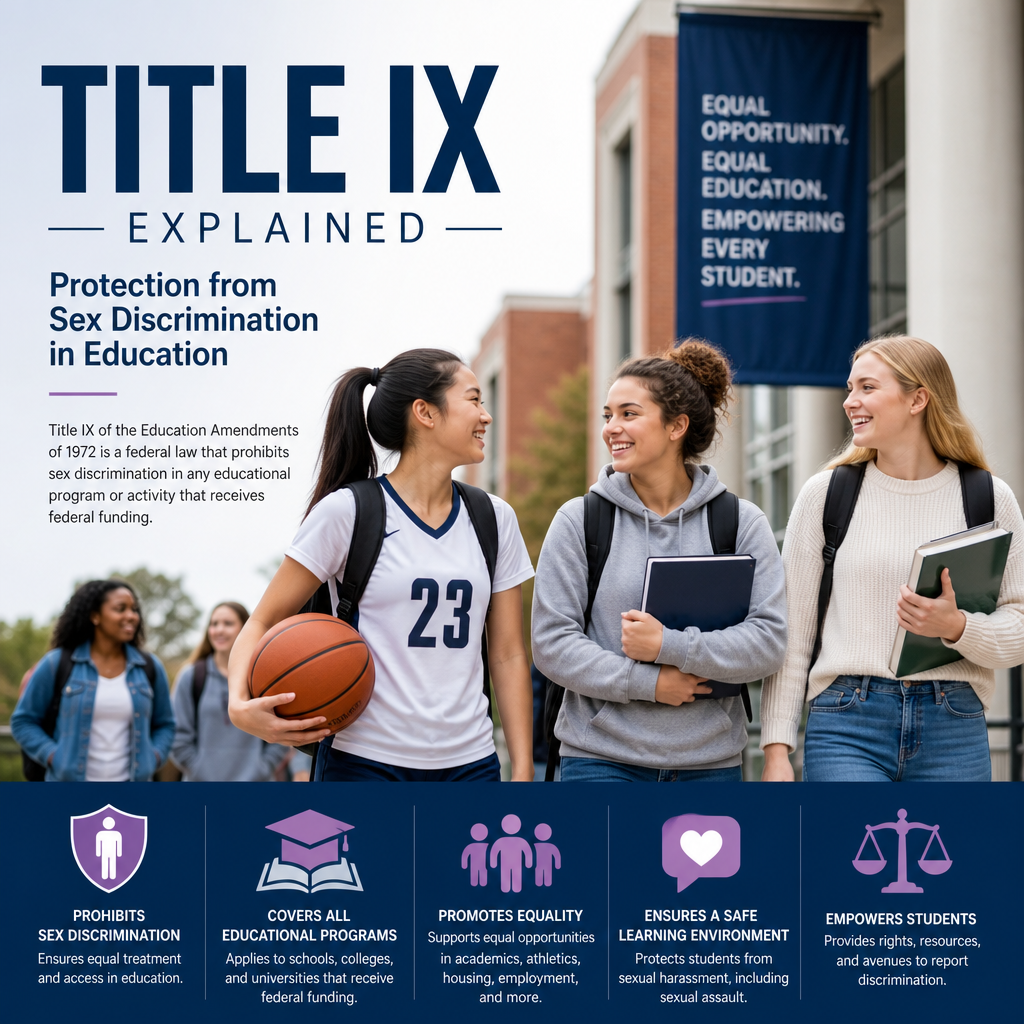
Title IX Explained: Protection from Sex Discrimination in Education
Title IX explained in simple terms means students and employees are protected from sex discrimination in education, whether it involves admissions, athletics, harassment, or pregnancy. This important law helps ensure schools and colleges that receive federal funding provide a fair, safe environment for everyone.
By: Jennifer Collins on August 1, 2026
Anúncios
Title IX is one of the most important civil rights protections in the United States education system. If you’ve ever wondered what Title IX explained really means in practical terms, the answer is simple: it helps protect students and employees from sex discrimination in schools, colleges, and other education programs that receive federal funding. That protection can apply to admissions, athletics, harassment, pregnancy, sexual violence, and other aspects of campus and school life.
Understanding Title IX matters because it affects real people every day. Students should be able to learn in a fair environment, participate in sports, and report concerns without fear of retaliation. Parents, educators, and school administrators also benefit from knowing how the law works and what obligations schools have under it.
Anúncios
What Is Title IX?
Title IX is a federal civil rights law passed in 1972 as part of the Education Amendments. Its core purpose is straightforward: no person should be excluded from participation in, denied the benefits of, or subjected to discrimination under any education program or activity receiving federal financial assistance because of sex.
In plain language, Title IX prohibits sex-based discrimination in education. That includes public schools, colleges, universities, and many private institutions that receive federal funds.
Anúncios
Where Title IX Applies
Title IX covers a wide range of educational settings, including:
K-12 public schools
Public colleges and universities
Private schools and universities that receive federal funding
Career and technical education programs
School-sponsored activities and athletics
Some off-campus programs if they are part of the school’s education program or activity
This is important because Title IX is not limited to classroom instruction. It can apply to almost any school-related program or activity connected to a federally funded institution.
Title IX Explained: What Counts as Sex Discrimination?
Sex discrimination under Title IX can take many forms. It is not limited to obvious unequal treatment. Schools may violate Title IX when they treat students differently based on sex or fail to respond appropriately to discrimination.
Common Examples of Title IX Violations
Some of the most common issues include:
Unequal access to educational opportunities
Sexual harassment
Sexual assault and other forms of sexual violence
Pregnancy discrimination
Retaliation against someone who reports discrimination
Unequal athletic opportunities
Restrictive policies based on sex stereotypes
For example, if a school allows repeated sexual harassment to continue without a meaningful response, that may create a hostile environment and violate Title IX. Likewise, if a student is denied accommodations related to pregnancy or childbirth, the school may be acting unlawfully.
Who Is Protected Under Title IX?
Title IX protects students, applicants, and employees in educational settings covered by the law. The protections extend to people of all sexes, including women, men, and nonbinary individuals, depending on the facts and the school’s responsibilities under federal guidance and law.
Students
Students are the primary group protected by Title IX. This includes:
Elementary and secondary school students
College and university students
Graduate and professional students
Students participating in athletics, clubs, and extracurricular programs
Employees and Applicants
Title IX can also protect school employees and job applicants in education programs. That means faculty, staff, coaches, and other employees may have rights if they experience sex discrimination in a school setting.
How Title IX Works in Education
Schools that receive federal funding must have procedures for addressing Title IX concerns. These procedures usually include a Title IX coordinator, reporting options, investigation processes, and anti-retaliation protections.
The Role of the Title IX Coordinator
Most covered schools are required to designate at least one Title IX coordinator. This person oversees compliance, handles complaints, and helps connect people with resources.
A Title IX coordinator may:
Receive reports of sex discrimination
Explain school policies and complaint procedures
Coordinate supportive measures
Help ensure the school responds promptly and fairly
Track patterns or systemic problems
If a student or employee is unsure where to start, the Title IX coordinator is often the first point of contact.
Reporting and Complaint Processes
Schools usually have internal processes for reporting discrimination or harassment. These processes vary, but many include:
Filing a report with the Title IX office or another designated school official
Requesting supportive measures, such as schedule changes or no-contact directives
Participating in an investigation or informal resolution process, if appropriate
Receiving a decision and the right to appeal in some cases
It’s important to read the school’s policy carefully because procedures can differ from one institution to another.
Title IX and Sexual Harassment
Sexual harassment is one of the most widely discussed Title IX issues. In the education context, it can include unwelcome conduct that is severe, pervasive, and objectively offensive enough to deny a person equal access to education.
Types of Harassment Covered
Sexual harassment may include:
Unwanted sexual comments or jokes
Repeated requests for sexual favors
Touching or other physical conduct
Harassment based on gender stereotypes
Online harassment connected to the school environment
A single incident may also raise serious Title IX concerns if it is severe enough, such as sexual assault or a serious physical threat.
Hostile Environment Concerns
If harassment becomes so serious that it interferes with a student’s ability to learn, attend class, or fully participate in school, the school may be responsible for addressing a hostile environment. Schools cannot simply ignore reports or leave students to deal with the problem alone.
Title IX and Athletic Opportunities
Many people first learned about Title IX through sports. The law helped transform school athletics by requiring fair opportunities for students of all sexes.
What Equal Opportunity Means in Sports
Equal opportunity does not always mean identical programs. It means schools must provide fair access to athletic participation and benefits, such as:
Teams and participation opportunities
Coaching quality
Practice and competition facilities
Equipment and supplies
Travel and scheduling
Publicity and support services
Schools are not required to offer the exact same sports for every group, but they must avoid sex-based disparities that deny meaningful participation.
Why Athletics Still Matter
Sports can shape student development, scholarships, leadership skills, and school engagement. Title IX helps ensure that athletic programs are open and equitable rather than limited by sex-based assumptions.
Title IX and Pregnancy
Pregnancy discrimination is another major part of Title IX. Schools cannot treat a student unfairly because she is pregnant, has given birth, or is experiencing related medical conditions.
What Schools Must Do
Covered schools generally must:
Allow students to continue participating in classes and activities
Excuse medically necessary absences
Provide reasonable adjustments when needed
Treat pregnancy-related conditions the same as other temporary medical conditions
A school cannot force a pregnant student to switch programs, drop classes, or leave sports simply because she is pregnant.
Practical Example
If a high school student needs time away after childbirth, the school should work with her on absences, make-up work, and any needed academic adjustments. The goal is to keep the student connected to education, not push her out.
Title IX and Retaliation
Retaliation is prohibited under Title IX. A school cannot punish someone for filing a complaint, participating in an investigation, or opposing sex discrimination.
What Retaliation Can Look Like
Retaliation may include:
Lower grades assigned in bad faith
Unjustified discipline
Exclusion from activities
Threats or intimidation
Social or administrative pressure to withdraw a complaint
This protection matters because people are more likely to report problems when they know they are protected from backlash.
Title IX Investigations and Due Process
When a Title IX complaint is filed, schools are expected to follow their policies and give both parties a fair process. The exact procedures depend on the institution and current federal requirements, but fairness, notice, and an opportunity to respond remain central concerns.
What to Expect in an Investigation
A typical school investigation may involve:
Written notice of allegations
Interviews with the complainant and respondent
Review of emails, texts, and other evidence
Witness statements
A written determination or outcome
Why Procedure Matters
A fair process helps protect everyone involved. The complainant deserves a serious response, and the respondent deserves a chance to understand the allegations and respond. Schools should avoid rushing, ignoring evidence, or applying one-size-fits-all assumptions.
Supportive Measures Under Title IX
Supportive measures are steps schools can take to help protect students and restore equal access to education while a complaint is being reviewed.
Examples of Supportive Measures
Supportive measures may include:
Counseling referrals
Academic extensions
Classroom changes
Housing adjustments
Schedule modifications
No-contact directives
Work or activity changes
These measures are often available even if a formal complaint is not filed. They are meant to reduce harm and support continued participation in education.
Title IX Explained: Why It Still Matters Today
Title IX has had a major impact on education, but the law remains relevant because discrimination does not disappear on its own. Students still face harassment, unequal treatment, and barriers to participation. Schools must stay aware of their legal obligations and respond appropriately.
The Real-World Impact
Title IX affects everyday school experiences, such as:
Whether a student feels safe in class
Whether a team has equal resources
Whether a pregnant student can continue her education
Whether a harassment report is taken seriously
Whether employees can work free from sex-based discrimination
When schools follow Title IX well, students are more likely to stay engaged, succeed academically, and trust the institution.
How to Respond If You Think Title IX Was Violated
If you believe sex discrimination has occurred, it helps to act quickly and document what happened.
Practical Steps to Take
Save emails, texts, screenshots, and other evidence.
Write down dates, times, locations, and names of witnesses.
Review the school’s Title IX policy.
Report the issue to the Title IX coordinator or another designated official.
Ask about supportive measures.
Consider whether outside help may be needed if the school does not respond appropriately.
When to Seek Additional Help
If the situation involves serious harassment, assault, repeated retaliation, or a school that refuses to act, it may be wise to consult a qualified attorney or advocacy organization familiar with education rights.
Frequently Asked Questions
1. What is Title IX in simple terms?
Title IX is a federal law that prohibits sex discrimination in education programs and activities that receive federal funding. It applies to many schools, colleges, and universities and protects students and employees from unfair treatment based on sex.
2. Does Title IX only apply to women?
No. Title IX protects people of all sexes. While the law historically played a major role in expanding opportunities for women and girls, it applies broadly to anyone affected by sex discrimination in a covered education program.
3. Does Title IX cover sexual harassment?
Yes. Sexual harassment can violate Title IX when it creates a hostile environment or otherwise denies a person equal access to education. Schools are expected to respond promptly and appropriately to reports of harassment and related misconduct.
4. Can a school punish someone for filing a Title IX complaint?
No. Retaliation is prohibited. A school cannot punish, threaten, or otherwise disadvantage someone because they reported discrimination, participated in an investigation, or opposed a Title IX violation.
5. Does Title IX protect pregnant students?
Yes. Title IX protects students from pregnancy discrimination. Schools must treat pregnancy and related conditions fairly and provide access to education, including reasonable adjustments and excused medically necessary absences when appropriate.
Title IX explained in practical terms is about fairness, access, and safety in education. It gives students and employees a legal protection against sex discrimination and requires schools to take complaints seriously. Whether the issue involves harassment, athletics, pregnancy, retaliation, or unequal opportunities, Title IX is designed to help ensure that education remains open and equitable for everyone.
For students and families, knowing the basics of Title IX can make a major difference. It can help you recognize warning signs, ask for supportive measures, and understand what a school should do in response. For educators and administrators, it serves as a reminder that compliance is not just a legal requirement—it is part of creating a respectful learning environment where all students can thrive.
If you are navigating a potential Title IX issue, start by reviewing your school’s policy, documenting the facts, and using the reporting channels available to you. The more you understand your rights, the better prepared you are to protect them.
Jennifer, M.Ed., holds a degree in Higher Education Administration, with
a focus on U.S. college financial aid, admissions policy, and student
support systems. She researches and writes about scholarships, federal
aid programs, and the college planning process to help students and
families make informed, well-supported decisions.