Unemployment Insurance Benefits: Eligibility and State Application Process
Anúncios
Losing a job can be stressful, but unemployment insurance benefits can provide temporary financial support while you look for new work. If you recently lost your job or had your hours cut, understanding how unemployment insurance works can help you act quickly and avoid missing important deadlines.
Every state runs its own unemployment program, but the basic idea is the same: eligible workers receive weekly payments for a limited time while they search for new employment. The details vary by state, so knowing the eligibility rules and the application process can save time and reduce confusion.
Anúncios
What Are Unemployment Insurance Benefits?
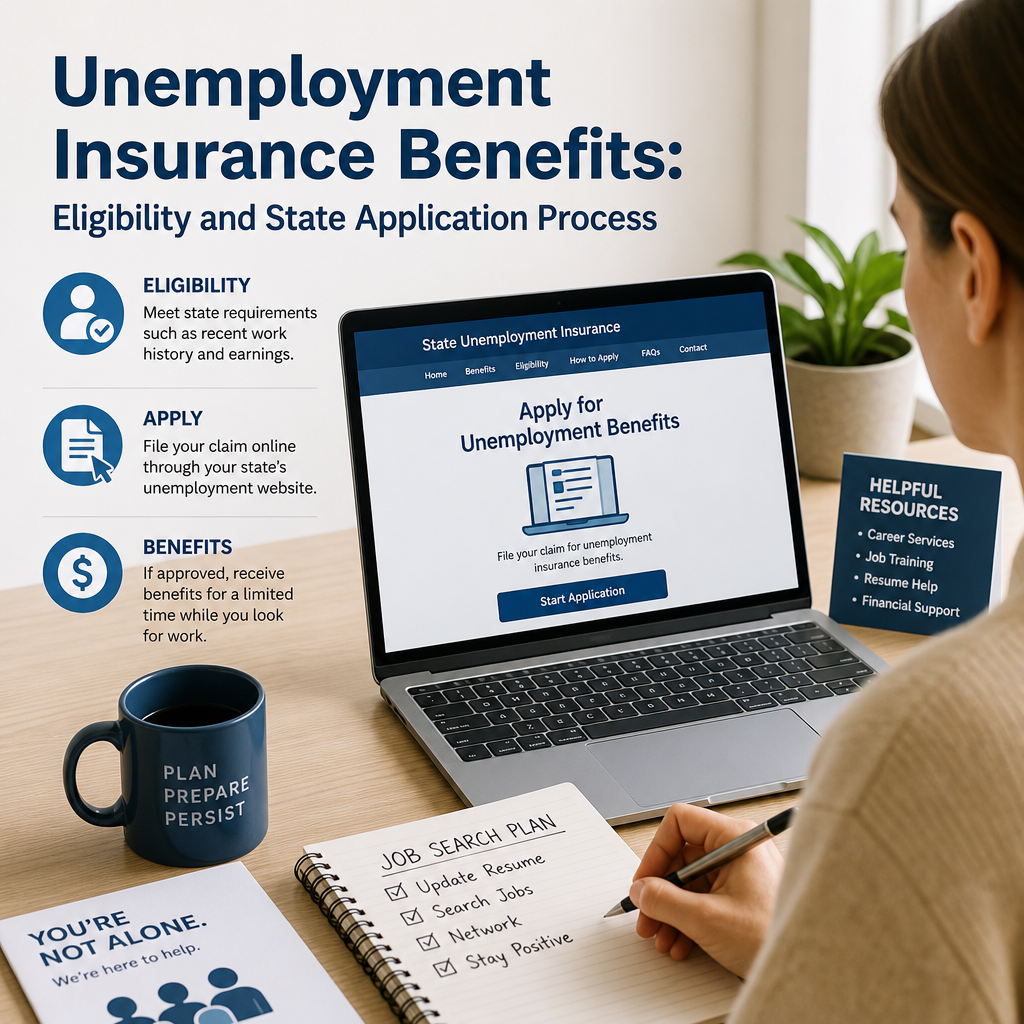
Unemployment insurance benefits are temporary payments designed to replace part of your lost wages after an involuntary job loss. These benefits are usually funded through employer payroll taxes, not deducted from your paycheck in the way Social Security or Medicare taxes are.
The program is meant to help workers who are unemployed through no fault of their own and are actively trying to return to work. It is not a long-term income source, but it can help cover essentials such as:
Anúncios
- Rent or mortgage payments
- Groceries and utilities
- Transportation costs
- Job search expenses
In the United States, unemployment insurance is administered at the state level under federal guidelines. That means the rules for weekly amounts, duration, and application steps can differ depending on where you live.
Who May Be Eligible for Unemployment Insurance Benefits?
Eligibility for unemployment insurance benefits depends on several factors. While each state has its own requirements, most states look at the same core issues.
You lost your job for a qualifying reason
In general, you must be unemployed through no fault of your own. Common qualifying situations include:
- A layoff due to lack of work
- A business closure
- A reduction in hours
- Some furlough situations
You may not qualify if you quit without a good work-related reason or were fired for serious misconduct. However, many states review these cases individually, so it is still worth applying if you are unsure.
You earned enough wages during the base period
States usually examine your work history during a set timeframe called the base period. This is typically the first four of the last five completed calendar quarters before you file your claim.
To qualify, you generally must have earned enough wages and worked enough during that period. The exact amount varies by state. If you have an inconsistent work history, you may still qualify depending on the state’s rules.
You are able and available to work
To receive benefits, you usually need to be:
- Physically able to work
- Available to accept suitable work
- Actively looking for a job
This means you cannot usually collect benefits if you are unable to work because of illness, injury, or another limiting condition unless you meet a special exception in your state.
You are actively seeking work
Most states require claimants to make a genuine effort to find a job each week. This often includes:
- Submitting job applications
- Attending interviews
- Contacting employers
- Registering with the state job service
Some states require you to keep detailed records of your job search. If your state asks for proof, save emails, application confirmations, interview notes, and recruiter communications.
Common Reasons a Claim May Be Denied
A denial does not always mean you should give up. It simply means the state did not find enough evidence that you qualify under its rules.
Common reasons for denial include:
- Quitting without a qualifying reason
- Being fired for misconduct
- Not meeting wage requirements
- Failing to apply on time
- Not searching for work
- Not responding to requests from the unemployment office
If your claim is denied, you may have the right to appeal. Deadlines for appeals are usually short, so review the notice carefully and respond quickly.
How to Apply for Unemployment Insurance Benefits
The state application process is straightforward in concept, but it helps to prepare before you start. Since each state operates differently, the exact steps can vary, but most claims follow the same general pattern.
Step 1: Gather your information
Before filing, collect the information you will need. Having everything ready can make the process faster and reduce mistakes.
You may need:
- Your Social Security number
- Mailing address and contact information
- Driver’s license or state ID number
- Last employer’s name, address, and phone number
- Dates of employment
- Reason you are no longer working
- Pay records or W-2s, if needed
- Alien registration information, if applicable
If you worked for multiple employers recently, include all of them. Missing employment details can delay your claim.
Step 2: File your claim with the state
You usually apply online through your state workforce agency. Some states also allow phone or in-person filing.
When filing, you will answer questions about:
- Your employment history
- Why you are unemployed
- Whether you are currently able and available to work
- Whether you are receiving other income or benefits
Answer honestly and carefully. Even small inconsistencies can cause delays or trigger additional review.
Step 3: Create your online account
Most states require you to create an online account to manage your claim. This account is where you may:
- Check claim status
- File weekly certifications
- Review payment history
- Upload documents
- Respond to state requests
Use an email address and password you can access reliably. If the state sends a time-sensitive notice, you do not want to miss it.
Step 4: Complete weekly certifications
Applying once is not enough. In many states, you must certify every week that you remain unemployed or partially unemployed and still meet eligibility requirements.
Weekly certification questions often ask whether you:
- Worked during the week
- Earned any wages
- Refused a job offer
- Searched for work
- Were able to accept work
If you miss a certification deadline, payment may be delayed or stopped until you file again.
Step 5: Respond to any requests from the state
The unemployment agency may ask for more information before approving your claim. You may receive a request to verify:
- Your identity
- Your prior wages
- Your separation from work
- Your job search activities
Respond quickly. States often set strict deadlines for submitting documents or answering questions.

How Weekly Benefit Amounts Are Determined
The amount you receive depends on your state’s formula and your recent wages. Most states calculate weekly benefits based on your earnings during the base period.
In general:
- Higher prior wages may lead to a higher weekly benefit amount
- There is usually a state-set maximum
- Benefits are often paid for a limited number of weeks
Some states also factor in dependents or use different formulas for part-time workers and seasonal workers. If you are partially unemployed, you may still qualify for reduced benefits.
What to Expect After You Apply
Once you submit your claim, the state reviews your application and verifies your eligibility. Processing times vary depending on workload, identity verification, and whether your employer contests the claim.
You may receive:
- A confirmation that your claim was filed
- A request for additional documents
- A determination notice explaining whether you qualify
- Instructions for weekly certifications
If your claim is approved, payment is usually made by direct deposit or a debit card, depending on your state’s system.
Tips for a Smooth Application Process
A little preparation can prevent delays and make the unemployment insurance benefits process easier.
Keep your documents organized
Create a folder for:
- Claim confirmation numbers
- Employer correspondence
- Job search records
- State notices
- Payment confirmations
This helps if the state later asks for proof or if you need to appeal.
Check your state’s rules regularly
Unemployment programs change. Requirements for job searches, online reporting, and identity verification can be updated. Always rely on your state workforce agency’s current instructions.
Report income accurately
If you work part-time while receiving benefits, report any earnings exactly as directed. Failing to report income can result in overpayments, repayment demands, or penalties.
Watch for deadlines
Deadlines matter throughout the claims process, especially for:
- Filing your initial application
- Completing weekly certifications
- Responding to eligibility questions
- Filing an appeal
Missing a deadline can interrupt your payments.
If Your Claim Is Denied or Delayed
A denied or delayed claim can be frustrating, but there are practical next steps.
Review the notice carefully
Read the reason for the denial or delay. The state should explain what information is missing or why you were found ineligible.
Submit an appeal if needed
If you believe the decision is wrong, you may be able to appeal. Appeal rights and deadlines vary by state, but the notice should explain how to proceed.
Continue certifying if instructed
In some states, you should keep filing weekly certifications while your appeal is pending. If you stop certifying, you may lose benefits even if your appeal succeeds.
Contact the state agency
If your claim is delayed because of a missing document or identity verification issue, contact the unemployment office as soon as possible. Keep notes of who you spoke with and when.
Special Situations That Can Affect Eligibility
Some situations make unemployment claims more complicated. If any of these apply to you, review your state’s guidance carefully.
Part-time or reduced-hours workers
If your hours were cut, you may still qualify for partial unemployment benefits. The amount usually depends on your remaining wages and state rules.
Self-employed or gig workers
Traditional unemployment insurance often does not cover independent contractors or self-employed workers. However, special programs have existed in some circumstances, and state rules may vary. Check your state agency for current options.
Recent graduates or first-time job seekers
Unemployment insurance benefits are generally based on prior covered wages. If you do not have enough wage history, you usually will not qualify.
Workers with multiple jobs
If you lost one job but still work another, you may be eligible for reduced benefits. Make sure to report all income and employment accurately.
Why Understanding State Rules Matters
Because unemployment insurance is state-run, your location affects nearly every part of the process. States differ in:
- Base period calculations
- Weekly benefit formulas
- Maximum benefit duration
- Job search requirements
- Filing methods
- Appeal procedures
That is why it is important to use your state workforce agency as your primary source of information. General guidance is helpful, but the official state rules determine your claim.
Frequently Asked Questions
1. How soon should I apply for unemployment insurance benefits after losing my job?
Apply as soon as possible. Many states start benefits based on the date you file, not the date you lost work. Waiting too long can reduce the amount of benefits you receive or delay payment.
2. Can I receive unemployment insurance benefits if I was fired?
Possibly. If you were fired for reasons other than serious misconduct, you may still qualify. The state will review the circumstances of your separation from work and your employer may provide their version of events.
3. Do I have to look for work every week?
In most states, yes. You usually must actively search for work and be able to accept suitable employment. Keep records of your applications, interviews, and employer contacts in case the state asks for proof.
4. What happens if I work part-time while collecting benefits?
You may still qualify for reduced benefits, depending on your earnings and state rules. Always report part-time income accurately when you certify each week. The state will determine how much, if anything, is payable.
5. How long do unemployment insurance benefits last?
Benefit duration varies by state and by economic conditions. In many states, benefits are available for a limited number of weeks. Your determination notice should explain the maximum weeks available under your claim.
Official Resources
- U.S. Department of Labor — Unemployment Insurance
- CareerOneStop — Unemployment Benefits Finder
- USA.gov — Unemployment Benefits
- National Association of State Workforce Agencies
- California Employment Development Department — Unemployment Insurance
Conclusion
Understanding unemployment insurance benefits can make a difficult transition more manageable. If you have lost work, the most important steps are to check your state’s eligibility rules, gather your employment records, file your claim promptly, and keep up with weekly certifications. Since each state administers unemployment differently, the official state workforce agency should always be your main source for current instructions and deadlines.
A successful claim often comes down to preparation and follow-through. Report your work history honestly, respond quickly to agency requests, and keep organized records of your job search. If your claim is denied or delayed, review the notice carefully and act before the appeal deadline passes.
Unemployment benefits are designed to provide temporary support while you return to work. By understanding how the system works, you can move through the process with more confidence and focus your energy on finding the next right opportunity.