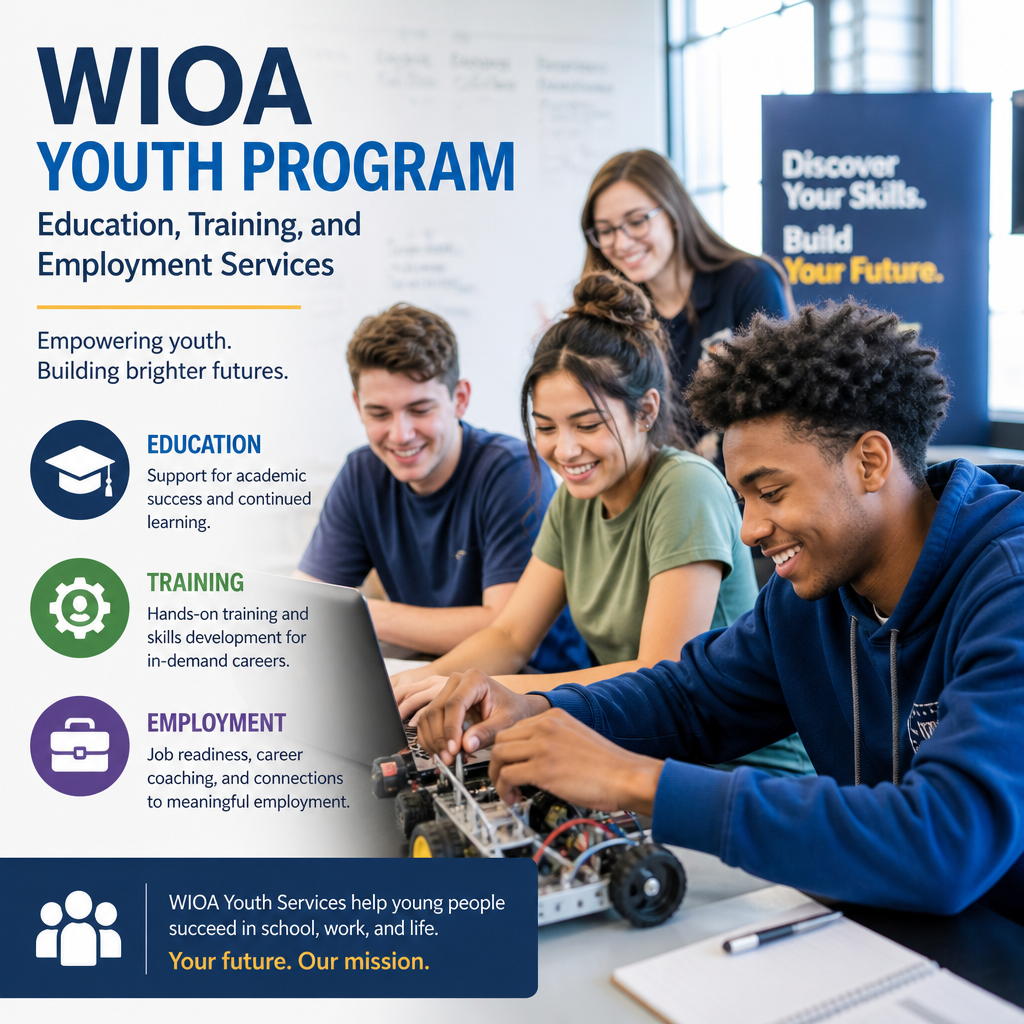
WIOA Youth Program: Education, Training, and Employment Services
The WIOA Youth Program helps young people build the skills, experience, and confidence they need to move from school into meaningful work. With personalized education, training, and employment support, it can make the path to a stable career feel much more achievable.
By: Jennifer Collins on August 1, 2026
Anúncios
For young people trying to move from school into a stable career, the WIOA Youth Program can be a practical starting point. It connects eligible youth and young adults with education, training, work experience, and support services designed to build a path toward employment and long-term success. Whether someone needs help finishing school, learning job skills, or getting a first work opportunity, the program can make that next step feel more reachable.
The WIOA Youth Program: Education, Training, and Employment Services is built around the idea that young people benefit most from personalized support. Instead of offering a one-size-fits-all solution, it helps participants find the services that match their needs, goals, and current level of readiness.
Anúncios
What Is the WIOA Youth Program?
The Workforce Innovation and Opportunity Act, or WIOA, is a federal workforce development law that supports job seekers, workers, and employers. Its youth portion focuses on helping eligible individuals build the education and career foundation they need to succeed.
The WIOA Youth Program serves young people who may be out of school, struggling to find work, or needing extra support to complete education and training goals. Services vary by local area, but the core purpose stays the same: help youth move toward meaningful employment and self-sufficiency.
Anúncios
Who the program is designed to help
The program usually supports youth and young adults who may face barriers to employment, such as:
Not having a high school diploma or equivalent
Being unemployed or underemployed
Lacking work experience
Need for job readiness or soft skills development
Challenges related to housing, transportation, or childcare
Disabilities or other support needs
Involvement with the foster care or justice systems
Eligibility rules can vary somewhat by state and local workforce area, so it is always best to check with the local workforce center.
Core Services in the WIOA Youth Program
The strength of the WIOA Youth Program: Education, Training, and Employment Services lies in how many different types of support it can provide. Participants often receive services in several areas at once, depending on their goals.
1. Academic support and education services
Some participants need help finishing school or strengthening academic skills before entering the workforce. Education services may include:
Tutoring
Dropout recovery support
High school equivalency preparation
Basic literacy and math assistance
Career-connected learning
Help with postsecondary enrollment
For example, a young adult who left school early might work with a case manager to create a plan for earning a GED while also exploring career pathways in healthcare or skilled trades.
2. Occupational skills training
Training is a major part of the program. It helps participants learn the technical skills needed for a specific occupation or industry. Training can include:
Classroom instruction
Online or hybrid courses
Community college programs
Apprenticeships
Industry-recognized credential programs
Short-term occupational certifications
This type of support is especially useful for young people who know what field they want to enter but need the training to qualify for entry-level work.
3. Paid and unpaid work experience
One of the most valuable features of the WIOA Youth Program is work experience. These opportunities help young people build confidence, understand workplace expectations, and strengthen their resumes.
Common forms include:
Internships
Summer jobs
Job shadowing
Paid work experience
Pre-apprenticeship programs
On-the-job training
Work experience gives participants a chance to learn by doing. A student interested in information technology, for instance, might spend a summer helping with basic help desk tasks, learning both technical and customer service skills.
4. Employment preparation
Many young job seekers need help understanding how to apply for work, interview effectively, and present themselves professionally. Employment preparation services may include:
Resume writing
Interview practice
Job search assistance
Workplace communication skills
Professional dress and etiquette coaching
Digital job application support
These services help bridge the gap between education and employment. Even a talented young person can struggle to get hired without knowing how to navigate the hiring process.
5. Support services
A major reason the WIOA Youth Program is effective is that it recognizes real-life barriers. A participant may be ready to work, but without transportation or childcare, keeping a job can be difficult. Support services may include assistance with:
Transportation
Childcare
Uniforms or work clothing
Tools or supplies needed for training
Testing fees
License or certification costs
Referrals to community resources
These supports can remove obstacles that might otherwise prevent someone from completing training or starting a job.
Required Program Elements That Strengthen Outcomes
WIOA youth programs are built around a set of program elements that local providers can tailor to each participant’s needs. These elements help ensure the program is more than just job placement.
Tutoring and study skills
Participants may receive academic help to catch up or stay on track in school or training.
Alternative secondary school services
For youth who need a different path to a diploma or equivalent, the program may offer flexible educational options.
Paid and unpaid work experiences
Work-based learning remains one of the most effective ways to prepare young people for the world of work.
Occupational skills training
This creates a clear connection between classroom learning and labor market demand.
Leadership development opportunities
Programs often encourage personal growth through activities like peer mentoring, community service, teamwork exercises, and communication training.
Adult mentoring
A caring mentor can provide guidance, encouragement, and practical advice as a young person works toward a goal.
Follow-up services
Support often continues after a participant gets a job or completes training. Follow-up may include check-ins, coaching, and help solving problems that arise during the early stages of employment.
Why the WIOA Youth Program Matters
The transition from adolescence to adulthood is not always straightforward. Some young people have clear goals, but others need help identifying a career path. The WIOA Youth Program: Education, Training, and Employment Services matters because it offers structure, encouragement, and practical resources during a critical time.
It connects education with real careers
Too often, education and employment feel disconnected. This program helps youth understand how school, training, and work experience fit together.
It builds confidence
Young people who struggle in school or have difficulty finding work may doubt their abilities. A supportive program can help them gain confidence through small wins and steady progress.
It focuses on long-term success
The goal is not just to help someone get a job today. The program aims to build skills that support future growth, higher wages, and career advancement.
It serves youth with barriers
By offering individualized support, the program can help participants overcome issues that might otherwise keep them out of the workforce.
Examples of How the Program Can Help
The best way to understand the value of the WIOA Youth Program is to look at how it can work in real life.
Example 1: A high school dropout returning to education
A 19-year-old who left school may feel stuck working temporary jobs. Through the program, they could:
Meet with a career counselor
Enroll in GED preparation
Receive help with transportation
Participate in a paid work experience
Transition into a community college certificate program
Example 2: A young adult entering the trades
A 21-year-old interested in construction may already be motivated but lack credentials. The program could help them:
Enroll in pre-apprenticeship training
Learn workplace safety
Get tools or uniforms
Practice interview skills
Connect with an employer hiring apprentices
Example 3: A student exploring healthcare careers
A 17-year-old high school student might want to become a medical assistant. The program may provide:
Career exploration
Job shadowing in a clinic
Help with summer employment
Training for a healthcare credential
Support with applying to a local college program
How to Apply for the WIOA Youth Program
The application process usually starts with a local workforce development office or American Job Center. Because services are managed locally, the exact steps may differ, but the general process often looks like this:
Contact a local workforce center
Complete an intake or interest form
Verify eligibility
Meet with a career specialist
Develop an Individual Service Strategy or career plan
Begin education, training, or work experience services
A participant may need documents such as proof of age, residency, school status, income, or barriers to employment. Local staff can explain what is required.
Tips for a strong application
Be honest about current challenges and goals
Bring any requested documents
Ask about available training programs
Share your career interests clearly
Follow up if you do not hear back right away
How Employers and Communities Benefit
The WIOA Youth Program supports not only participants but also employers and local communities. Young workers who gain skills and experience often become stronger long-term employees. Employers benefit from access to job-ready candidates who have received coaching and training.
Communities benefit too. When young people stay engaged in education or employment, they are more likely to build stable lives, contribute to the local economy, and continue developing their skills.
Choosing the Right Path Within the Program
Because the program is personalized, one participant may focus on finishing school while another enters paid work experience. There is no single path that works for everyone.
Ask these questions when planning your next step
What is my current education level?
What career fields interest me?
Do I need basic skills or technical training?
Would work experience help me learn faster?
What barriers are keeping me from work or school?
What support services would make success more realistic?
Answering these questions can help participants and case managers build a plan that feels practical and achievable.
Best Practices for Getting the Most from the Program
Success in the WIOA Youth Program: Education, Training, and Employment Services depends on participation and follow-through. A few simple habits can make a big difference:
Attend scheduled appointments
Communicate when problems come up
Complete assigned activities on time
Keep track of applications and documents
Stay open to different career paths
Use support services early instead of waiting until problems grow
Young people who stay engaged are more likely to move steadily toward education milestones, training completion, and employment goals.
Frequently Asked Questions
What is the main goal of the WIOA Youth Program?
The main goal is to help eligible young people build skills, complete education or training, and move into employment or a career pathway. The program focuses on long-term success by addressing both skill gaps and barriers to work.
Who qualifies for the WIOA Youth Program?
Eligibility usually includes young people and young adults who meet age requirements and face one or more barriers to employment. Common factors include being out of school, low income, or lacking work experience. Exact rules can vary by location, so local workforce centers should confirm eligibility.
Does the program pay for training?
In many cases, yes. The program may help cover the cost of approved training, certifications, testing fees, or related support services. Availability depends on the local program, eligibility, and whether the training fits the participant’s career plan.
Can the program help if I already have a job?
Yes, in some cases. A participant may still benefit from training, education support, or career coaching even if they are working. The program is designed to help young people move toward better employment and stronger long-term career outcomes.
How do I find a local WIOA Youth Program near me?
A good place to start is your local American Job Center or workforce development office. You can also check your state workforce agency website for youth services and local contact information. Staff can explain eligibility, available services, and next steps.
The WIOA Youth Program: Education, Training, and Employment Services gives young people a practical way to move from uncertainty to opportunity. By combining education support, job training, work experience, mentoring, and helpful services, the program meets youth where they are and helps them build a stronger future step by step.
For some, that means finishing school and earning a diploma or GED. For others, it means gaining a first job, building a resume, or learning a trade that leads to a stable career. The program’s real value comes from its flexibility and its focus on real-world outcomes.
If you are a young person looking for direction, a parent helping a teen plan ahead, or a community member interested in workforce development, learning about this program is a smart next step. Reaching out to a local workforce center can open the door to support that makes education and employment more achievable. With the right guidance, the path forward can become clearer and more manageable.
Jennifer, M.Ed., holds a degree in Higher Education Administration, with
a focus on U.S. college financial aid, admissions policy, and student
support systems. She researches and writes about scholarships, federal
aid programs, and the college planning process to help students and
families make informed, well-supported decisions.