Why Recent Global Health Progress Is at Risk of Reversal
Recent shocks are putting hard-won global health progress at risk, from missed vaccinations and disrupted care to rising outbreaks and weaker health systems. This article explores the forces behind the setback—and why protecting these gains matters now more than ever.
By: Peter on August 1, 2026
Anúncios
For much of the past few decades, the world has made meaningful global health progress. More children have survived past their fifth birthdays, more people have gained access to vaccines and essential medicines, and major diseases such as HIV, malaria, and tuberculosis have seen important advances in prevention and treatment. But today, that progress is far from guaranteed.
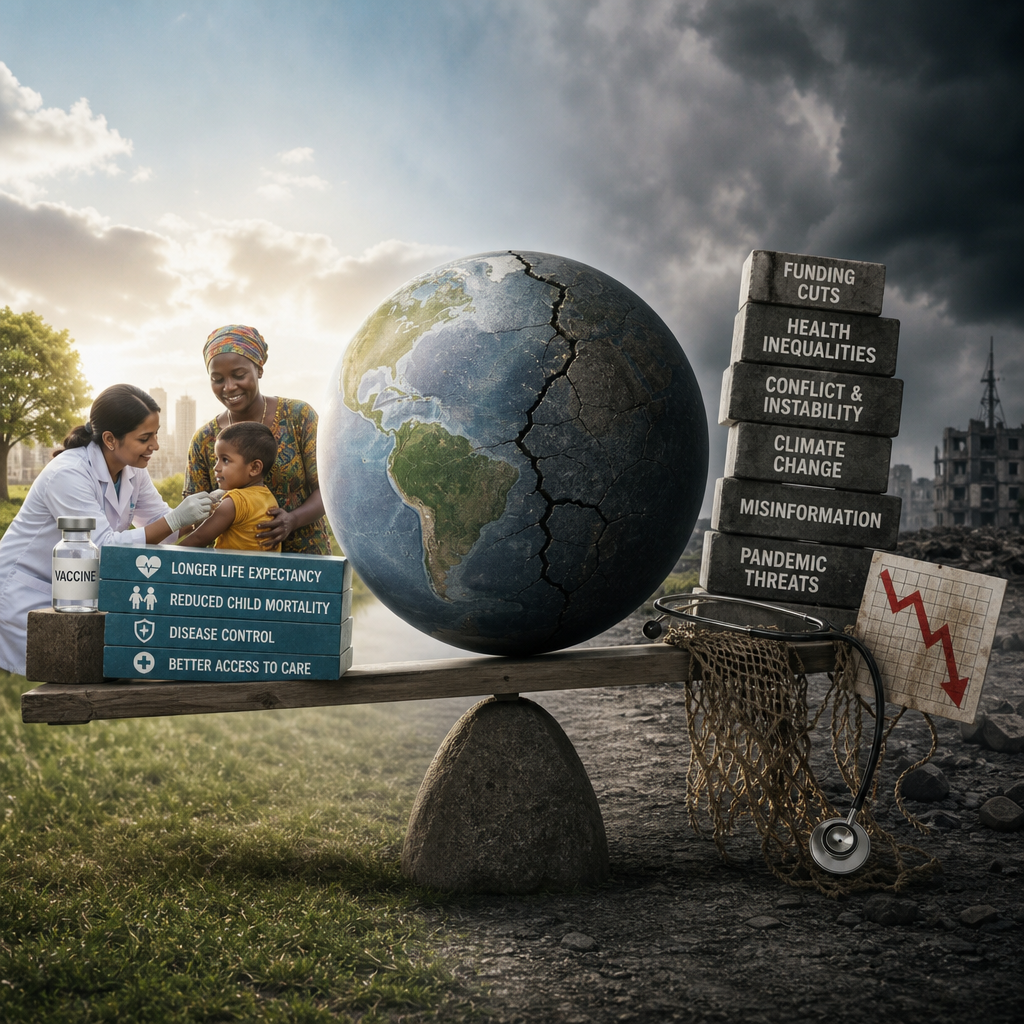
Recent shocks have exposed how fragile health gains can be. Pandemic disruptions, conflict, climate change, economic strain, and weakened health systems are pushing many countries in the wrong direction. In some places, routine immunization rates have fallen, maternal care has become less accessible, and disease outbreaks are resurfacing. The risk is not just slower progress — it is the reversal of hard-won gains in global health progress.
Anúncios
Understanding why this is happening matters. The stakes are not abstract. They affect child survival, life expectancy, reproductive health, infectious disease control, and the ability of health systems to respond to future crises.
Why Global Health Progress Is Under Pressure
The world’s health gains depend on a network of interconnected systems: stable financing, trained workers, functioning clinics, reliable supply chains, public trust, and political commitment. When one part breaks down, the effects spread quickly.
Anúncios
1. Health systems are still recovering from major disruptions
Many countries continue to deal with the long shadow of COVID-19. Even after the peak emergency phase passed, the pandemic left behind:
Missed vaccinations
Delayed surgeries and screenings
Burnout among health workers
Interrupted treatment for chronic and infectious diseases
Weakened public confidence in health institutions
These disruptions did not affect everyone equally. Communities already facing barriers to care often experienced the biggest setbacks.
2. Conflict and displacement are widening health gaps
Armed conflict and forced migration create urgent health needs while dismantling the systems needed to meet them. Hospitals may be damaged, supply routes blocked, and health workers forced to flee. Families displaced by violence often lose access to clean water, nutrition, prenatal care, and childhood immunizations.
In crisis settings, even basic services can become difficult to maintain. That makes outbreaks more likely and routine care much harder to deliver.
3. Climate change is increasing disease and disruption
Climate change is no longer only an environmental issue. It is a health threat. Extreme heat, floods, droughts, and wildfires can all damage infrastructure and threaten lives directly. They also influence the spread of infectious disease, food insecurity, and respiratory illness.
For example:
Flooding can contaminate water supplies and raise the risk of diarrheal disease
Heat waves can worsen heart and lung conditions
Drought can reduce crop yields and nutrition
Changing rainfall patterns can affect mosquito populations and disease transmission
These pressures strain already fragile health systems and make planning more difficult.
4. Economic strain is limiting public health investment
When governments face inflation, debt pressure, or slow growth, health budgets often come under stress. That can mean fewer resources for vaccines, primary care, maternal health, disease surveillance, and workforce training.
At the household level, economic hardship also pushes families to delay care or avoid it altogether. Out-of-pocket costs remain a major barrier in many places, especially where health insurance coverage is limited or uneven.
The Consequences of Reversing Global Health Progress
The rollback of health gains does not happen all at once. It often begins with small declines that build over time. A missed vaccine here, a delayed diagnosis there, a clinic that closes after funding ends. Over time, these setbacks can become a public health crisis.
Rising preventable illness and death
When immunization coverage drops, vaccine-preventable diseases can return. When prenatal care becomes less available, maternal and newborn outcomes worsen. When HIV treatment interruptions occur, viral suppression declines and transmission risk rises.
This is one of the clearest dangers to global health progress: preventable illnesses become harder to prevent, and treatable conditions become more dangerous.
Greater inequality between and within countries
Health setbacks rarely affect everyone in the same way. People with higher incomes, better insurance, or easier access to urban hospitals often recover faster. Rural communities, informal workers, children, older adults, and displaced populations are more likely to be left behind.
That means a slowdown in global health progress can deepen existing inequities, both within countries and across regions.
Reduced resilience for future crises
A strong health system does more than treat illness. It detects outbreaks early, supports emergency response, and keeps essential services running during shocks. If those systems weaken, countries become less prepared for the next crisis.
In other words, today’s reversals can create tomorrow’s vulnerabilities.
Where Progress Has Been Most Fragile
Some health gains are especially vulnerable because they depend on consistent, long-term support.
Routine childhood immunization
Vaccines are among the most effective public health tools, but they require reliable delivery systems, trusted health workers, and public confidence. Missed schedules can leave children unprotected and allow outbreaks to spread.
Maternal and newborn health
Progress in reducing maternal and infant mortality depends on accessible prenatal care, skilled birth attendants, emergency obstetric services, and postnatal follow-up. When any of these fail, outcomes worsen quickly.
Infectious disease control
Programs targeting HIV, tuberculosis, malaria, and neglected tropical diseases often rely on sustained funding, surveillance, and medication access. Even short disruptions can create long-term setbacks.
Primary care and chronic disease management
As more people live with noncommunicable diseases such as diabetes, hypertension, and asthma, access to primary care becomes essential. Interruptions in care can lead to avoidable emergencies and complications.
What Needs to Happen to Protect Global Health Progress
Preventing reversal requires more than short-term emergency response. It calls for long-term investment, stronger institutions, and policies that protect the most vulnerable.
Strengthen primary health care
Primary care is the foundation of a resilient health system. It helps people get preventive services, manage chronic conditions, and connect to specialized care when needed.
Key priorities include:
Expanding community-based care
Training and retaining frontline health workers
Ensuring reliable access to essential medicines
Improving referral systems
Making services affordable and easy to reach
Protect health financing
Countries need stable and predictable funding for public health. This includes domestic investment as well as international support where needed. Sudden funding gaps can disrupt programs that took years to build.
Policymakers should aim to protect:
Immunization programs
Maternal and child health services
Disease surveillance
Health workforce development
Laboratory capacity and emergency preparedness
Invest in health data and surveillance
Good data helps governments see problems early and respond quickly. Surveillance systems can identify outbreaks, monitor vaccination coverage, and reveal where care is falling short.
Without timely data, health setbacks can stay hidden until they become much harder to fix.
Support health workers
Health workers are at the center of any successful health system. They need fair pay, safe working conditions, training, and mental health support. Countries that neglect their workforce often struggle with turnover, shortages, and burnout.
Build trust through community engagement
Public trust matters. Even strong health programs can fail if communities do not trust them. Misinformation, past abuses, and poor communication can all reduce uptake of vaccines or services.
Effective communication should be:
Clear
Culturally respectful
Locally grounded
Consistent over time
The Role of Global Cooperation
Global health progress depends on cooperation across borders. Diseases travel, supply chains cross countries, and research benefits from shared knowledge. No country can fully protect its population alone.
International collaboration can help by:
Coordinating outbreak response
Sharing surveillance data
Supporting vaccine access
Funding health infrastructure in low-resource settings
Strengthening research and innovation
This cooperation is not charity. It is a practical investment in a safer, healthier world.
What Individuals and Organizations Can Do
While large-scale policy changes matter most, individuals and institutions also play a role in protecting global health progress.
For health organizations
Prioritize continuity of essential services
Use data to target high-risk populations
Invest in workforce retention
Strengthen supply chain planning
Improve crisis preparedness
For nonprofits and community groups
Partner with local leaders
Focus on underserved communities
Support health education and outreach
Help families navigate available services
For readers and citizens
Stay informed from credible sources
Support public health initiatives
Advocate for health funding and equitable policies
Encourage vaccination and routine care in your community
Frequently Asked Questions
What does global health progress mean?
Global health progress refers to improvements in health outcomes around the world, such as lower child mortality, better access to vaccines, fewer deaths from infectious diseases, and stronger health systems. It also includes progress in maternal health, life expectancy, and disease prevention.
Why is global health progress at risk of being reversed now?
Several factors are contributing to the risk, including the lingering effects of COVID-19, conflict, climate change, economic pressure, health worker shortages, and interrupted funding. These challenges can weaken health systems and reduce access to essential services.
Which health areas are most likely to be affected?
Routine immunization, maternal and newborn care, infectious disease control, primary care, and chronic disease management are especially vulnerable. These services rely on consistent funding, staffing, supplies, and public trust.
How does climate change affect global health progress?
Climate change can worsen heat-related illness, spread vector-borne diseases, disrupt food and water systems, and damage health infrastructure. It also increases the likelihood of emergencies that overwhelm already stretched health services.
What can governments do to protect health gains?
Governments can strengthen primary care, protect health budgets, improve surveillance systems, support health workers, and invest in preparedness. Long-term planning is essential to prevent setbacks and respond quickly to future shocks.
The world has made real gains in health, but those gains are not permanent. Global health progress can be slowed or even reversed when health systems are underfunded, communities are displaced, climate shocks intensify, and essential services break down. The warning signs are already visible in vaccine gaps, disrupted care, and widening inequalities.
Protecting progress requires more than reacting to emergencies. It means building resilient primary care, investing in health workers, strengthening surveillance, safeguarding financing, and supporting communities with clear, trusted information. It also means recognizing that health is connected to peace, climate stability, and economic security.
The good news is that reversal is not inevitable. With steady investment and stronger cooperation, countries can protect what has been achieved and create the conditions for further improvement. The next step is to treat health not as a short-term expense, but as a long-term foundation for human development, stability, and opportunity.
Peter B holds a degree in Journalism and has 5 years of experience covering U.S. economic policy, labor markets, and financial news. He writes data-driven news content on topics like inflation, interest rates, and employment trends.