How Students Can Identify and Avoid Financial Aid Scams
Financial aid scams often prey on students who are stressed, rushed, and eager to secure college funding, making it easy to miss warning signs. Learn how to spot common red flags so you can protect your money, your personal information, and your aid eligibility.
By: Jennifer Collins on August 1, 2026
Anúncios
Filling out the FAFSA, comparing scholarships, and figuring out how to pay for college can already feel overwhelming. Unfortunately, that stress creates a perfect opening for financial aid scams. If you are a student or a parent helping with college costs, learning how students can identify and avoid financial aid scams is essential for protecting your money, personal information, and future aid eligibility.
Financial aid scams often look legitimate at first glance. They may promise “guaranteed scholarships,” claim they can unlock secret grants, or pressure you to pay for help you can get for free. The good news is that most scams follow predictable patterns. Once you know the warning signs, you can spot them early and avoid costly mistakes.
Anúncios
What Financial Aid Scams Look Like
Financial aid scams come in many forms, but they usually have one goal: to get your money, personal data, or FAFSA login credentials.
Some common examples include:
Anúncios
Fake scholarship offers that require an upfront fee
Services that claim they can “find hidden aid” for a price
Emails or texts asking you to confirm your FAFSA information
Calls from people pretending to work for the U.S. Department of Education
“Debt relief” offers that ask for sensitive account details
Websites that look official but are designed to steal your information
A scam may not always look obvious. Some are polished, well-written, and use logos or language that seems trustworthy. That is why it helps to slow down and check the details before responding.
Why Students Are Common Targets
Students are frequent targets because they are often:
Managing large financial decisions for the first time
Under pressure to secure aid quickly
Looking for scholarships and grants online
Unfamiliar with how federal aid systems work
More likely to trust messages that mention school, money, or deadlines
Scammers use urgency and confusion to their advantage. They know that students may act quickly if a message says a deadline is approaching or that aid will be lost unless they respond immediately.
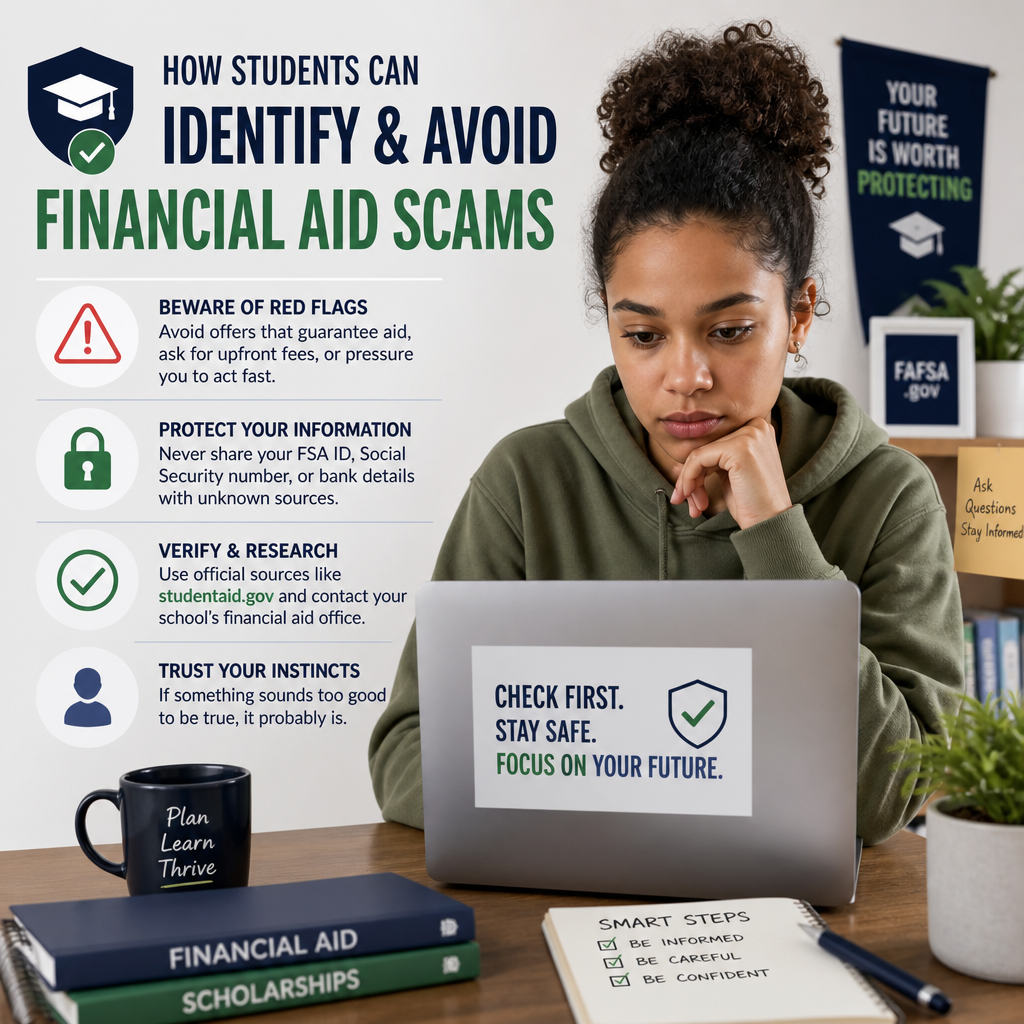
How Students Can Identify and Avoid Financial Aid Scams
The most effective way to avoid a scam is to know the warning signs before you share any personal information. The following red flags can help you evaluate offers more carefully.
Red flags that often signal a scam
Watch for these common warning signs:
Upfront payment required: Legitimate federal aid and many scholarship services do not charge you to apply for aid.
Guaranteed results: No one can guarantee scholarships, grants, or special aid approval.
Pressure to act fast: Scammers often create urgency to stop you from verifying their claims.
Requests for sensitive information: Be careful if someone asks for your Social Security number, FAFSA login, bank account details, or credit card number.
Unsolicited contact: If you did not ask for help, be extra cautious.
Poorly designed websites or emails: Spelling errors, strange URLs, and unofficial branding can indicate fraud.
Promises of “secret” aid: There is no hidden government scholarship list only insiders can access.
If any of these appear, pause and verify before you respond.
Legitimate aid never requires strange fees
A key rule in identifying financial aid scams is this: you should never pay someone to submit your FAFSA for you, and you should be skeptical of any service that says payment is necessary to access aid.
Some services may charge for legitimate consulting or tax help, but that is different from claiming they can unlock free money. Federal student aid information is available at no cost through official channels, and scholarship searches are widely available through schools and trusted organizations.
Be skeptical of “exclusive” scholarship offers
Scammers often send messages saying you were “selected” for a scholarship you never applied for. They may ask you to pay a processing fee or share private information to claim the award.
A legitimate scholarship will usually:
Be offered by a known school, organization, foundation, employer, or government source
Have a clear application process
Explain eligibility requirements
Not require you to pay to receive the award
If the offer sounds too easy, it probably deserves extra scrutiny.
Safe Ways to Search for Financial Aid
You can avoid many scams by using trusted sources from the start. Instead of relying on random ads, social media posts, or unsolicited emails, begin with verified resources.
Use official and school-based resources first
Start with:
Your college or university financial aid office
The official FAFSA website
State higher education agencies
Scholarship listings from your school or trusted nonprofit organizations
Employer tuition assistance programs
These sources are more likely to provide accurate information about grants, scholarships, work-study options, and loans.
Verify the website before entering information
Before you type in any personal data, check that the website is legitimate. Look for:
A secure URL beginning with https://
A domain that matches the official organization
Contact information you can verify independently
Clear privacy and refund policies
No pressure to submit information immediately
If you are not sure whether a site is legitimate, search for the organization’s official website separately rather than clicking the link in an email or ad.
How to Protect Your FAFSA and Personal Information
Your FAFSA information is sensitive. If the wrong person gets access to it, they may be able to change your details or misuse your identity.
Protect your login credentials
Use these steps to keep your account safe:
Create a strong, unique password
Enable multi-factor authentication if available
Never share your login with friends, relatives, or “advisers” you do not trust
Log out of shared computers
Avoid saving your password on public devices
If someone claims they need your FAFSA password to “help speed things up,” treat that as a major warning sign.
Be careful with documents and attachments
Scammers sometimes use fake forms or attachments to steal data. Before opening anything:
Check the sender’s email address carefully
Do not open unexpected attachments
Avoid downloading files from unfamiliar sources
Confirm with your school or lender if the request seems unusual
A message that looks official may still be fake. Always verify the source.
Common Scam Tactics Students Should Know
Understanding the most common techniques can help you spot trouble sooner.
Phishing emails and texts
Phishing attempts try to trick you into revealing personal information. They often:
Pretend to be from the Department of Education, your school, or a lender
Use urgent language like “act now” or “your aid will be canceled”
Link to fake login pages
Ask you to confirm personal data
When in doubt, do not click the link. Go directly to the official website instead.
Fake “financial aid advisors”
Some scammers pose as advisers who can increase your aid package or help you appeal a decision. A real financial aid counselor may work through your school and never ask for unnecessary fees or private credentials.
Before trusting anyone:
Check whether they are affiliated with your school
Ask for an official office number or email address
Call the institution directly to confirm
Scholarship prize scams
These scams tell you that you won a contest you never entered. To claim the prize, you may be asked to pay “taxes,” “handling fees,” or “verification costs.”
A real scholarship should not require payment to receive the award.
Loan forgiveness and repayment scams
Students and recent graduates may also be targeted with false promises of loan forgiveness, repayment assistance, or consolidation help. Some scammers charge a fee to file paperwork you can often do yourself for free.
If someone promises to “erase” your loans quickly, get a second opinion from your loan servicer or school financial aid office.
Practical Steps to Verify an Offer
If you receive a suspicious email, text, phone call, or scholarship notice, use a simple verification process before doing anything else.
A quick checklist
Ask these questions:
Did I request this information?
Is the sender using an official email address or phone number?
Does the offer require payment upfront?
Are they asking for private credentials?
Can I confirm this through my school or the official website?
Does the offer make unrealistic promises?
If the answer to any of those raises doubt, step back and verify independently.
How to confirm with your school or lender
If a message claims to come from your school or loan servicer:
Do not use the contact information in the suspicious message.
Visit the organization’s official website.
Use the listed phone number or email address.
Ask whether the message is legitimate.
This small step can save you from giving information to the wrong person.
What to Do If You Think You Were Targeted
If you think you encountered a scam, act quickly.
Immediate steps to take
Stop communication with the scammer
Do not send money or additional information
Change passwords if you shared account details
Contact your financial aid office or loan servicer
Save screenshots, emails, phone numbers, and receipts
Report the scam to the appropriate authorities
Reporting can help protect others
Reporting a scam may help investigators identify patterns and warn other students. Depending on the situation, you can file reports with:
Your school’s financial aid office
The Federal Trade Commission
The Consumer Financial Protection Bureau
Your state attorney general’s office
Your bank or credit card company if money was lost
If you shared personal information, consider placing a fraud alert or credit freeze with the credit bureaus.
Smart Habits That Lower Your Risk
A few simple habits can make you much harder to scam.
Build a habit of slow checking
Before responding to any financial aid message, pause and verify. Scams thrive when people feel rushed. A 10-minute check can prevent a long-term problem.
Keep a record of official contacts
Save the direct contact information for:
Your school financial aid office
Your loan servicer
Your scholarship providers
The official FAFSA website
When you already know the real contact details, it is easier to spot impostors.
Talk to a trusted adult or adviser
If you are unsure whether an offer is legitimate, ask someone you trust. A parent, counselor, college adviser, or financial aid officer can help you review the details before you act.
Helping Parents and Students Stay Alert
Parents can play an important role in preventing financial aid scams, especially during the FAFSA season and scholarship search process.
What parents can do
Review scholarship offers together
Teach students not to share passwords
Encourage them to verify websites and emails
Discuss how legitimate aid works
Remind them that free help is available through schools and official agencies
The more students understand how aid is supposed to work, the easier it becomes to recognize when something feels off.
Frequently Asked Questions
1. How can I tell if a financial aid email is fake?
Look closely at the sender’s email address, links, and wording. Fake emails often create urgency, ask for personal information, or direct you to a website that does not match the official organization. When in doubt, go directly to the organization’s website instead of clicking the message link.
2. Do legitimate scholarship programs ever charge fees?
A legitimate scholarship should not require you to pay to receive the award. Some third-party services may charge for optional help, but you should be cautious if the service promises guaranteed scholarships or demands payment upfront.
3. Is it safe to give my FAFSA login to someone helping me?
No. You should not share your FAFSA credentials with anyone unless you are sure they are authorized and trustworthy. If someone claims they need your password to help you, contact your school’s financial aid office for safe alternatives.
4. What should I do if I already paid a scammer?
Act quickly. Contact your bank or credit card company, change your passwords, and report the scam to the FTC and your school if relevant. If you shared personal information, monitor your accounts and consider a fraud alert or credit freeze.
5. Where should I look for real financial aid opportunities?
Start with your school’s financial aid office, the official FAFSA site, state education agencies, and trusted scholarship organizations. These sources are far more reliable than random emails, social media ads, or unsolicited phone calls.
Learning how students can identify and avoid financial aid scams is one of the most practical money-saving skills you can develop during the college search process. Scammers often rely on urgency, confusion, and promises that sound too good to be true. But with a few smart habits—checking sender details, avoiding upfront fees, protecting your FAFSA login, and using official resources—you can greatly reduce your risk.
The safest approach is simple: slow down, verify everything, and trust trusted sources over flashy promises. If a scholarship, grant, or aid offer seems unusual, confirm it with your school’s financial aid office or the official website before taking action. Protecting your information now can save you from identity theft, lost money, and unnecessary stress later.
Stay informed, stay cautious, and keep using verified financial aid resources as you plan for college.
Jennifer, M.Ed., holds a degree in Higher Education Administration, with
a focus on U.S. college financial aid, admissions policy, and student
support systems. She researches and writes about scholarships, federal
aid programs, and the college planning process to help students and
families make informed, well-supported decisions.