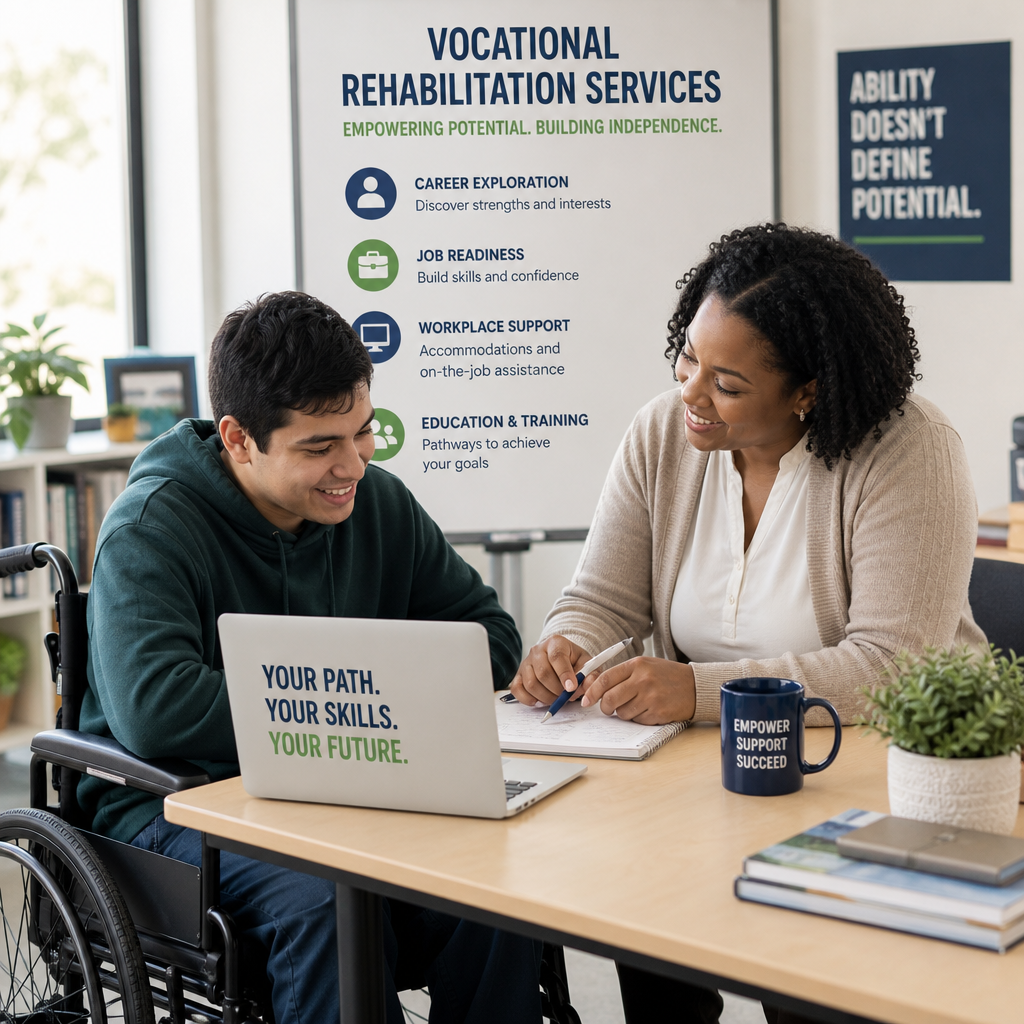
Vocational Rehabilitation Services for Students With Disabilities
Vocational rehabilitation services can give students with disabilities the guidance and practical support they need to turn post-school goals into real opportunities. From career exploration to job coaching and assistive technology, these services help build a smoother path to employment, college, and independent living.
By: Jennifer Collins on August 1, 2026
Anúncios
For many students, planning for life after high school means more than choosing a college or career. It means building the skills, confidence, and support needed to move into adulthood successfully. That is where vocational rehabilitation services for students with disabilities can make a meaningful difference.
These services help students prepare for employment, training, college, independent living, and other post-school goals. They can also connect families, schools, and community partners with practical resources that reduce barriers and open more opportunities. Whether a student is considering trade school, a four-year university, or direct entry into the workforce, vocational rehabilitation can be an important part of the transition plan.
Anúncios
What Are Vocational Rehabilitation Services for Students With Disabilities?
Vocational rehabilitation services for students with disabilities are programs designed to help people with physical, cognitive, sensory, emotional, or developmental disabilities prepare for, obtain, and keep meaningful employment. For students, these services often begin during the transition years while they are still in school.
The goal is not just job placement. It is to support the student’s broader path toward adult life. That may include:
Anúncios
Career exploration
Job coaching or work-based learning
Assistive technology
Counseling and guidance
Skills training
Postsecondary education support
Transportation planning
Resume and interview preparation
These services are usually provided by state vocational rehabilitation agencies, often called VR agencies. In many cases, students can start working with VR while still enrolled in high school, which gives them time to explore goals and build a transition plan.
Why Vocational Rehabilitation Matters During School Years
The transition from school to adulthood can be challenging for any student. For students with disabilities, that transition may involve additional planning around accessibility, accommodations, health needs, or job readiness.
Vocational rehabilitation services can help students:
Identify strengths and interests
Understand career options
Learn workplace expectations
Build self-advocacy skills
Access accommodations and assistive tools
Reduce barriers to employment
Early support matters. Students who begin planning before graduation often have more time to test career interests, gain experience, and create realistic next steps. This can make the transition smoother and less stressful for everyone involved.
Common Vocational Rehabilitation Services Available to Students
VR agencies vary by state, but many offer a similar range of services. The specific support a student receives depends on eligibility, needs, and goals.
Career Exploration and Counseling
Career exploration helps students connect their interests, strengths, and abilities with real-world options. A counselor may help the student:
Learn about different occupations
Review labor market trends
Set short-term and long-term goals
Identify needed education or training
This process is especially valuable for students who are still deciding what direction to take after graduation.
Work-Based Learning and Job Development
Many students benefit from hands-on experience. VR services may support:
Job shadowing
Internships
Summer work experiences
Part-time jobs
Volunteer roles that build employability skills
These experiences help students learn workplace routines, communicate with supervisors, and practice responsibility in a real setting.
Skills Training and Education Support
Some students need support to succeed in job training, community college, or university. VR may help with:
Tuition or training assistance, when eligible
Books and supplies
Career and technical education support
Study skills coaching
Transition planning for postsecondary programs
This kind of assistance can be especially helpful for students whose career goals require certifications, licenses, or specialized training.
Assistive Technology and Accommodations
Assistive technology can remove barriers and increase independence. Depending on the student’s needs, VR may help with:
Screen readers
Speech-to-text tools
Communication devices
Ergonomic equipment
Adaptive software
Worksite accommodations
VR counselors may also help coordinate disability accommodations in school, training programs, or the workplace.
Job Coaching and Supported Employment
Some students need more individualized support to succeed at work. Job coaching can include:
On-site guidance
Task breakdowns
Social and communication support
Performance feedback
Gradual fading of support as the student gains independence
For students with more significant disabilities, supported employment services can provide structured help to build and maintain a job.
Who Can Qualify for Vocational Rehabilitation Services?
Eligibility rules can vary by state, but in general, a student may qualify if they:
Have a documented disability
Need VR services to prepare for, find, or keep employment
Can benefit from those services
A disability alone does not guarantee services, and not every student will qualify for every type of support. However, many students with disabilities do meet eligibility requirements, especially if the disability affects school-to-work transition or job readiness.
Students with a wide range of conditions may be eligible, including:
Learning disabilities
Autism spectrum disorder
ADHD
Physical disabilities
Blindness or low vision
Deafness or hearing loss
Mental health conditions
Traumatic brain injury
Chronic health conditions
The best way to know is to contact the state VR agency and begin the intake process.
How Schools and VR Agencies Work Together
A strong transition plan often includes collaboration between the school and the vocational rehabilitation agency. This partnership can help make sure the student’s goals are reflected in both the Individualized Education Program (IEP) and the VR employment plan.
The Role of the IEP Team
For students receiving special education services, the IEP team may discuss:
Post-school goals
Transition services
Career interests
Needed accommodations
Community experiences
Self-advocacy training
The team may also invite a VR counselor to participate in transition planning meetings.
Coordinating Services
Schools and VR agencies may coordinate around:
Job sampling or career fairs
Transition assessments
Travel training
Work-readiness instruction
College or training applications
Shared goals for employment
This coordination can prevent duplication, clarify responsibilities, and create a more consistent support system for the student.
How to Start Vocational Rehabilitation Services for Students With Disabilities
Getting started is usually straightforward, but it helps to begin early. A student does not need to wait until senior year to explore VR services.
1. Contact the State VR Agency
Families or school staff can locate the appropriate agency through the state’s vocational rehabilitation office. Many agencies have an online application or referral form.
2. Gather Basic Information
The intake process may ask for:
Disability documentation
School records
Medical records, if relevant
Work history, if any
Education goals
Contact information
The exact documentation needed depends on the agency.
3. Meet With a VR Counselor
A counselor will usually talk with the student about:
Strengths and needs
Career interests
Education plans
Support barriers
Employment goals
This meeting helps determine eligibility and the types of services that may be appropriate.
4. Create an Individualized Plan for Employment
If the student is eligible, the VR agency and student work together to create a plan outlining goals and services. This plan should be based on the student’s interests and future direction.
5. Put Services Into Action
Once the plan is in place, the student may begin receiving services such as training, coaching, assistive technology, or work experience support.
Practical Ways Students Can Benefit
The value of vocational rehabilitation services for students with disabilities becomes clearer when you look at everyday examples.
Example 1: A Student Interested in Healthcare
A high school student wants to become a medical assistant but struggles with organization and time management. VR can help with:
Career exploration
Community college preparation
Study supports
Organizational tools
Internship connections
Example 2: A Student With Autism Entering the Workforce
A student with autism wants a part-time retail job but feels anxious during interviews and new social situations. VR may provide:
Interview practice
Job coaching
Communication strategies
On-the-job support
Example 3: A Student With a Physical Disability Planning for College
A student with a mobility impairment plans to attend college and needs accessible technology and campus accommodations. VR may assist with:
Adaptive equipment
Accessibility planning
Coordination with the college disability office
Transition counseling
These examples show that VR support is not one-size-fits-all. It adapts to the student’s goals and barriers.
Tips for Families and Educators
Families and educators can play a major role in helping students use vocational rehabilitation services well.
For Families
Start transition discussions early
Encourage the student to speak for themselves
Keep records of evaluations and plans
Ask questions about eligibility and services
Focus on strengths, not just challenges
For Educators
Include VR in transition planning when appropriate
Share career and work-readiness observations
Help students practice self-advocacy
Coordinate with families and counselors
Connect learning goals to employment goals
For Students
Explore your interests honestly
Ask what supports you need
Practice explaining your disability and accommodations
Stay involved in planning meetings
Think about both short-term and long-term goals
Self-advocacy is a key skill. The more students understand their needs and preferences, the better they can participate in planning for their future.
Challenges to Watch For
While vocational rehabilitation services can be highly effective, families and schools may encounter a few common challenges:
Waiting until too late to apply
Not having complete documentation
Unclear career goals
Gaps in communication between school and VR
Confusion about what services are available
To avoid delays, it helps to start the conversation early, keep documents organized, and stay in regular contact with the VR counselor.
Why Vocational Rehabilitation Is Part of a Bigger Transition Strategy
VR services work best when they are part of a broader transition strategy that includes education, family support, community resources, and student involvement. Employment is only one piece of adulthood, but it is a major one. A good transition plan considers:
Career development
Independent living skills
Transportation
Postsecondary education
Health and wellness
Social supports
Self-advocacy
When students receive coordinated support, they are better positioned to move into adult life with confidence.
Frequently Asked Questions
What is the main purpose of vocational rehabilitation services for students with disabilities?
The main purpose is to help students prepare for employment and adult life. Services can support career planning, job skills, postsecondary education, accommodations, and transition from school to work.
Can students receive vocational rehabilitation services while still in high school?
Yes. Many students can begin working with a state VR agency while they are still in school. Starting early gives students more time to explore career options and build a transition plan.
Do vocational rehabilitation services cost money?
In many cases, VR services are provided at no cost or on a sliding basis, depending on the service and state rules. Some services may require financial information, but families should ask the agency directly about cost.
What if a student does not know what job they want yet?
That is very common. VR services often begin with career exploration and counseling. A student does not need to have a final answer before applying.
How do vocational rehabilitation services differ from school accommodations?
School accommodations are designed to help a student access education. VR services focus on employment, training, and the transition to adult life. The two systems can work together, but they serve different purposes.
Vocational rehabilitation services for students with disabilities can make a real difference during one of the most important transitions in life. By offering career guidance, job training, assistive technology, coaching, and education support, these services help students move toward meaningful employment and greater independence.
The earlier students, families, and educators begin the conversation, the better the chances of creating a plan that reflects the student’s strengths and goals. Vocational rehabilitation is not about forcing a single path. It is about expanding options, reducing barriers, and building a future that fits the student.
If a student with a disability is approaching graduation or starting to think about life after school, now is the time to explore available supports. A strong transition plan can turn uncertainty into direction and help a student step into adulthood with confidence, skills, and purpose.
Jennifer, M.Ed., holds a degree in Higher Education Administration, with
a focus on U.S. college financial aid, admissions policy, and student
support systems. She researches and writes about scholarships, federal
aid programs, and the college planning process to help students and
families make informed, well-supported decisions.