Credit Card Grace Periods, Interest Charges, and Payment Deadlines Explained
Anúncios
Understanding credit card grace periods, interest charges, and payment deadlines can save you money and help you avoid unnecessary fees. Yet many cardholders still get tripped up by confusing billing terms, different due dates, and the fine print buried in credit card agreements. If you’ve ever wondered why interest showed up even though you thought you paid on time, you’re not alone.
The good news is that these rules are manageable once you know how they work. A credit card grace period can give you a window to pay your balance without interest, but only if you meet certain conditions. Miss a payment deadline, carry a balance, or make only the minimum payment, and interest charges can start adding up quickly.
Anúncios
This guide explains how credit card grace periods work, how interest is calculated, why payment deadlines matter, and how to protect yourself from avoidable costs.
What Is a Credit Card Grace Period?
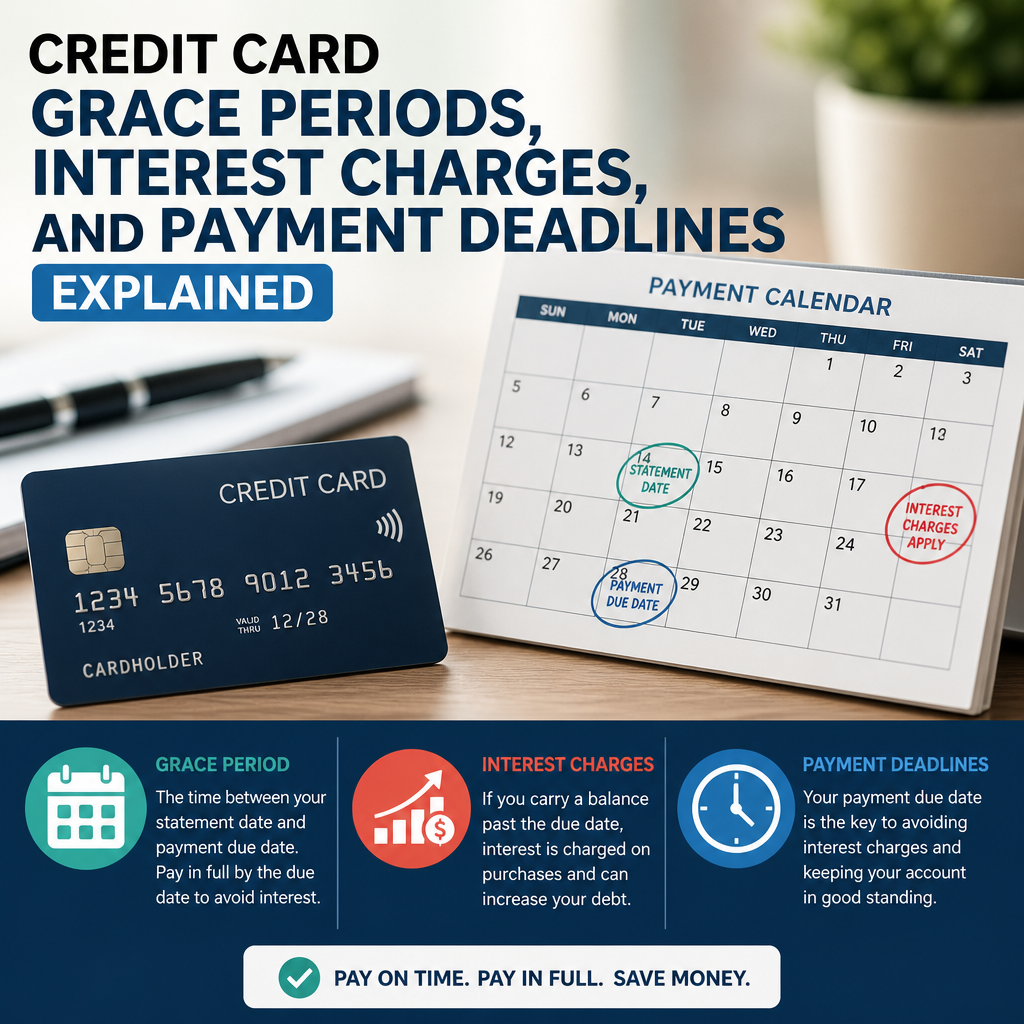
A credit card grace period is the time between the end of a billing cycle and the due date when you can pay your statement balance without being charged interest on new purchases.
Anúncios
In simple terms, if you pay the full statement balance by the payment deadline, you may avoid interest on purchases made during that billing cycle.
How the grace period usually works
Most credit cards offer a grace period on purchases if:
- You pay your full statement balance by the due date
- You do not carry a balance from the previous month
- Your card issuer’s terms include a grace period, which most do for purchases
The grace period does not usually apply to:
- Cash advances
- Balance transfers
- Some promotional purchases
- Any balance you already carried from a previous month
That distinction matters because many people assume all transactions get the same treatment. They do not.
A simple example
Suppose your billing cycle ends on the 10th of the month, and your payment deadline is the 5th of the next month. If you buy groceries on the 11th, those charges appear on the next statement. If you pay that next statement in full by the due date, you avoid interest on those purchases.
But if you pay only part of the balance, your grace period may disappear, and interest may begin to accrue on new purchases and possibly on the remaining balance.
Credit Card Grace Periods, Interest Charges, and Payment Deadlines: How They Work Together
These three parts of your credit card account are closely connected.
- The billing cycle determines what transactions appear on your statement.
- The payment deadline tells you when the minimum payment or full payment is due.
- The grace period is your chance to pay the statement balance without interest on purchases.
When you understand the relationship between them, it becomes much easier to manage your card responsibly.
Billing cycle versus payment deadline
Your billing cycle is the period during which purchases, payments, and credits are tracked. At the end of the cycle, your issuer creates a statement showing:
- Statement balance
- Minimum payment due
- Due date
- Any interest charges
- Fees, if applicable
The payment deadline is the date by which your payment must arrive, not the date you mail it or schedule it. If you pay late, even by one day, your issuer may charge a late fee and possibly penalty interest.
Why the grace period is so important
Without a grace period, interest can start accruing as soon as you use your card. With a grace period, you get a short window to borrow money interest-free on purchases. That’s a valuable feature, but it only works if you pay on time and in full.
When Interest Charges Start
Interest charges on credit cards can begin in several ways, depending on how you use the card and what type of balance you carry.
If you carry a balance
If you do not pay the full statement balance by the due date, you may lose the grace period. Once that happens, interest may accrue on:
- Unpaid purchases
- New purchases
- Cash advances
- Balance transfers, depending on the terms
This can make even small balances expensive over time.
If you take a cash advance
Cash advances typically start accruing interest immediately. They usually do not come with a grace period. In addition, cash advance APRs are often higher than purchase APRs, and fees may apply.
If you miss a payment
Missing a payment can trigger:
- Late fees
- Loss of grace period
- Possible penalty APR, depending on your card agreement
- Damage to your credit score if the payment becomes seriously overdue
A single missed due date can make your account more expensive for months.
How Credit Card Interest Is Calculated
Credit card interest usually compounds daily, which means the issuer charges interest based on your average daily balance and annual percentage rate, or APR.
You do not need to calculate it by hand to use your card wisely, but it helps to know the basics.
Common factors that affect interest
Interest charges depend on:
- Your APR
- Your daily balance
- Whether your card uses a daily periodic rate
- Whether you carry a balance
- Whether you have promotional or penalty pricing
Why minimum payments are risky
Making only the minimum payment keeps your account in good standing, but it usually does not eliminate interest. In fact, it can extend repayment for a long time and increase the total cost of purchases.
For example, if you carry a balance month after month, interest can pile on top of interest. That makes it harder to pay off the debt and easier to fall behind again.
How to Find Your Payment Deadline
Your payment deadline is listed on your monthly statement and in your online account. Many issuers also send reminders by email or text.
Where to look
Check:
- Your monthly billing statement
- Your online account dashboard
- Your mobile banking app
- Account alerts from your card issuer
Timing matters
Most issuers require that your payment be received by the due date. To avoid problems:
- Pay a few days early
- Set up automatic payments if you trust your cash flow
- Avoid waiting until the final hour on the due date
If your payment is late because of a bank processing delay, you may still be responsible.
How to Keep Your Grace Period Intact
If you want to keep enjoying interest-free purchases, consistency is key.
Best practices
- Pay the full statement balance every month
- Make payments before the due date
- Avoid carrying balances
- Track spending during the billing cycle
- Review your statements for fees or unexpected charges
These habits help preserve your grace period and reduce the odds of interest charges.
Practical budgeting tip
Treat your credit card like a payment method, not a loan. If you use it for recurring expenses such as gas, groceries, or subscriptions, build a habit of setting aside money for the upcoming statement. That way, the balance is ready to pay when the bill arrives.
What Happens If You Lose the Grace Period?
Losing the grace period does not always mean disaster, but it does mean costs can rise quickly.
Common consequences
If you lose your grace period:
- New purchases may begin accruing interest immediately
- You may owe interest on unpaid balances
- Your total monthly payment burden may increase
- It may take longer to restore interest-free status
Some issuers may restore the grace period after you pay your balance in full for one or more billing cycles, but the exact policy depends on the card agreement.
Read the card agreement
Credit card terms vary. Some cards have more flexible rules, while others are stricter. The cardholder agreement explains:
- APRs
- Due dates
- Grace period terms
- Fee policies
- How interest is applied
It’s worth reviewing this document, especially if you are trying to avoid finance charges.
Common Mistakes That Lead to Interest Charges
Many people pay interest not because they spend too much, but because they misunderstand the rules.
Mistake 1: Paying the minimum instead of the full balance
The minimum payment keeps your account current, but it does not usually prevent interest.
Mistake 2: Missing the due date
Even a late payment by one day can trigger fees and interest consequences.
Mistake 3: Confusing the current balance with the statement balance
Your online account may show a current balance that is higher than the statement balance because of recent purchases. To preserve the grace period, the key number is often the statement balance.
Mistake 4: Ignoring cash advance rules
Cash advances are usually expensive and start accruing interest right away.
Mistake 5: Assuming all cards work the same way
Different issuers may handle due dates, posting times, and promotional offers differently. Always verify the details for your specific card.
How to Avoid Unnecessary Credit Card Interest
You do not need a complicated strategy to stay ahead of interest charges. A few simple habits go a long way.
Easy ways to stay on track
- Turn on payment reminders
- Use automatic payments for at least the minimum, then pay the rest manually
- Check your statement as soon as it posts
- Keep a calendar reminder for your due date
- Use alerts for spending, balance, and payment confirmations
If you’re carrying debt already
If you already have a balance, focus on reducing it while staying current. You might:
- Pay more than the minimum when possible
- Pause nonessential card spending
- Consider a balance transfer only if you understand the fees and terms
- Look for opportunities to lower your APR through a lower-rate card or a call to your issuer
The goal is to stop interest from snowballing.
How Payment Deadlines Affect Your Credit Score
Payment deadlines matter not just for interest charges, but also for your credit health.
On-time payments help your score
Payment history is a major factor in most credit scoring models. Paying on time supports a stronger credit profile.
Late payments can hurt
If a payment is late enough to be reported, it can negatively affect your credit score. The longer the delay, the more serious the impact may become.
A consistent payment routine is one of the simplest ways to protect both your finances and your credit.
Special Situations to Know
Some credit card features change how interest and deadlines work.
Introductory 0% APR offers
Promotional rates can offer a temporary break from interest on purchases or balance transfers. But these offers still come with deadlines, and if you miss a payment, you may lose the promotion or trigger a penalty rate.
Rewards cards
Rewards cards can be great for earning points, cash back, or travel perks, but rewards do not cancel interest. If you carry a balance, the interest cost can wipe out the value of the rewards.
Business and student cards
Business and student cards often follow the same basic rules as other cards, though terms may vary. Read the agreement closely so you know whether a grace period applies and how the issuer handles payment timing.
A Quick Checklist Before You Make a Payment
Use this checklist to avoid surprise charges:
- Did your statement post for the month?
- Do you know the exact due date?
- Are you paying the full statement balance?
- Have you confirmed the payment method and date?
- Have you checked for pending transactions that may affect your next bill?
A few minutes of review can prevent costly mistakes.
Frequently Asked Questions
1. What is the difference between a grace period and a due date?
The due date is the deadline for making your payment. The grace period is the time after the billing cycle ends and before the due date when you can pay the statement balance without interest on purchases. The due date is the endpoint; the grace period is the window that makes interest-free borrowing possible.
2. Do all credit cards have a grace period?
Most credit cards offer a grace period on purchases, but not all transactions qualify. Cash advances usually do not have one, and some cards or promotions may follow different rules. Always check your cardholder agreement to confirm whether your card offers a grace period and how it applies.
3. If I pay late one month, do I lose the grace period forever?
Not necessarily. Many issuers restore the grace period after you pay your balance in full on time for a billing cycle or two, but policies differ. The card agreement explains the exact conditions for regaining it. If you’re unsure, contact your issuer directly.
4. Why was I charged interest even though I made a payment?
You may have paid less than the full statement balance, missed the due date, carried a balance from the previous cycle, or made a cash advance. Interest can also apply to balances that were not fully paid off from earlier statements. Reviewing the statement details will usually reveal the reason.
5. Is it better to pay before the due date or on the due date?
Paying before the due date is usually safer. It helps you avoid bank processing delays, weekends, holidays, and last-minute mistakes. If you use automatic payments, schedule them early enough to ensure the payment posts on time.
Official Resources
- Consumer Financial Protection Bureau: Credit cards
- Federal Trade Commission: Credit and loan topics
- Federal Reserve: Credit cards
- FDIC: Managing your credit card debt
- USA.gov: Credit reports and scores
Conclusion
Credit card grace periods, interest charges, and payment deadlines may sound like small details, but they have a big impact on how much your card actually costs. When you know how the billing cycle works, what the due date means, and which transactions qualify for a grace period, you can avoid many of the most common credit card mistakes.
The key is simple: pay the full statement balance on time whenever possible, watch out for cash advances and balances that carry over, and read your card terms so you know exactly how your issuer handles interest. These habits can help you preserve interest-free purchases, reduce fees, and keep your credit in better shape.
If you’re trying to become a more confident cardholder, start with one small step today. Review your next statement, note the payment deadline, and set a reminder before the due date. That single habit can save you money and make your credit card work for you instead of against you.