Global Growth Slows in 2026 as Energy Prices and Trade Risks Rise
As the world enters 2026, global growth is expected to face a tougher environment than many economists hoped for just a year earlier. Rising energy prices, renewed trade friction, and weaker demand in several major economies are combining to slow momentum across regions. While no single factor explains the shift, the overall picture is clear: businesses, consumers, and policymakers are navigating a more uncertain global economy.
This slowdown does not mean recession is inevitable. Instead, it signals a period where growth may be uneven, inflation risks could reappear, and supply chains may remain vulnerable. For companies that depend on international markets, understanding these pressures is essential. For households, the effects may show up in higher utility bills, more expensive goods, and slower wage gains.
What Is Driving the Slowdown in Global Growth?
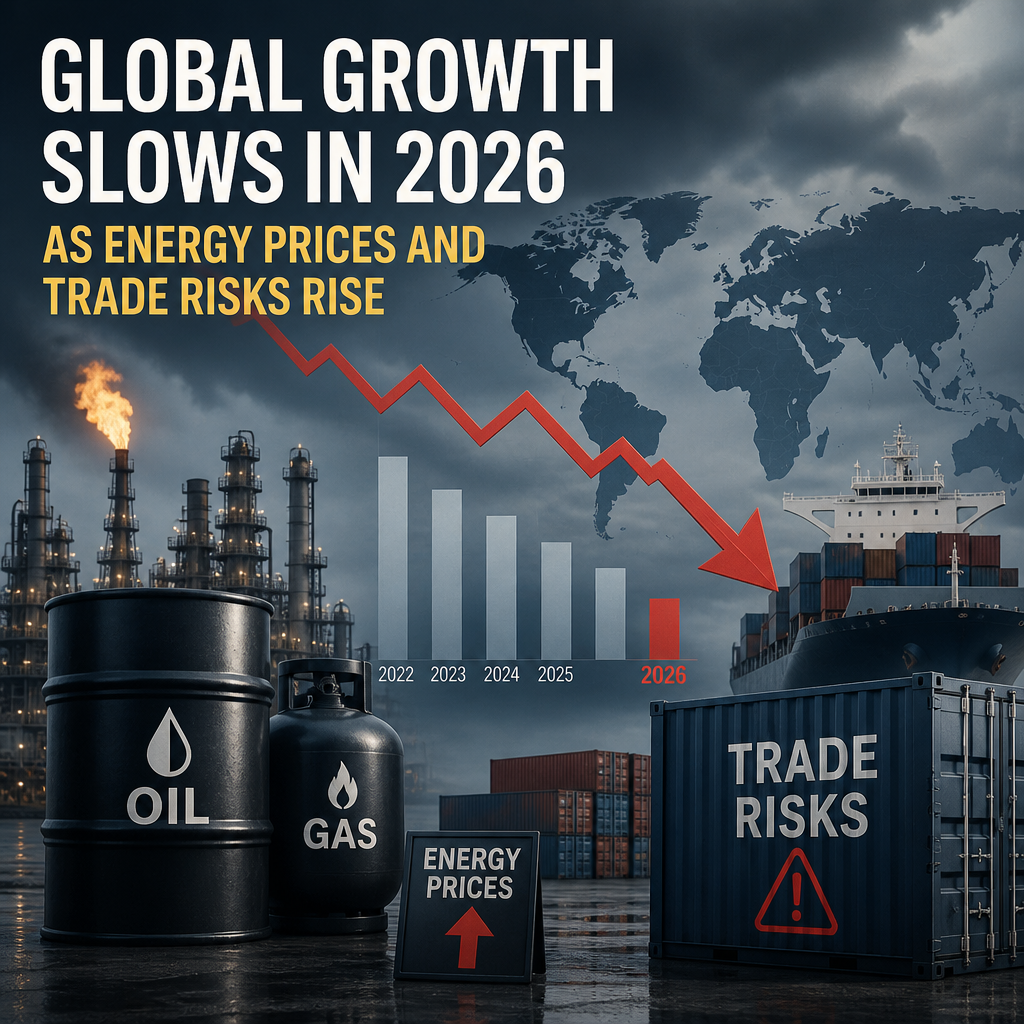
Several forces are weighing on the outlook for global growth in 2026. Some are cyclical, while others reflect deeper structural tensions that have been building for years.
Higher Energy Prices Are Pressuring Businesses and Consumers
Energy remains one of the most important inputs in the global economy. When oil, natural gas, or electricity prices rise, the effects ripple widely.
Higher energy costs can:
- Increase transportation and shipping expenses
- Raise production costs for manufacturers
- Put pressure on household budgets
- Add to inflation in food, goods, and services
Even economies that are less dependent on imported energy can feel the impact. For example, a logistics company may pay more for fuel, while a bakery may spend more on electricity and delivery. Those added costs often move down the chain to consumers.
Trade Risks Are Rising Again
Global trade has become more fragile. Tariffs, export controls, industrial policy disputes, and geopolitical tensions are all contributing to a less predictable trade environment.
In practical terms, trade risks can lead to:
- Delays at ports and border crossings
- Higher costs for imported materials
- Reduced access to key markets
- Repricing of supply chain contracts
Companies that once relied on a stable international sourcing model are now reassessing where and how they buy products. Some are diversifying suppliers, while others are reshoring or nearshoring production to reduce exposure.
Weak Demand in Major Economies Is Adding Pressure
Even without external shocks, global growth tends to slow when major economies soften at the same time. Slower consumer spending, tighter credit conditions, and hesitant business investment can all reduce momentum.
When demand weakens in large markets, exporters in other countries often feel it quickly. Industries such as autos, electronics, machinery, and consumer goods are especially sensitive to this shift.
How Energy Prices Affect Global Growth
Energy costs do more than raise utility bills. They influence inflation, trade balances, investment decisions, and consumer confidence.
Inflation Can Reaccelerate
When energy prices rise, inflation often becomes harder to control. Businesses face increased operating costs and may pass those costs on to customers. Central banks then face a difficult tradeoff: support growth or keep interest rates high enough to restrain inflation.
This matters because persistent inflation can reduce real income and make borrowing more expensive for households and firms.
Transportation and Logistics Become Costlier
Oil and fuel prices affect nearly every sector that moves physical goods. A jump in fuel costs can affect:
- Air freight
- Ocean shipping
- Trucking
- Warehousing and distribution
For global supply chains, even modest increases in transport costs can alter sourcing decisions and reduce margins.
Energy-Intensive Industries Feel the Strain First
Industries such as chemicals, metals, cement, and heavy manufacturing are especially exposed to energy price shocks. When costs rise, companies may delay capital spending or cut output, which in turn weakens employment and investment.
Trade Risks in 2026 Are More Than a Policy Issue
Trade risk is not limited to tariffs. It now includes a broader set of vulnerabilities tied to geopolitics, regulation, and supply-chain concentration.
Tariffs and Countermeasures Raise Costs
When one country raises import duties, trading partners may respond with their own measures. These actions can reduce volumes and increase costs for firms on both sides.
Businesses often absorb part of the cost at first, but over time those higher expenses tend to reach consumers or limit growth in corporate earnings.
Export Controls Affect Strategic Sectors
Semiconductors, advanced manufacturing equipment, energy technology, and defense-related goods are increasingly subject to export controls and licensing rules. These restrictions can slow cross-border investment and complicate production planning.
Supply Chains Remain Vulnerable to Shocks
Companies have spent years improving resilience, but the system remains exposed to:
- Shipping disruptions
- Political instability
- Natural disasters
- Infrastructure bottlenecks
A single disruption can still cause shortages or delivery delays, especially when inventories are lean.
Which Regions May Feel the Slowdown Most?
The effects of slower global growth will not be the same everywhere. Some economies are better positioned than others, depending on energy dependence, trade exposure, fiscal space, and domestic demand.
Europe Faces a Narrow Path
Europe is particularly sensitive to energy prices and external trade conditions. Many businesses in the region rely on imported energy and cross-border commerce. If prices stay elevated, households may cut spending and manufacturers may struggle with thinner margins.
At the same time, tighter monetary conditions can make financing more expensive, slowing construction and investment.
Export-Driven Asian Economies Could See Weaker Orders
Many Asian economies depend heavily on global trade. If demand softens in North America and Europe, exporters may see fewer orders for electronics, machinery, and consumer goods.
Some countries in the region have also invested heavily in industrial supply chains, which makes them vulnerable to disruptions in logistics and input costs.
Energy Producers May Gain Revenue but Face Volatility
Countries that export oil, gas, or refined energy products may benefit from higher prices in the short term. However, those gains can be offset by inflation, currency volatility, or weaker global demand for other exports.
In other words, higher energy prices are not an unqualified benefit even for producers.
Emerging Markets Face the Most Complex Tradeoffs
Emerging markets often face the hardest balancing act. They may need to manage inflation, currency pressure, debt service costs, and slower trade all at once.
If energy imports become more expensive, governments may face pressure to support households through subsidies or price controls. That can strain public finances if the slowdown lasts too long.
What This Means for Businesses
For companies, the 2026 outlook calls for discipline, flexibility, and scenario planning. Waiting for conditions to normalize may no longer be a reliable strategy.
Review Supply Chains
Businesses should map key suppliers, identify single points of failure, and look for alternate sourcing options. It is often wise to evaluate:
- Supplier concentration risk
- Transportation routes and backup options
- Inventory buffers for critical inputs
- Contract terms tied to energy or freight costs
This kind of review can help companies respond faster when conditions change.
Watch Margin Pressure Closely
Rising energy and trade costs can compress margins quickly. Firms should track where costs are rising the fastest and decide whether to pass them on, absorb them, or offset them elsewhere.
For example, a manufacturer may renegotiate contracts with logistics providers, while a retailer may adjust pricing only on select product lines.
Reassess Capital Spending
When the outlook is uncertain, businesses may need to prioritize projects with the strongest return and the shortest payback period. Large expansion plans can wait if financing costs are high and demand is soft.
That does not mean stopping investment altogether. It means being selective.
What This Means for Households
Consumers may not follow trade policy or energy markets closely, but they feel the effects in daily life.
Household Budgets Could Tighten
Higher gasoline, heating, and electricity costs can leave less room for discretionary spending. Families may respond by cutting back on travel, dining out, or large purchases.
Credit Conditions Matter More in a Slower Economy
If borrowing costs remain elevated, mortgages, auto loans, and credit card balances become more expensive to carry. That can reduce confidence and delay big-ticket spending decisions.
Planning Becomes More Important
In uncertain times, households benefit from a simple financial checklist:
- Build or protect an emergency fund
- Reduce high-interest debt where possible
- Track monthly energy and utility costs
- Avoid overcommitting to variable-rate borrowing
These steps do not eliminate macroeconomic risk, but they can reduce personal exposure to it.
How Policymakers Can Respond
Central banks and governments have limited tools, and each comes with tradeoffs. Still, they can help cushion the slowdown if they act carefully.
Central Banks Must Balance Inflation and Growth
If energy prices push inflation higher, monetary authorities may hesitate to cut rates. But keeping policy too tight for too long can deepen the slowdown.
The challenge is to avoid overreacting to temporary price spikes while still keeping inflation expectations anchored.
Governments Can Target Relief Carefully
Well-designed support may help households and small businesses handle temporary energy cost spikes. The key is to avoid broad subsidies that distort prices or strain budgets too much.
Targeted support, infrastructure investment, and energy diversification can improve resilience over time.
Trade Policy Needs Predictability
Businesses can adapt to tariffs, quotas, and regulations better when they understand the rules. Sudden changes create uncertainty, which reduces investment and hiring.
More predictable trade frameworks would help stabilize global growth even in a more competitive world.
Practical Signals to Watch in 2026
The outlook can shift quickly, so it helps to monitor a few leading indicators.
Energy Market Developments
Watch oil and natural gas prices, refinery capacity, shipping fuel costs, and inventory levels. These are early signals of whether inflation pressures may persist.
Trade and Shipping Data
Freight rates, port congestion, customs delays, and new trade restrictions can reveal whether global commerce is becoming more constrained.
Business and Consumer Confidence
If companies begin postponing hiring or investment and households cut spending, slower growth may intensify.
Central Bank Guidance
Statements from major central banks can offer clues about rate policy, inflation tolerance, and expectations for the broader economic path.
How Businesses and Investors Can Stay Prepared
No one can fully predict the next year, but preparation reduces risk.
Focus on Resilience, Not Just Efficiency
The leanest supply chain is not always the safest. A slightly more diversified model may be worth the added cost if it prevents major disruptions.
Use Scenario Planning
Companies should consider multiple outcomes, such as:
- Energy prices stay high
- Trade barriers increase
- Demand softens more than expected
- Inflation eases and policy becomes more supportive
Thinking through these cases helps management respond faster.
Keep Communication Clear
Employees, customers, and suppliers all want clarity when conditions worsen. Honest communication builds trust and reduces confusion during uncertain periods.
Frequently Asked Questions
1. Why is global growth slowing in 2026?
Global growth is slowing because higher energy prices, stronger trade risks, and weaker demand in major economies are all reducing momentum. These factors raise costs, compress margins, and make businesses more cautious about hiring and investment.
2. How do energy prices affect the global economy?
Energy prices influence transportation, manufacturing, utilities, and inflation. When fuel and electricity costs rise, businesses often pay more to produce and ship goods, and consumers may face higher prices for many everyday items.
3. What trade risks are most important in 2026?
The biggest trade risks include tariffs, export controls, shipping disruptions, and geopolitical tensions. These can increase supply-chain costs, limit market access, and delay the flow of goods and components.
4. Which industries are most exposed to slower global growth?
Export-oriented manufacturing, logistics, energy-intensive industries, and companies with complex international supply chains are especially exposed. Retail, travel, and consumer discretionary sectors may also feel the impact if households spend less.
5. How can businesses prepare for a weaker global economy?
Businesses can prepare by reviewing supply chains, diversifying suppliers, managing margin pressure, and prioritizing capital spending carefully. Scenario planning and stronger cash management can also help companies stay resilient.
Official Resources
- International Monetary Fund (IMF)
- World Bank
- U.S. Energy Information Administration (EIA)
- World Trade Organization (WTO)
- Organisation for Economic Co-operation and Development (OECD)
Conclusion
The outlook for global growth in 2026 reflects a world that is more exposed to shocks than it was just a few years ago. Higher energy prices can quickly raise costs across transportation, manufacturing, and household budgets. At the same time, trade risks are making it harder for companies to rely on stable sourcing, predictable shipping, and frictionless market access.
That does not mean the global economy is heading into a deep crisis. It does mean the next phase of growth is likely to be slower, more uneven, and more vulnerable to policy mistakes or external shocks. Businesses that focus on resilience, flexible planning, and cost discipline will be better positioned to adapt. Households that monitor spending and strengthen financial buffers may feel less of the strain.
In uncertain periods, the best response is not panic but preparation. By watching energy markets, trade developments, and central bank signals, decision-makers can stay ahead of changing conditions. The 2026 environment may be challenging, but informed planning can still create room for stability and long-term opportunity.