Emergency Food Assistance Programs for Families in Immediate Need
Emergency food assistance can provide fast, practical relief when your family is facing a short-term food crisis, helping you access groceries, meals, and other essentials without delay. Whether the need comes from job loss, unexpected bills, or a gap in benefits, these programs are designed to help you get through the immediate moment with dignity.
By: Emily Adams - Benefits on August 2, 2026
Anúncios
When a family runs out of food or cannot afford enough groceries, the pressure is immediate and overwhelming. Emergency food assistance programs for families facing immediate need can provide fast, practical support while households figure out their next steps. These programs are designed to help people bridge a short-term crisis, whether the problem is job loss, a medical bill, reduced hours, a delay in benefits, or an unexpected emergency.
If you are searching for food help right now, the most important thing to know is this: you do not have to wait until things get worse. Many local and national resources exist to help families access groceries, prepared meals, infant formula, and other essential food items quickly and with dignity.
Anúncios
What Emergency Food Assistance Programs Do
Emergency food assistance programs help people meet urgent food needs when money is tight or food access is limited. They are often designed to provide immediate relief, not long-term budgeting support.
These programs may offer:
Anúncios
Boxes or bags of groceries
Pre-packed meals
Fresh produce
Infant formula and baby food
Pantry staples like rice, beans, pasta, and canned goods
Referrals to additional nutrition and social services
Some programs focus on families with children, while others serve anyone in need. Many are open to households regardless of immigration status, employment status, or prior use of benefits, though rules vary by program.
Common Types of Emergency Food Assistance Programs
Understanding the main options can help you find the fastest and most appropriate support.
Food Pantries and Food Banks
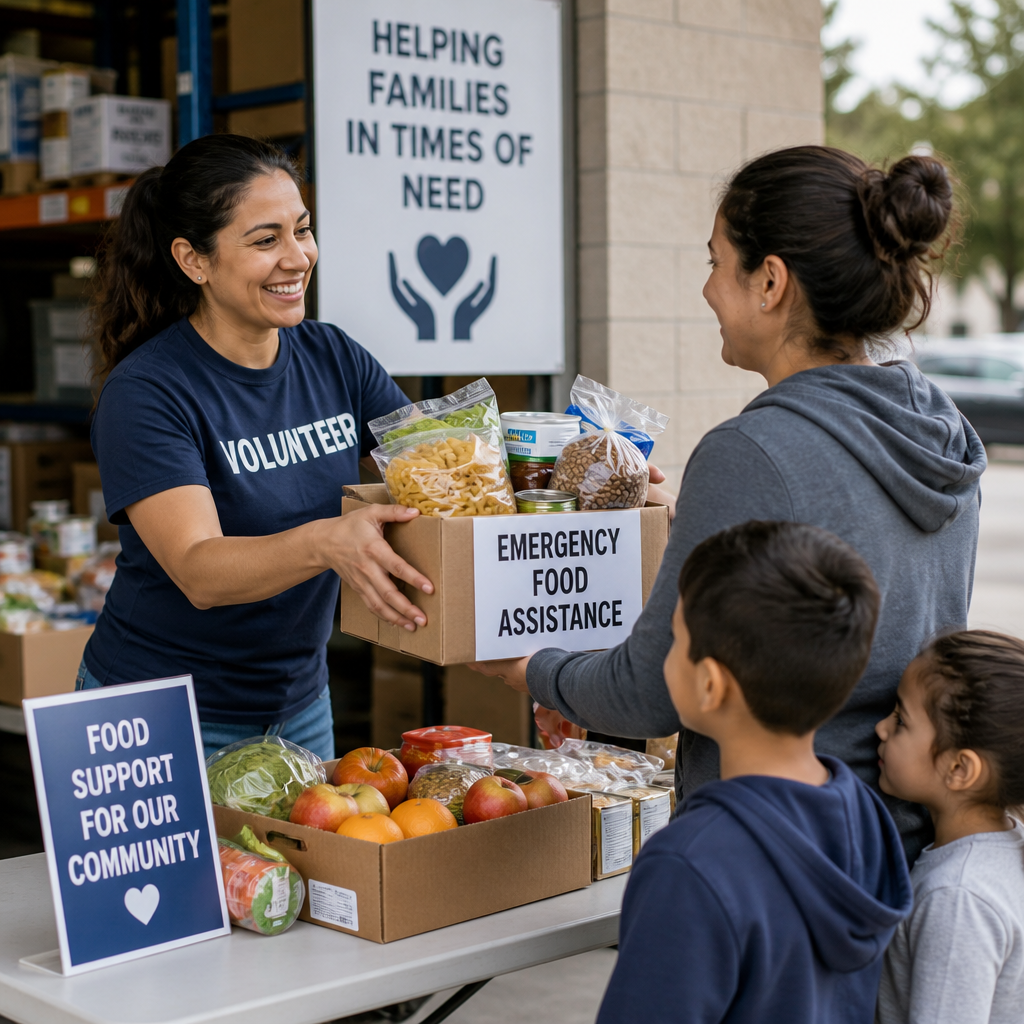
Food pantries are local distribution sites where families can receive groceries, usually at no cost. Food banks typically collect, store, and distribute food to pantries, shelters, and community organizations.
Food pantries may be located in:
Churches
Schools
Community centers
Nonprofit organizations
Public housing communities
Some pantries require an appointment, while others offer walk-in hours. Many do not ask for extensive paperwork, especially in emergencies.
SNAP Benefits
The Supplemental Nutrition Assistance Program (SNAP) is a federal program that helps low-income households buy food at authorized retailers. While SNAP is not always instant, it can be a crucial part of longer-term food stability.
In some states, households facing a very urgent need may qualify for expedited SNAP, which speeds up the application process for eligible families.
SNAP can help families purchase:
Fruits and vegetables
Meat, poultry, and fish
Dairy products
Bread and cereal
Seeds and plants that produce food
It generally cannot be used for hot prepared foods, alcohol, or non-food household items.
School and Child Nutrition Programs
Families with children may also benefit from food programs tied to schools and child care settings. These can be especially helpful when school meals are part of a child’s regular nutrition.
Examples include:
School breakfast and lunch programs
Summer meal sites
After-school meal programs
Child and Adult Care Food Program sites
Weekend backpack food programs
If your child is missing school meals due to closures, transportation barriers, or family hardship, contacting the school district is a smart first step.
WIC for Pregnant Women, Infants, and Young Children
The Special Supplemental Nutrition Program for Women, Infants, and Children (WIC) supports pregnant people, new parents, infants, and children under five who meet income and nutrition risk requirements.
WIC helps with:
Formula and baby foods
Healthy foods for caregivers and young children
Nutrition counseling
Breastfeeding support
Referrals to health services
For families with a new baby or a child under five, WIC can be one of the most valuable forms of emergency food assistance.
Community Meals and Shelter Services
Some families need food that is ready to eat right away. Community kitchens, shelters, drop-in centers, and faith-based organizations often provide prepared meals with no charge.
This can be especially important for:
People without cooking facilities
Families in temporary housing
Individuals fleeing domestic violence
Households dealing with power outages or displacement
Disaster Food Assistance
If your family has been affected by a disaster such as a flood, fire, hurricane, or extended outage, there may be special emergency food assistance programs available through local, state, or federal agencies. These may include disaster meal sites, grocery replacement support, or temporary benefit changes.
How to Find Food Help Quickly
If the need is urgent, start with the fastest and most local options. In many cases, you can get food the same day.
Step 1: Call 2-1-1
In many parts of the United States, dialing 2-1-1 connects you to a local referral specialist who can help locate food pantries, shelters, meal sites, rental assistance, and other emergency services.
Be ready to share:
Your ZIP code
Household size
Ages of children, if any
Transportation limitations
Whether you need same-day food
Step 2: Search Local Food Banks
Most regional food banks maintain searchable online lists of food pantries and distribution schedules. These sites often include updated hours, eligibility details, and whether you need an appointment.
Look for:
Drive-through distributions
Weekend pantry hours
Mobile food pantry routes
Special child-focused distributions
Step 3: Contact Schools, Libraries, and Community Centers
Schools, libraries, and community centers often know about nearby food resources and may host local distributions themselves. A school counselor, family liaison, or social worker can sometimes connect families to emergency food assistance programs faster than a general search.
Step 4: Check Faith-Based and Neighborhood Organizations
Many churches, mosques, synagogues, and neighborhood nonprofits offer food assistance without requiring formal applications. These programs may be especially helpful for families who need help after normal business hours or on weekends.
Step 5: Apply for Public Benefits if You Qualify
If your hardship is likely to continue beyond a few days, consider applying for SNAP, WIC, or other nutrition support. Even if you need food today, beginning the application process now can reduce future stress.
What to Bring When You Ask for Help
Many emergency food assistance programs try to keep the process simple. Still, having a few basic items ready can speed things up.
Useful documents may include:
Photo ID
Proof of address, if available
Household information
Birth dates for children
Benefit letters, if applicable
Proof of income, if required for the program
If you do not have all the documents, do not assume you cannot get help. Many programs can still assist you and tell you what to bring next time.
What to Expect at a Food Pantry or Distribution Site
If you have never used a pantry before, the process may feel unfamiliar. Most sites try to make it easy and respectful.
A typical visit might look like this:
You arrive during operating hours or at a scheduled appointment.
Staff or volunteers greet you and ask basic household questions.
You receive a pre-packed box or choose items from a shelf.
You may be offered information about additional services.
You leave with groceries or prepared food for your family.
Some pantries allow repeat visits weekly or monthly, while others limit how often you can receive food. If your need continues, ask about return policies and nearby partner locations.
Tips for Making the Most of Emergency Food Assistance
Emergency food support is helpful, but a little planning can make it go further.
Focus on Flexible Ingredients
When possible, choose foods that can be used in multiple meals:
Rice
Pasta
Canned beans
Peanut butter
Oats
Canned vegetables and fruit
Shelf-stable milk
Tuna or canned chicken
These items can stretch across several breakfasts, lunches, and dinners.
Build Simple Meals
A few low-cost meal ideas include:
Beans and rice with vegetables
Pasta with canned tomatoes and tuna
Oatmeal with fruit
Peanut butter sandwiches with fruit
Soup with crackers and a side of vegetables
Even simple meals can help keep children and adults fed during a difficult time.
Ask About Special Dietary Needs
If someone in your household has diabetes, food allergies, or religious dietary needs, let the pantry or distribution site know. Some programs can offer gluten-free, low-sodium, halal, kosher, or allergen-sensitive options, though availability varies.
Keep a List of Nearby Resources
If your family is facing ongoing instability, create a short list of:
Food pantry addresses
Meal site hours
SNAP office contacts
School meal contacts
2-1-1 information
Having this list ready saves time when another emergency comes up.
How Emergency Food Assistance Programs Support Families Long Term
While these programs are built for immediate need, they often do more than fill a single gap. They can connect families to broader support systems that improve stability over time.
A family may discover access to:
Nutrition education
Benefit enrollment help
Housing referrals
Utility assistance
Clothing closets
Holiday meal programs
Job and family services
This matters because food insecurity rarely happens in isolation. One crisis can quickly affect rent, transportation, child care, and work attendance. Emergency food assistance programs can serve as a first line of support while families address the bigger issue.
When to Reach Out for Help
The best time to seek help is as soon as the situation becomes unmanageable. You do not need to wait until your cupboards are empty.
Consider reaching out if:
You are skipping meals to feed your children
You cannot afford groceries after paying rent or bills
You have lost income or hours at work
You are waiting for benefits to start
Your child is missing regular meals
A disaster has disrupted food access
You have no safe or reliable way to prepare food
Food insecurity can happen to working families, caregivers, seniors raising grandchildren, and households that have never needed help before. Asking for assistance is a practical response to a real problem.
Frequently Asked Questions
1. What is the fastest way to find emergency food assistance programs near me?
The quickest option is often to call 2-1-1 or search your local food bank’s website. These resources can connect you to nearby pantries, meal sites, and same-day food distributions.
2. Can I get food help even if I do not have all my documents?
Yes, many emergency food assistance programs can still help you without full documentation, especially in urgent situations. If paperwork is needed later, the program will usually explain what to bring next time.
3. How long does it take to get SNAP benefits?
The timeline depends on your state and household situation. Some families with very urgent needs may qualify for expedited SNAP, which can speed up the process. If you need food immediately, use a pantry or meal site while your application is pending.
4. Are food pantries only for people with very low income?
Not always. Many pantries focus on immediate need rather than strict income rules. Some ask about household size or basic eligibility, but the goal is usually to help anyone facing food insecurity.
5. What should I do if my child is missing school meals?
Contact the school district, school counselor, or family resource center right away. Ask about breakfast and lunch services, summer meal programs, weekend food backpacks, and other school-based food support.
Emergency food assistance programs for families facing immediate need play a vital role in helping households get through a crisis with less stress and more stability. Whether a family needs same-day groceries, prepared meals, infant formula, or help applying for longer-term benefits like SNAP or WIC, support is available through food banks, pantries, schools, community groups, and government programs.
The most important takeaway is simple: if your family is struggling to afford food, reach out now. You do not need to face food insecurity alone, and you do not need to wait until the situation becomes desperate. Start with the fastest local options, such as 2-1-1 or your nearest food bank, then follow up with benefit applications and school-based resources if needed. Small steps can make a meaningful difference, especially when time and money are tight.
Taking action today can help protect your family’s health, reduce stress, and create a clearer path forward. The sooner you connect with support, the sooner you can focus on restoring stability and meeting your household’s needs.
Emily A, holds a Master's degree in Public Administration (MPA) and has over 7 years of experience researching federal and state assistance programs. She writes educational content focused on government benefits, public policy, and community resources, using information from official agencies to help readers understand available programs and eligibility requirements.