Why Global Food Markets Are Increasingly Vulnerable to Economic and Climate Shocks
Anúncios
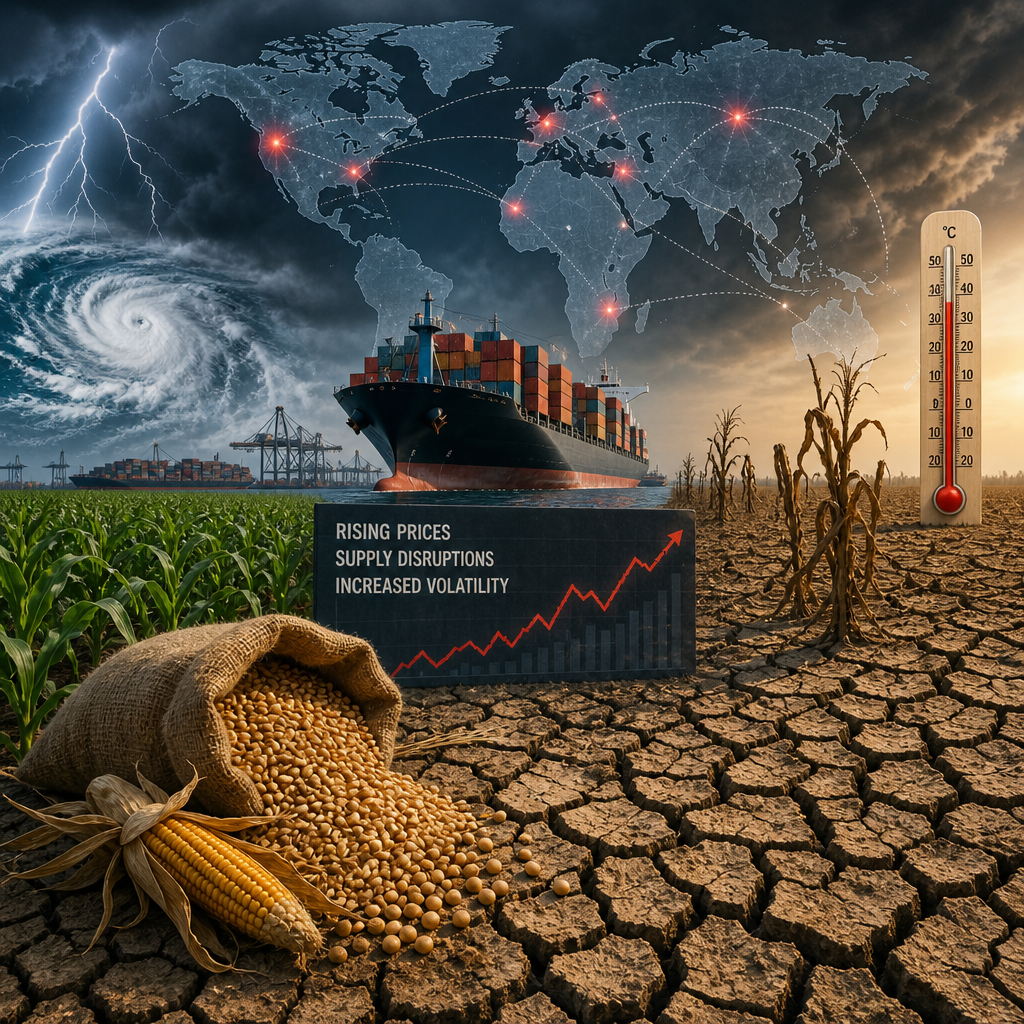
Global food markets have always been shaped by weather, trade, and consumer demand. But in recent years, the system has become far more fragile. A drought in one region, a shipping disruption in another, or a sudden spike in fuel costs can now ripple across continents much faster than many people realize. That growing fragility is why global food markets are becoming more vulnerable to economic and climate shocks.
Anúncios
This matters for farmers, food manufacturers, retailers, governments, and households alike. When supply chains tighten, prices rise, inventories shrink, and access becomes less predictable. The challenge is not just that shocks happen more often. It is that the modern food system is tightly connected, highly efficient, and often operating with little room for error.
What Makes Global Food Markets So Sensitive?
Global food markets rely on a complex network of growers, processors, freight operators, traders, exporters, importers, and retailers. That network works well when conditions are stable. But efficiency can also create vulnerability.
A system built for speed, not resilience
Over the last several decades, food supply chains have become leaner. Companies reduced storage costs, sourced ingredients from specialized regions, and depended on just-in-time delivery. That approach lowers costs under normal conditions, but it leaves less backup when something goes wrong.
Anúncios
For example:
- A grain exporter may depend on a single port.
- A food processor may rely on ingredients from multiple countries.
- A retailer may carry only a small buffer of inventory.
- A country may depend heavily on imports for staple foods.
When one link fails, the impact can spread quickly.
Dependence on a few key producing regions
Many major crops come from a relatively small number of regions. Wheat, corn, rice, coffee, cocoa, and vegetable oils are often concentrated in specific climate zones or countries. That concentration helps with scale, but it also increases risk.
If a major producer faces drought, flooding, labor shortages, or conflict, global supply can tighten almost immediately. Buyers in distant markets may compete for the same reduced supply, pushing prices higher.
Economic Shocks Are Hitting Food Markets Harder
Climate stress is only part of the story. Economic shocks also play a major role in the instability of global food markets.
Inflation affects every part of the chain
Food does not move from farm to table by itself. It requires labor, fertilizer, animal feed, fuel, packaging, storage, and transportation. When inflation rises in any of those areas, food prices can increase even if crop yields remain stable.
Common cost pressures include:
- Fuel and shipping expenses
- Fertilizer and pesticide prices
- Labor shortages and wage growth
- Packaging and processing costs
- Interest rates that raise borrowing costs for producers
These pressures can squeeze farmers and food companies at the same time. Some producers absorb the cost for a while, but many eventually pass it on to buyers and consumers.
Currency swings and trade disruptions
Global food trade depends heavily on exchange rates. If a country’s currency weakens, imported food becomes more expensive. That can strain national budgets and household incomes. In export-heavy markets, stronger currencies can also make goods less competitive abroad.
Trade policy can add another layer of uncertainty. Export restrictions, tariffs, sanctions, and border delays can all distort the flow of food. During periods of stress, countries often act to protect their domestic markets, but those decisions can worsen shortages elsewhere.
Debt and financial pressure on farmers
Farmers often operate with narrow margins and significant debt. When borrowing costs rise or commodity prices fall, their financial flexibility shrinks. That can limit investment in irrigation, storage, climate adaptation, or newer equipment.
In practice, this means the farming sector may be less able to respond when shocks hit. A farmer with little financial cushion cannot easily recover from a poor harvest or a sudden spike in input costs.
Climate Shocks Are Becoming More Frequent and More Severe
Climate change is not a distant threat to food markets. It is already affecting crop yields, livestock health, transport routes, and water availability.
Droughts, floods, and heat waves disrupt production
Extreme weather can reduce harvests, damage infrastructure, and delay planting or harvesting cycles. Heat stress can lower yields in many crops and affect animal productivity. Floods can destroy stored grain, erode soil, and disrupt road and rail networks.
Unlike some economic shocks, climate events can damage both current production and future capacity. Soil degradation, water scarcity, and repeated stress can make recovery slower over time.
Unpredictable seasons make planning harder
Farmers and commodity traders once relied more heavily on seasonal patterns. Today, those patterns are less reliable. Rainfall can arrive too early, too late, or not at all. Frost, storms, and wildfire risk can shift rapidly.
This unpredictability makes it harder to decide:
- What crops to plant
- When to plant them
- How much water or fertilizer to use
- When to hedge commodity risk
- How much inventory to store
When planning becomes harder, risk rises across the entire chain.
Climate shocks affect more than crop fields
A climate event does not stop at the farm gate. It can hit:
- Processing plants that need reliable power and water
- Ports and highways used for exports
- Cold storage facilities
- Rural labor availability
- Inland transport routes
A single weather event can therefore create a multiplier effect. One crop failure may lead to higher feed costs, which then affects meat and dairy prices, while transport delays further constrain availability.
Why Global Food Markets Amplify Shocks
The international food system is so interconnected that local problems often become global problems.
Commodity markets react quickly
Prices in food markets often move based on expectations, not just actual shortages. If traders think supplies will tighten, prices may rise before the shortage fully appears. That can create volatility even when consumers have not yet felt the direct impact.
This is especially true for:
- Wheat
- Corn
- Rice
- Soybeans
- Edible oils
- Sugar
- Coffee and cocoa
Because many foods are traded globally, a shock in one region can influence pricing, procurement, and food inflation in many others.
Just-in-time logistics leave little margin for delay
Modern shipping systems are efficient, but they are not built for repeated disruption. Port congestion, container shortages, labor disputes, and geopolitical instability can all delay shipments. Food products often have limited shelf life, and even shelf-stable goods depend on packaging, transport, and storage.
When logistics slow down, businesses may overpay for alternative sources or accept smaller margins. Consumers often see the result in higher prices or fewer product choices.
Biofuel demand can compete with food use
Some crops have multiple uses, including food, animal feed, and fuel. When demand for biofuels rises, it can affect the availability and price of corn, sugarcane, soy, and other feedstocks. That creates another layer of pressure in already tight markets.
How Consumers Feel the Impact
Food market shocks are not abstract. They show up in grocery receipts, restaurant menus, and household budgets.
Higher prices and less predictability
Consumers may notice:
- Larger swings in the price of staples
- Short-term shortages of specific items
- Smaller package sizes at the same price
- More frequent menu price increases
- Reduced quality or substitution of ingredients
For low-income households, even modest food price increases can create serious strain. These households often spend a larger share of income on food and have fewer options to absorb sudden cost increases.
Nutrition can suffer when budgets tighten
When families must spend more on basics, they may cut back on fruits, vegetables, protein, and other nutrient-rich foods. In some cases, they switch to cheaper processed products with lower nutritional value. That can worsen long-term health outcomes.
What Businesses and Governments Can Do
The good news is that vulnerability is not inevitable. Food systems can become more resilient with the right mix of policy, planning, and investment.
Diversify supply sources
Businesses can reduce risk by sourcing from multiple regions rather than depending on one supplier or one country. Governments can encourage this through trade partnerships, regional infrastructure, and import diversification strategies.
Build strategic reserves
Food and grain reserves can help smooth out temporary shortages and price spikes. These reserves are not a complete solution, but they provide breathing room during emergencies.
Invest in climate-smart agriculture
Farmers can improve resilience through practices such as:
- Efficient irrigation
- Drought-tolerant crop varieties
- Soil health management
- Agroforestry
- Better water storage
- Improved weather forecasting tools
These practices can help reduce losses and stabilize output over time.
Strengthen early warning systems
Better data can lead to better decisions. Governments, commodity organizations, and development agencies can monitor weather patterns, crop conditions, port delays, and market signals to detect emerging risks earlier.
Improve transparency in trade and pricing
Clearer reporting on inventories, exports, and harvest expectations can reduce panic-driven market behavior. When markets have better information, they are less likely to overreact to temporary disruptions.
Why This Trend Is Likely to Continue
The vulnerability of global food markets is not likely to fade soon. Population growth, changing diets, urbanization, water stress, and climate volatility all place pressure on the system. At the same time, geopolitical tensions and economic uncertainty continue to complicate trade.
More demand, more pressure
As incomes rise in some regions, demand for meat, dairy, and processed foods increases. Those products require more feed, land, and water than many staple crops. That adds pressure to supply chains already dealing with environmental stress.
Climate adaptation takes time
Farmers, processors, and governments can adapt, but adaptation takes investment and time. New irrigation systems, better infrastructure, and improved crop genetics do not appear overnight. In the meantime, shocks can still disrupt supplies.
Practical Lessons for a More Resilient Food System
A stronger food system does not mean eliminating risk entirely. It means reducing the size of the shock when one occurs.
Here are some practical lessons:
- Avoid overdependence on one source.
Diversification gives buyers more options when a region is hit by weather or political disruption. - Treat inventory as a resilience tool.
Running too lean can save money in the short term but increase exposure later. - Invest in local and regional capacity.
Stronger domestic and regional food systems can reduce reliance on long global routes. - Support farmers as risk managers.
Producers need access to credit, insurance, extension services, and climate information. - Plan for compounding shocks.
Economic stress and climate stress often happen together. Risk planning should reflect that reality.
Frequently Asked Questions
1. Why are global food markets more vulnerable now than in the past?
Global food markets are more vulnerable because supply chains are more interconnected and optimized for efficiency. That leaves less room to absorb disruptions from drought, inflation, trade restrictions, transportation delays, or geopolitical conflict.
2. How does climate change affect food prices?
Climate change can reduce crop yields, damage farmland, disrupt shipping, and increase uncertainty for farmers and traders. When supply falls or becomes less predictable, prices often rise.
3. Do economic shocks affect all food products the same way?
No. Some foods are more exposed than others. Products that depend on imported ingredients, fuel-intensive transport, or concentrated growing regions are usually more sensitive to inflation, currency shifts, and trade disruptions.
4. Can governments reduce food market volatility?
Yes. Governments can help by improving trade transparency, supporting strategic reserves, investing in climate-smart agriculture, strengthening infrastructure, and building early warning systems for shortages and price shocks.
5. What can consumers do when food markets become unstable?
Consumers can reduce stress by budgeting carefully, comparing prices, buying seasonal foods when possible, reducing waste, and staying flexible with meal planning. While individuals cannot fix the system, they can respond more strategically to price changes.
Official Resources
- U.S. Department of Agriculture (USDA) Economic Research Service
- Food and Agriculture Organization of the United Nations (FAO)
- World Bank – Food Security
- National Oceanic and Atmospheric Administration (NOAA) Climate.gov
- U.S. Environmental Protection Agency (EPA) – Climate Change
Conclusion
Global food markets are becoming more vulnerable because the forces shaping them now move faster, interact more tightly, and produce bigger ripple effects than before. Climate shocks such as droughts, floods, and heat waves can reduce supply and damage infrastructure. Economic shocks such as inflation, currency swings, trade restrictions, and higher borrowing costs can make those problems worse. Together, they create a system that is efficient, but often too brittle for today’s level of uncertainty.
The solution is not to retreat from global trade altogether. It is to build resilience into the system through diversification, better forecasting, stronger infrastructure, climate-smart agriculture, and more transparent markets. Businesses, governments, and consumers all have a role to play. The more attention we give to risk management now, the better prepared we will be when the next shock arrives.
Understanding these pressures is the first step toward a food system that can better withstand disruption and continue feeding people reliably in a changing world.