How International AI Principles Shape Responsible Technology Policies
Anúncios

Artificial intelligence is moving fast, but policy is struggling to keep up. Governments, businesses, and civil society groups are all asking the same question: how do we encourage innovation without sacrificing safety, fairness, and accountability? That is where international AI principles come in. These principles are becoming the blueprint for responsible technology policies across the world, influencing how countries regulate AI systems, how companies design products, and how institutions manage risk.
Anúncios
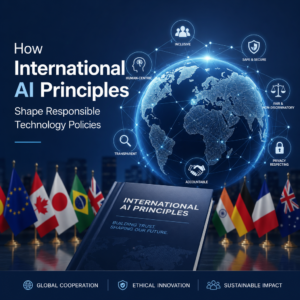
Rather than creating one single global law, international AI principles provide a shared foundation. They help align expectations around transparency, human oversight, privacy, security, and non-discrimination. As AI tools become embedded in hiring, healthcare, finance, education, and public services, these principles are no longer abstract ideals. They are shaping real-world governance decisions.
What Are International AI Principles?
International AI principles are high-level standards developed by governments, multilateral organizations, and expert bodies to guide the development and use of AI. They are not always legally binding, but they strongly influence national laws, industry frameworks, and organizational policies.
At their core, these principles usually emphasize:
Anúncios
- Human-centered design
- Transparency and explainability
- Fairness and inclusion
- Accountability
- Robustness and safety
- Privacy and data governance
- Security and resilience
- Human oversight and contestability
Different organizations may define these concepts in slightly different ways, but the common goal is the same: ensure AI serves people and does not undermine rights, trust, or public welfare.
Why They Matter
AI systems often operate at scale and influence outcomes that affect daily life. A poorly designed model can amplify bias, expose sensitive data, or make decisions that are difficult to challenge. International AI principles help policymakers and organizations avoid a fragmented approach by creating a common language for responsible technology policy.
How International AI Principles Influence Responsible Technology Policies
International AI principles shape policy in several important ways. They set expectations for how governments draft regulation, how agencies procure AI tools, and how organizations govern AI internally.
1. They Establish Shared Policy Goals
Before lawmakers can regulate AI, they need consensus on the values those rules should protect. International principles provide that foundation. For example, if a policy framework prioritizes accountability, it may require documentation, audits, or clear lines of responsibility for AI decisions.
This matters because AI policy is not only about technical performance. It is also about:
- Protecting human rights
- Preserving public trust
- Reducing discriminatory impacts
- Ensuring safe and secure deployment
By focusing on these common goals, international AI principles reduce confusion and help countries move in a similar direction, even when local laws differ.
2. They Guide National AI Regulations
Many national governments draw from international frameworks when creating AI laws and strategies. This influence is visible in areas such as risk assessment, transparency obligations, and oversight requirements.
For example, policymakers may adopt rules that require:
- Impact assessments before deploying high-risk AI
- Disclosure when users interact with AI-generated content or chatbots
- Human review for consequential decisions
- Recordkeeping for system design and training data
- Risk management throughout the AI lifecycle
These ideas often trace back to international AI principles endorsed by organizations such as the OECD, UNESCO, and the European Union. The principles help shape the structure of new laws even when local legal systems differ.
3. They Influence Corporate Governance and Compliance
Businesses do not wait for regulation to catch up. Many organizations use international AI principles to build internal governance programs, especially if they operate globally or serve regulated industries.
This often includes:
- AI ethics committees
- Model documentation standards
- Vendor due diligence processes
- Bias testing and evaluation
- Human-in-the-loop review systems
- Incident response plans for AI failures
For example, a financial services company using AI for loan recommendations may adopt fairness testing and explainability requirements based on international principles. Even if the law does not explicitly require them yet, these controls help reduce legal, reputational, and ethical risk.
4. They Create a Basis for Cross-Border Consistency
AI does not stop at borders. A company may train a model in one country, host it in another, and deploy it globally. In this environment, international AI principles are essential because they help create a consistent baseline across jurisdictions.
That consistency is useful for:
- Global product development
- International trade and digital services
- Public-sector procurement
- Cross-border data governance
- Multi-country compliance strategies
Without shared principles, companies could face conflicting expectations in every market. International alignment reduces complexity and supports more predictable responsible technology policies.
Key Principles Driving Responsible AI Policy
Although frameworks differ, several core ideas repeatedly show up in international AI principles. These ideas are now central to policy debates around responsible technology.
Transparency
Transparency means people should know when AI is being used and, where appropriate, understand how it works. That does not always mean revealing source code or proprietary models. It does mean giving meaningful information about purpose, limitations, and potential impacts.
Examples include:
- Labeling AI-generated content
- Explaining when automated systems affect eligibility decisions
- Publishing model cards or system summaries
- Disclosing data sources or training approaches at a high level
Transparency supports trust and enables oversight. Without it, users cannot assess whether a system is acting fairly or safely.
Accountability
Accountability makes sure someone is responsible when AI systems cause harm or make mistakes. Policies shaped by international AI principles usually assign responsibility to the deploying organization, not the algorithm itself.
That can involve:
- Clear ownership for AI decisions
- Audit trails
- Escalation procedures
- Independent review mechanisms
- Documentation of risk mitigation steps
Accountability is especially important in sectors like healthcare, law enforcement, and employment, where AI decisions can have serious consequences.
Fairness and Non-Discrimination
Fairness is one of the most important and challenging policy goals. AI systems can reflect or amplify bias if they are trained on incomplete, historical, or unbalanced data. International AI principles push policymakers to consider disparate impacts and to build safeguards against discrimination.
This may lead to requirements for:
- Testing model outcomes across groups
- Evaluating proxy variables
- Monitoring performance over time
- Using diverse datasets where appropriate
- Providing appeal or correction pathways
Responsible technology policy must go beyond intent and measure actual impact.
Privacy and Data Protection
AI depends on data, which makes privacy protections a major concern. International AI principles often reinforce the idea that data collection should be lawful, limited, and secure.
Policy responses can include:
- Data minimization requirements
- Consent and notice obligations
- Limits on secondary use
- Strong security controls
- Retention and deletion rules
These safeguards matter because AI can infer sensitive information even when it does not directly collect it.
Safety, Security, and Robustness
AI systems can fail due to poor training, unexpected inputs, adversarial attacks, or model drift. International AI principles increasingly emphasize robustness so that systems continue to function safely under real-world conditions.
Responsible policies may require:
- Stress testing before deployment
- Ongoing monitoring
- Red-team exercises
- Incident reporting
- Contingency plans for system shutdown or fallback
In high-stakes settings, robustness is not optional. It is a basic condition of trustworthy deployment.
Real-World Policy Effects Across Sectors
International AI principles are not just shaping abstract policy language. They are influencing how AI is governed in concrete industries.
Healthcare
In healthcare, AI may support diagnostics, triage, treatment recommendations, and administrative workflows. Policies informed by international principles often require human oversight, validation, and clear communication about system limitations.
This helps reduce risks such as:
- Misdiagnosis
- Overreliance on automated recommendations
- Data misuse
- Unequal performance across patient groups
Hiring and Employment
AI is increasingly used in recruiting, candidate screening, and workforce management. International principles encourage policymakers to address discrimination, explainability, and appeal rights in these contexts.
Responsible policies may require employers to:
- Test hiring tools for bias
- Inform applicants when AI is used
- Provide human review for adverse decisions
- Keep records of model use and outcomes
Public Services
Governments are also applying AI in benefits administration, tax processing, immigration, and fraud detection. Public-sector use raises especially high expectations for transparency and accountability because decisions often affect rights and access to essential services.
International principles help shape rules requiring:
- Public notice of AI use
- Impact assessments
- Human oversight
- Mechanisms for complaints and corrections
Finance
Banks and fintech companies use AI for fraud detection, credit scoring, and customer service. Principles related to fairness, explainability, and security are especially relevant because financial decisions can determine access to housing, loans, and other critical services.
Challenges in Turning Principles into Policy
International AI principles are influential, but they are not enough on their own. The hardest part is translating broad values into enforceable policy.
Principles Can Be Too Broad
A principle like “fairness” sounds clear, but different groups interpret it differently. One policymaker may focus on equal outcomes, while another prioritizes equal opportunity or procedural fairness. That makes implementation difficult.
Enforcement Can Lag Behind Innovation
AI technology changes quickly. Policies based on current systems may not account for future model capabilities, new deployment methods, or emerging risks. This creates pressure for adaptive governance.
Global Alignment Is Hard
Countries have different legal traditions, economic priorities, and views on speech, privacy, and competition. Even when they agree on broad principles, they may disagree on how to enforce them.
Small Organizations May Struggle
Large companies can build compliance teams and governance structures. Small businesses and public agencies may lack the resources to do the same, even if they want to follow responsible AI practices.
What Good Responsible Technology Policy Looks Like
The best policies do not just repeat principles. They operationalize them.
Practical Policy Features
A strong responsible AI policy usually includes:
- Risk-based rules that focus strongest controls on high-impact uses
- Clear definitions so organizations know what applies
- Documentation requirements for data, model design, and intended use
- Human oversight standards for consequential decisions
- Testing and monitoring before and after deployment
- Complaint and remediation pathways for affected users
- Regular updates as technology evolves
A Simple Example
Imagine a city government using AI to help prioritize housing applications. A principle-based policy would ask:
- Was the system tested for fairness?
- Can staff explain how it is used?
- Is there a human decision-maker?
- Can applicants challenge errors?
- Are performance metrics reviewed regularly?
This is the difference between abstract ethics and real governance. International AI principles help define the questions; responsible technology policy turns them into action.
The Future of AI Governance
International AI principles are likely to play an even bigger role as governments move from voluntary guidance toward more formal regulation. The future of AI governance will probably combine:
- International standards
- National laws
- Industry self-regulation
- Technical best practices
- Public oversight and civil society input
The most effective systems will be flexible enough to adapt but strong enough to protect people from misuse and harm. That balance is exactly why international AI principles matter. They create a shared foundation for trustworthy innovation, even in a rapidly changing technological landscape.
Frequently Asked Questions
What are international AI principles?
International AI principles are shared guidelines developed by governments and global organizations to promote responsible AI use. They usually focus on transparency, fairness, accountability, safety, privacy, and human oversight.
Are international AI principles legally binding?
Not always. Many are nonbinding frameworks, but they often influence national laws, corporate policies, procurement rules, and regulatory guidance. Over time, they can shape enforceable standards.
Why do governments rely on international AI principles?
Governments use them because AI crosses borders and affects many sectors. Shared principles help policymakers align around common values and create more consistent, responsible technology policies.
How do international AI principles affect businesses?
Businesses often use them to build internal AI governance programs, reduce compliance risk, and improve trust with customers and regulators. They can guide model testing, documentation, and oversight processes.
What is the biggest challenge in applying these principles?
The biggest challenge is turning broad ideas into practical rules. Concepts like fairness or transparency are easy to endorse but difficult to measure and enforce consistently across different AI uses.
Official Resources
- OECD AI Principles
- UNESCO Recommendation on the Ethics of Artificial Intelligence
- National Institute of Standards and Technology (NIST) AI Risk Management Framework
- European Commission Artificial Intelligence Act
- White House Blueprint for an AI Bill of Rights
Conclusion
International AI principles are shaping responsible technology policies by giving governments, businesses, and institutions a common framework for action. They help translate broad values like fairness, transparency, accountability, and safety into practical governance choices that matter in the real world. Whether the setting is healthcare, hiring, finance, or public services, these principles push decision-makers to ask better questions before AI is deployed and to monitor systems after they go live.
The strongest policies do more than express good intentions. They establish oversight, require documentation, support human review, and create paths for correction when things go wrong. That is what makes international AI principles so valuable: they connect ethics to enforcement and innovation to responsibility.
As AI continues to expand, the organizations and governments that pay attention to these principles will be better prepared to build trust, reduce harm, and adapt to change. If you want to understand where AI governance is headed, start by following the principles that are already shaping it.