Dollar-Cost Averaging: How Regular Investing Works in Changing Markets
Anúncios
Market swings can make even experienced investors uneasy. One month stocks are rising, the next they’re falling, and it can be hard to know what to do next. That’s where dollar-cost averaging comes in. This simple investing strategy helps people stay consistent by investing a fixed amount on a regular schedule, regardless of what the market is doing.
Instead of trying to guess the perfect time to buy, dollar-cost averaging encourages discipline. It can reduce the stress of timing the market and make it easier to build long-term wealth. For many investors, especially those contributing to retirement accounts or investing from a paycheck, it offers a practical and manageable way to stay on track.
Anúncios
What Is Dollar-Cost Averaging?
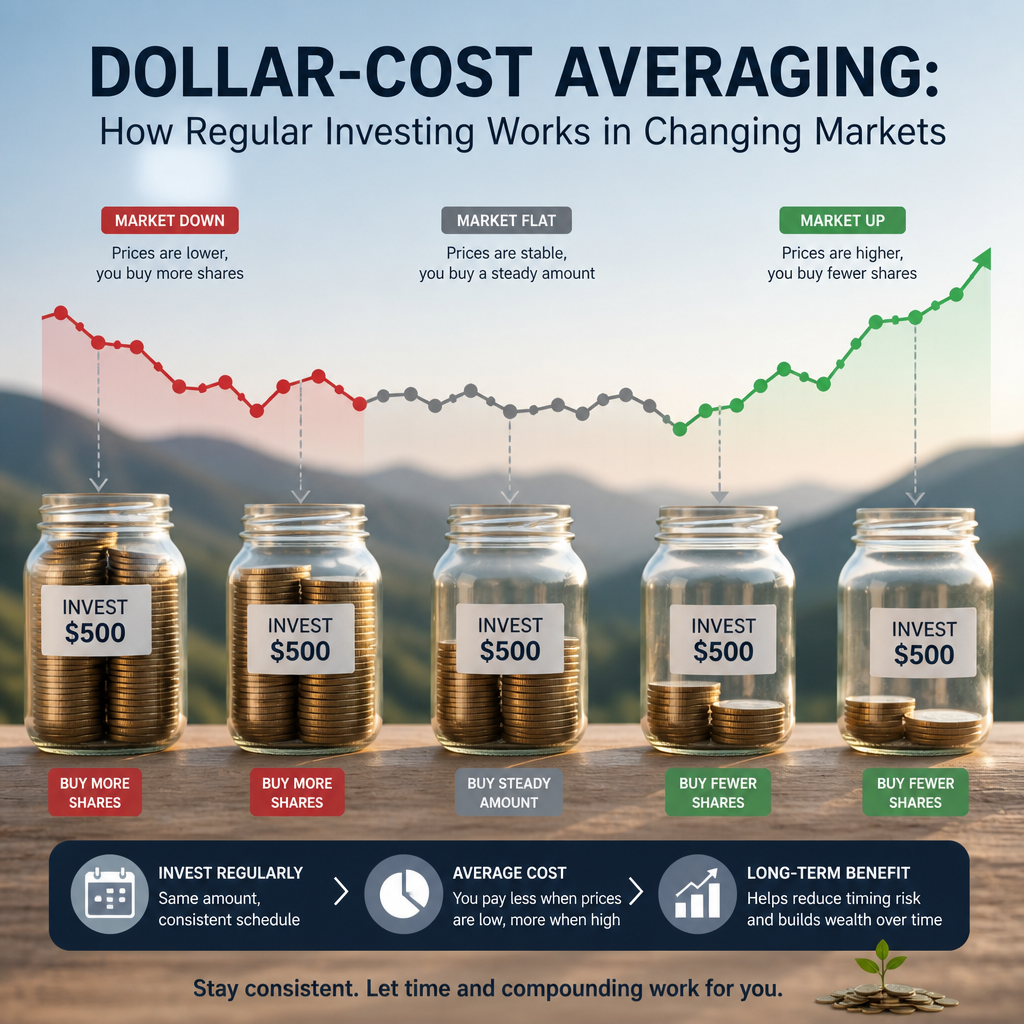
Dollar-cost averaging is an investment strategy where you invest the same dollar amount at regular intervals—such as weekly, biweekly, or monthly—no matter whether prices are up, down, or flat.
For example, if you invest $200 every month into a mutual fund or exchange-traded fund (ETF), your money buys more shares when prices are low and fewer shares when prices are high. Over time, this can smooth out the average cost per share.
Anúncios
How it works in real life
Imagine you invest $100 each month into a fund:
- Month 1: Share price = $10, you buy 10 shares
- Month 2: Share price = $20, you buy 5 shares
- Month 3: Share price = $5, you buy 20 shares
Your share count changes each month, but your investment amount stays the same. This is the core idea behind dollar-cost averaging: consistency over prediction.
Why Dollar-Cost Averaging Appeals to Investors
Many people like dollar-cost averaging because it removes emotion from the process. Markets can trigger fear during downturns and excitement during rallies, and both emotions can lead to poor decisions.
Key benefits of dollar-cost averaging
- Reduces the pressure to time the market
- Promotes consistent investing habits
- Can help during volatile markets
- Makes investing more accessible
- Fits naturally with automatic contributions
Instead of waiting for the “right” moment, you keep investing through market changes. That consistency can matter more than trying to make a perfect one-time move.
Dollar-Cost Averaging During Market Changes
Market changes are where dollar-cost averaging tends to shine. When prices fall, your fixed contribution buys more shares. When prices rise, you buy fewer shares. Over time, this can lower the average price you pay compared with investing a large amount all at once during a high point.
During a market decline
A falling market can feel uncomfortable, but it also means your regular contributions may purchase more shares at lower prices. For long-term investors, that can be an opportunity rather than a setback.
Example:
- You invest $500 each month
- The fund price drops from $50 to $25
- At $50, you buy 10 shares
- At $25, you buy 20 shares
If the market eventually recovers, those extra shares may help your portfolio grow faster.
During a market rally
When prices rise, dollar-cost averaging still works, but your fixed amount buys fewer shares. Some investors worry they’re “missing out” by not investing all at once. However, the strategy is less about maximizing each individual purchase and more about reducing the risk of making a bad timing decision.
In a strong market, your ongoing contributions keep you invested without chasing price spikes.
During volatile periods
Volatility can lead to dramatic price swings over short periods. Dollar-cost averaging helps you stay steady through those changes. Instead of reacting to every move, you follow a plan.
This can be especially useful for:
- Employees contributing to a 401(k)
- Investors adding money to an IRA each month
- People building a portfolio gradually from savings
- Anyone who prefers structure over speculation
Dollar-Cost Averaging vs. Lump-Sum Investing
A common question is whether dollar-cost averaging is better than investing a lump sum all at once. The answer depends on your goals, risk tolerance, and cash flow.
Lump-sum investing
Lump-sum investing means putting a large amount into the market at once. If the market rises soon after, this approach can produce stronger returns.
Dollar-cost averaging
Dollar-cost averaging spreads the investment over time. That can feel less risky because you’re not entering the market with all your money on one day.
Which one is better?
There isn’t a universal winner. In general:
- Lump-sum investing may be more effective when you already have cash ready and want to invest immediately.
- Dollar-cost averaging may be better for people who earn money over time, want to reduce stress, or prefer a disciplined routine.
The best choice often depends on how comfortable you are with market risk and how likely you are to stay invested.
Where Dollar-Cost Averaging Makes the Most Sense
Dollar-cost averaging is especially useful in situations where you contribute regularly anyway.
Common examples
- Retirement accounts
- 401(k), 403(b), and IRA contributions often happen on a recurring schedule.
- Automatic payroll deductions make dollar-cost averaging nearly effortless.
- Brokerage accounts
- You can set up recurring transfers to buy ETFs, mutual funds, or other investments.
- College savings plans
- Regular deposits into 529 plans often follow the same principle.
- Long-term goal investing
- Whether you’re saving for a house, education, or financial independence, steady contributions can help you stay organized.
If you’re investing for a goal that is years away, the consistency of dollar-cost averaging can be more valuable than trying to optimize every market move.
How to Use Dollar-Cost Averaging Effectively
Dollar-cost averaging works best when you pair it with a thoughtful plan. It is not magic, and it won’t guarantee gains. But used well, it can support long-term investing discipline.
1. Choose a realistic amount
Invest an amount you can maintain comfortably. The goal is consistency, not strain. If your contribution is too ambitious, you may stop when life gets expensive.
2. Set a schedule
Pick a fixed interval:
- Weekly
- Biweekly
- Monthly
A regular schedule reduces decision fatigue and helps automate the habit.
3. Automate whenever possible
Automatic transfers can keep your plan on track. Many brokerages and retirement plans allow recurring investments, which makes it easier to stay consistent.
4. Focus on diversified investments
Dollar-cost averaging works well with diversified investments like broad-market index funds or ETFs. These can help reduce the risk of putting too much into one company or sector.
5. Stay aligned with your time horizon
This strategy is usually most effective for long-term goals. If you need the money soon, market swings matter more, and you may need a different approach.
Common Mistakes to Avoid
Even a straightforward strategy can go off course if you don’t use it carefully.
Avoid these pitfalls
- Stopping during downturns
Many investors quit when prices fall, but that’s often when consistent contributions can be most useful. - Trying to outguess the market
Dollar-cost averaging is about steady participation, not market prediction. - Investing without a plan
A schedule helps, but you also need a clear goal, asset mix, and risk level. - Leaving cash idle for too long
If you already have money set aside for investing, waiting indefinitely can reduce the strategy’s usefulness. - Confusing consistency with safety
Dollar-cost averaging can help manage timing risk, but it does not eliminate market risk.
Practical Example of Dollar-Cost Averaging
Let’s say you want to invest $300 per month into a diversified ETF for the next five years.
- In a strong month, the ETF may be expensive, and your money buys fewer shares.
- In a weak month, the ETF may be cheaper, and your money buys more shares.
- Over time, your average cost per share may become more balanced than if you invested only during one market phase.
The real benefit is behavioral: you keep investing without overthinking each month’s price. That discipline can be powerful, especially when the market feels unpredictable.
Is Dollar-Cost Averaging Right for You?
This strategy is not a one-size-fits-all solution, but it works well for many everyday investors.
It may be a good fit if you:
- Invest from regular income
- Prefer a simple, repeatable strategy
- Want to reduce the emotional impact of market volatility
- Are building wealth over the long term
- Need help staying consistent
It may be less useful if you:
- Already have a large sum ready to invest and are comfortable taking market risk
- Need the money soon
- Want to maximize immediate market exposure and understand the risks
Before choosing an approach, consider your goals, timeline, and comfort with risk. If needed, a financial professional can help you decide how dollar-cost averaging fits into your broader plan.
Frequently Asked Questions
1. What is dollar-cost averaging in simple terms?
Dollar-cost averaging means investing a fixed amount of money on a regular schedule, no matter what the market is doing. You buy more shares when prices are low and fewer shares when prices are high. The goal is to build an investing habit and reduce the stress of trying to time the market.
2. Does dollar-cost averaging guarantee profits?
No. Dollar-cost averaging does not guarantee profits or protect against losses. It is a strategy for managing how and when you invest, not a promise of returns. Your results still depend on the performance of the investments you choose and the length of time you stay invested.
3. Is dollar-cost averaging better than investing all at once?
Not always. Lump-sum investing can outperform dollar-cost averaging if markets rise after you invest. However, dollar-cost averaging may feel less risky and can help people stay disciplined. The better option depends on your cash flow, comfort with risk, and ability to invest immediately.
4. What types of investments work well with dollar-cost averaging?
Dollar-cost averaging is commonly used with mutual funds, ETFs, index funds, and retirement accounts. It works best with diversified, long-term investments rather than short-term speculation. It is especially effective when contributions happen automatically through payroll deductions or recurring transfers.
5. Can I use dollar-cost averaging in a taxable brokerage account?
Yes, you can use dollar-cost averaging in a taxable brokerage account. Many investors set up recurring purchases there just as they would in a retirement account. Keep in mind that taxable accounts may have different tax considerations, so it’s wise to understand how dividends, capital gains, and sales may affect your tax bill.
Official Resources
- Investor.gov: Dollar-Cost Averaging
- SEC Office of Investor Education and Advocacy
- FINRA: Investing Basics
- U.S. Department of Labor: Retirement Savings
- NerdWallet: Dollar-Cost Averaging Explained
Conclusion
Dollar-cost averaging offers a practical way to invest through market changes without getting pulled into constant guesswork. By putting in the same amount on a regular schedule, you build discipline, reduce emotional decision-making, and create a habit that supports long-term growth. It may not always beat every other strategy in every market, but it does something just as important: it helps investors stay invested.
That consistency matters because wealth building is rarely about making one perfect move. It’s usually about repeating good decisions over time. Whether you’re contributing to a retirement plan, buying funds in a brokerage account, or investing from each paycheck, dollar-cost averaging can make the process easier to manage and less stressful.
If you’re trying to navigate uncertain markets, this strategy gives you a clear framework: invest steadily, focus on your long-term goal, and keep emotions from driving your decisions. The next step is simple—build a plan you can stick with and let time do more of the work.