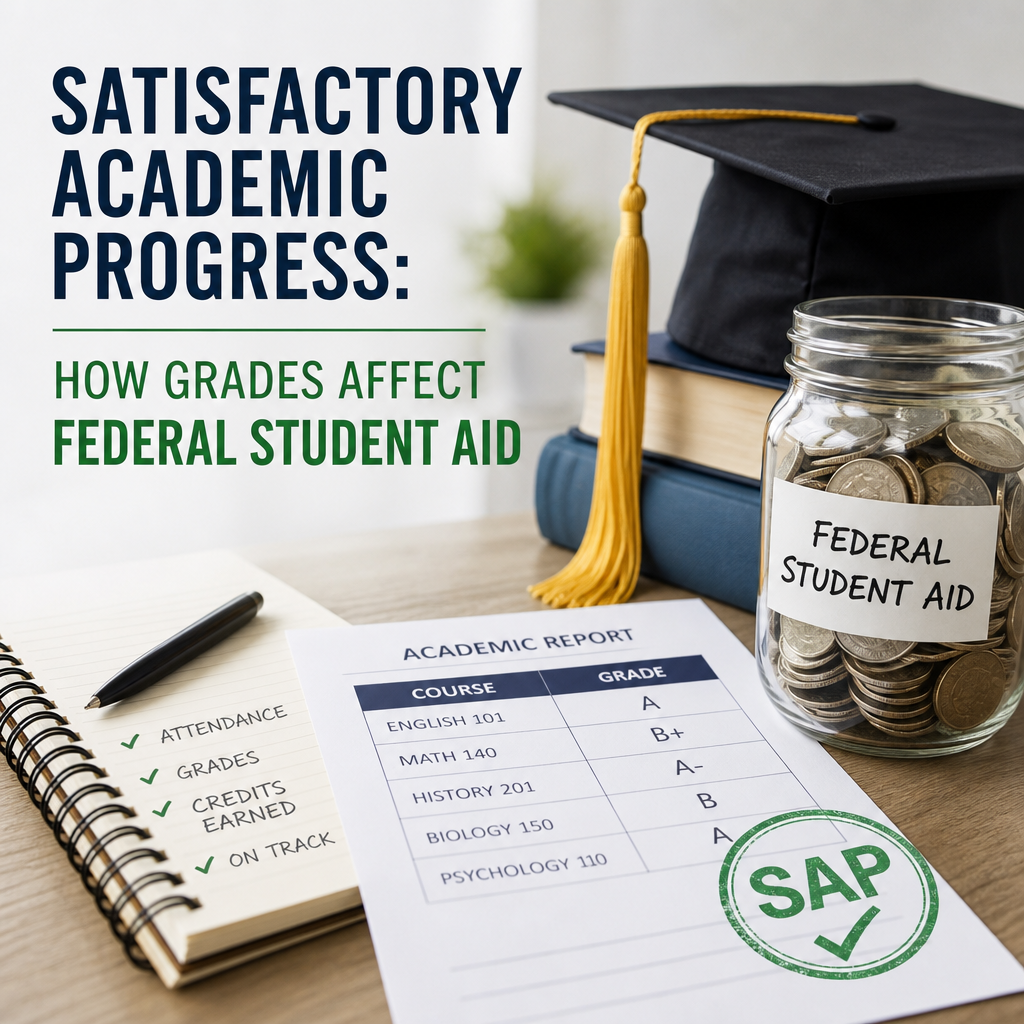
Satisfactory Academic Progress: How Grades Affect Federal Student Aid
Satisfactory academic progress is the key standard that determines whether you can keep receiving federal student aid, and it depends on more than just staying enrolled. Understanding how your GPA, pace, and completion timeline are measured can help you avoid surprises and protect your financial aid.
By: Jennifer Collins on August 1, 2026
Anúncios
If you receive federal student aid, your grades matter more than many students realize. Satisfactory Academic Progress is the standard the federal government and most colleges use to decide whether you can keep receiving financial aid. In simple terms, it measures whether you are moving through your program successfully and making steady progress toward graduation.
Anúncios
For students and families, this can feel stressful, especially if a rough semester, a change in major, or personal challenges affects your GPA or completion rate. The good news is that Satisfactory Academic Progress rules are manageable once you understand how they work, what schools look for, and what steps you can take if your aid is at risk.
This guide breaks down how Satisfactory Academic Progress affects federal student aid, what standards schools commonly use, and how to stay eligible.
What Is Satisfactory Academic Progress?
Satisfactory Academic Progress, often called SAP, is a federal financial aid requirement. Schools must check whether students receiving federal aid are making acceptable progress toward a degree or certificate.
Anúncios
SAP usually includes three main parts:
Grade point average (GPA)
Pace of completion
Maximum time frame
If you fail to meet your school’s SAP policy, you may lose eligibility for federal student aid such as:
Pell Grants
Direct Subsidized and Unsubsidized Loans
Federal Work-Study
Other Title IV aid
Each college sets its own SAP policy, but it must follow federal rules and apply them consistently.
Why Satisfactory Academic Progress Matters for Federal Student Aid
Federal aid is meant to support students who are actively working toward a credential. Satisfactory Academic Progress helps schools determine whether a student is still on track to finish their program.
Even if you remain enrolled, poor grades or too many dropped classes can affect aid eligibility. That means SAP is not just about academic standing. It directly affects your financial support.
Common reasons students run into SAP problems
Failing multiple classes
Dropping courses repeatedly
Taking too many withdrawals
Switching majors often
Completing too few credits each semester
Falling below the school’s GPA requirement
A single difficult term does not always end your aid, but continued problems can create a serious issue.
How Grades Affect Satisfactory Academic Progress
Grades influence SAP in several ways. Most schools look at GPA and completion rate, so low grades can hurt both measures at once.
GPA requirements
Many schools require students to maintain a minimum cumulative GPA, often around a 2.0 for undergraduates, though policies vary. If your grades fall below your school’s threshold, you may be placed on warning or probation, or lose aid altogether.
Completion rate requirements
Schools also check whether you complete enough attempted credits. This is often called pace. Withdrawals, incompletes, and failed classes can lower your completion rate because they count as attempted but not completed credits.
For example:
You enroll in 15 credits
You complete only 9
Your pace is 60%
If your school requires a 67% completion rate, you may not meet SAP standards.
Maximum time frame
Federal rules also limit how long you can receive aid for a program. If you take too many classes, change majors multiple times, or repeat courses excessively, you may reach the maximum time frame before graduating.
This is especially important for students who:
Attend part-time
Transfer schools
Change degree programs
Need developmental or remedial coursework
What Your School May Review
Every school creates its own SAP policy, but most reviews include the same core areas.
1. Cumulative GPA
Your overall GPA across all eligible coursework is usually checked at the end of each payment period or academic term.
2. Pace of completion
This measures how many credits you successfully complete compared with how many you attempt.
3. Total credits earned versus attempted
Schools often compare the number of credits you’ve earned to the number you’ve attempted to see whether you’re making steady progress.
4. Maximum time frame
Your school may calculate whether you can still finish your program within 150% of the published length of the program. For example, if a bachelor’s degree normally takes 120 credits, aid eligibility may stop after 180 attempted credits.
5. Academic standing and program requirements
Some programs, especially professional or competitive ones, may have additional expectations tied to progression, licensure, or clinical placement.
SAP Warning, Probation, and Appeals
If you do not meet SAP standards, you may not lose aid immediately. Many schools use a step-by-step process.
SAP warning
Some schools place students on warning after one period of poor performance. During this time, you may still receive federal aid, but you must improve quickly.
SAP probation
If you appeal successfully, your school may place you on probation. Probation usually comes with conditions, such as:
Raising your GPA
Completing all classes in the next term
Following an academic plan
Meeting with an advisor regularly
SAP appeal
You may be able to appeal if there were unusual circumstances that affected your academic performance, such as:
Serious illness
Family emergency
Death of a close relative
Mental health challenges
Other documented hardships
A strong appeal usually explains what happened, what changed, and how you will succeed going forward.
How to Check Your School’s SAP Policy
The most important step is to read your college’s official SAP policy. Schools must publish it, usually in the financial aid section of the website or student handbook.
Look for:
Minimum GPA requirements
Required completion rate
Maximum credit limits
Review schedule
Appeal process
Probation conditions
Questions to ask your financial aid office
How often is SAP reviewed?
What GPA do I need to keep aid?
Do withdrawn classes count against me?
How are repeated courses handled?
Can I appeal if I lose aid?
What documents do I need for an appeal?
Getting clear answers early can prevent surprises later.
Practical Ways to Stay Eligible for Federal Student Aid
You do not need perfect grades to keep federal student aid, but you do need a plan. These practical habits can help.
1. Monitor your grades during the semester
Do not wait until finals week to check your progress. Use your course syllabus to track quizzes, assignments, and exams. If a class starts slipping, ask for help early.
2. Meet with academic and financial aid advisors
Academic advisors can help you choose a manageable course load. Financial aid advisors can explain how your choices affect SAP.
3. Be careful with withdrawals
Withdrawing from a course may protect your GPA, but it can hurt your completion rate. Too many withdrawals can create SAP trouble even if your transcript looks better.
4. Retake failed classes strategically
Repeating a class may help your GPA, but not always your pace. Ask whether repeated courses count as attempted credits under your school’s policy.
5. Build a realistic schedule
Taking on too many credits, work hours, or extracurricular commitments can lead to poor grades. A balanced schedule often works better than overloading yourself.
6. Use campus support services
Many colleges offer:
Tutoring
Writing centers
Math labs
Study groups
Counseling services
Disability services
These supports can make a major difference, especially after a difficult term.
Special Situations That Can Affect SAP
Some students face extra complexity because of their academic path.
Transfer students
If you transfer schools, your prior credits may count toward your program length and pace. That can affect how much aid you have left.
Part-time students
Part-time enrollment often means slower progress, so it is important to understand how your school calculates pace and maximum time frame.
Students with incompletes
An incomplete grade may temporarily delay SAP review, but it can become a problem if not resolved quickly.
Students in remedial or developmental courses
These classes may count differently depending on the school and the aid program. Always confirm how they affect your SAP calculation.
Graduate and professional students
Graduate programs often have different GPA and pacing standards. Professional programs may also use stricter progression rules.
What Happens If You Lose Federal Student Aid?
Losing aid can make school more expensive fast, but it does not always mean the end of your education.
If you are ineligible for federal student aid, you may need to:
Pay out of pocket
Use private scholarships
Set up a payment plan
Reduce your course load
Appeal the SAP decision
Restore eligibility by meeting the school’s standards
Some students regain aid after improving grades or completing an academic plan. Others regain eligibility through a successful appeal. The key is to act quickly and stay in contact with the financial aid office.
How to Write a Strong SAP Appeal
If your school allows appeals, take them seriously. A vague or emotional letter is less effective than a clear, documented explanation.
A strong appeal should include:
What happened
Explain the situation honestly and briefly.
How it affected your academics
Show the connection between the hardship and your grades.
What has changed
Demonstrate that the problem is resolved or being managed.
Your plan for success
Include specific steps, such as tutoring, reduced work hours, or regular advising.
Supporting documents
Attach medical notes, obituaries, counselor letters, or other relevant records if required.
Keep your tone respectful and focused on solutions.
Example: How SAP Can Affect Aid in Real Life
Imagine a student who starts college full-time and earns decent grades the first year. During the second year, they begin working extra hours to support their family, miss assignments, and fail two classes. Their GPA drops below the school minimum, and their completion rate falls under the required pace.
Even though they are still enrolled, their Satisfactory Academic Progress is now in trouble. The student may receive a warning, be placed on probation, or have aid suspended. If they meet with advisors, reduce their work hours, and create a realistic academic plan, they may be able to recover eligibility.
This is a common situation. SAP rules are strict, but they are also designed to measure progress, not perfection.
Frequently Asked Questions
1. What is Satisfactory Academic Progress for federal student aid?
Satisfactory Academic Progress is the standard schools use to decide whether you remain eligible for federal student aid. It usually includes your GPA, the percentage of credits you complete, and the amount of time you take to finish your program.
2. Do withdrawals affect Satisfactory Academic Progress?
Yes, withdrawals can affect SAP. While a withdrawal may not lower your GPA directly, it can reduce your completion rate because the class still counts as attempted credit. Too many withdrawals can put your aid at risk.
3. Can I lose aid even if I still have a good GPA?
Yes. GPA is only one part of SAP. You can still lose federal student aid if you do not complete enough credits, exceed the maximum time frame, or otherwise fail to meet your school’s policy.
4. What should I do if I fail a class and worry about aid?
Contact your financial aid office right away. Review your SAP status, ask how the failed class affects your progress, and find out whether you can appeal or create an academic plan. Acting early gives you more options.
5. Can I get my federal student aid back after losing it?
Often, yes. You may regain eligibility by improving your academic record, following an approved academic plan, or winning an appeal based on unusual circumstances. The process depends on your school’s policy and your progress after the problem occurred.
Understanding Satisfactory Academic Progress is one of the smartest things any student receiving federal student aid can do. Your grades, course completion, and time to degree all play a role in whether your aid continues. That makes it important to stay aware of your school’s standards, check your progress regularly, and act quickly if you start falling behind.
If your semester did not go as planned, do not assume your financial aid is gone for good. Many schools offer warnings, appeals, and academic plans that give students a path back to eligibility. The key is to communicate early, use campus support services, and make a realistic plan for improvement.
By understanding how Satisfactory Academic Progress works, you can protect your federal student aid and stay focused on what matters most: finishing your education. If you are unsure where you stand, start with your financial aid office and read your school’s SAP policy today. Small steps now can prevent bigger problems later.
Jennifer, M.Ed., holds a degree in Higher Education Administration, with
a focus on U.S. college financial aid, admissions policy, and student
support systems. She researches and writes about scholarships, federal
aid programs, and the college planning process to help students and
families make informed, well-supported decisions.