Debt Collection Validation Notices: What Consumers Should Review
A debt collection validation notice gives you key details about an alleged debt so you can check whether it’s accurate, belongs to you, and is still legally collectible. Before paying anything, review the notice carefully to understand your rights and spot any errors.
By: Mary Mitchell on August 2, 2026
Anúncios
Getting a letter or email about a debt can feel stressful, especially if you are not sure whether the account is real, accurate, or even yours. That is exactly why debt collection validation notices matter. These notices give consumers important details about an alleged debt and explain the right to dispute it before paying.
If you recently received a collection notice, do not rush to send money. Instead, take time to review the information carefully. A validation notice is not just paperwork—it is a consumer protection tool that helps you confirm key facts, spot errors, and understand your options under the Fair Debt Collection Practices Act (FDCPA).
Anúncios
What Is a Debt Collection Validation Notice?
A debt collection validation notice is a written notice a debt collector sends to a consumer after initial contact, or with the initial communication, depending on the situation. The notice is designed to provide enough information for you to identify the debt and decide whether to dispute it.
In plain terms, it should help answer questions like:
Anúncios
Who is trying to collect the debt?
Who was the original creditor?
What is the amount owed?
How can I dispute the debt?
What happens if I disagree with it?
This notice is an important part of consumer rights in debt collection. It helps protect against mistaken identity, incorrect balances, and collection attempts on debts that may already be paid, settled, discharged in bankruptcy, or outside the collector’s legal authority.
Why Debt Collection Validation Notices Matter
Many people assume a collection letter means they must pay immediately. That is not always true. Debt collection validation notices give you a chance to slow down and verify the claim before taking action.
Here is why they matter:
They help confirm the debt is actually yours.
They provide details you can compare against your own records.
They explain your right to dispute the debt.
They can reveal errors in the creditor name, balance, or account history.
They may help you avoid paying a debt you do not legally owe.
For consumers, the notice is a starting point—not the final word.
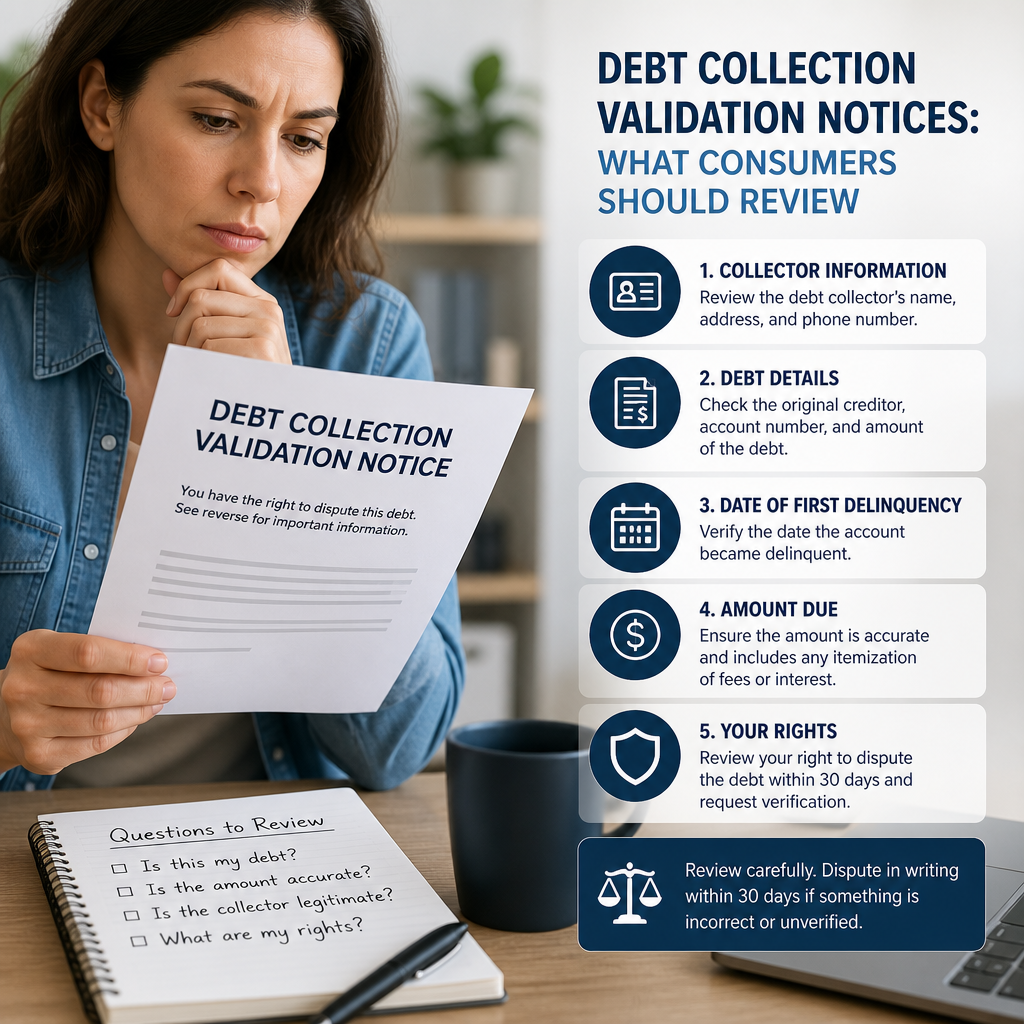
Information Consumers Should Review in a Validation Notice
A validation notice should contain key details that allow you to assess the debt. When you receive one, review every line carefully. Small differences can matter.
1. The Name of the Debt Collector
Check the company name, address, and contact information. Make sure the collector is identifiable and legitimate.
Questions to ask:
Is the company a known collection agency?
Does the mailing address look valid?
Does the phone number match the company’s official contact information?
If the notice comes from a business you do not recognize, verify it before sharing personal information.
2. The Name of the Original Creditor
The notice should identify the original creditor, such as a credit card company, medical provider, utility company, or lender.
Why this matters:
It helps you connect the debt to a real account you may remember.
It may show whether the debt was sold to a different collector.
It can help you spot mistakes if the creditor name looks unfamiliar.
If you have multiple past accounts, confirm that the creditor name matches your records.
3. The Amount of the Debt
Review the total amount claimed. This is one of the most important pieces of information in any debt collection validation notice.
Look for:
Principal balance
Interest
Fees
Collection charges
Any recent changes to the total
Ask whether the amount makes sense based on your own account history. If the balance seems higher than expected, request more information.
4. An Itemization of the Debt
Many notices include an itemization showing how the debt amount was calculated. This may list the balance as of a specific date and show any added interest or fees.
An itemization can help you determine whether:
The account was charged off
Interest continued after default
Fees were added improperly
The balance changed after the account was sold
If the numbers do not add up, that may be a sign to dispute the debt.
5. The Date of the Debt and Relevant Timeline
The notice may include the date of the debt, the date of default, or the date of the last payment. These dates are important because they can affect whether the debt is time-barred under your state’s statute of limitations.
A useful question to ask is: When was the last time I made a payment or acknowledged this debt in writing?
That date may help determine whether the collector can still sue to collect it.
6. Your Dispute Rights
One of the most valuable parts of a validation notice is the explanation of your right to dispute the debt.
Typically, you may have the right to:
Dispute the debt in writing
Request validation or verification
Ask for the name and address of the original creditor
Require the collector to stop collection efforts until it verifies the debt
Read this section closely. Deadlines matter, and your response should be timely and in writing if you want to preserve certain rights.
7. Instructions for Responding
The notice should tell you how to dispute the debt or request additional information. Review the instructions carefully so you know:
Where to send your dispute
Whether mail, email, or another method is allowed
The deadline for responding
Whether the collector provides a form or template
Keep copies of everything you send.
How to Review a Debt Collection Validation Notice Step by Step
Reading the notice once is not enough. Use a methodical approach so you do not miss details.
Step 1: Read the Notice Without Responding Immediately
Start by reading the entire notice carefully. Do not call the collector right away unless you are simply confirming basic contact information. Phone calls can be useful, but written communication is better for documentation.
Step 2: Compare the Notice to Your Own Records
Look at old bills, credit card statements, medical invoices, bank records, or account emails. Ask:
Do I recognize the creditor?
Was the account already paid?
Was the debt included in bankruptcy?
Does the balance match my records?
If you have moved or changed names, make sure the collector is not confusing you with someone else.
Step 3: Watch for Red Flags
Some warning signs suggest the notice needs closer review:
The creditor name is unfamiliar
The amount does not match your records
The dates seem wrong
The collector uses threatening language
The notice lacks clear dispute instructions
The account information is too vague to identify
These issues do not automatically mean the debt is invalid, but they do mean you should investigate before paying.
Step 4: Check Whether the Debt May Be Time-Barred
If the debt is old, the collector may still ask for payment, but it may not be able to sue you depending on your state law. This is why the date information in a validation notice matters.
Because statutes of limitations vary, consumers should verify the rules in their state before taking action on an old debt.
Step 5: Decide Whether to Dispute the Debt
If anything looks wrong, unclear, or unfamiliar, consider sending a written dispute. You may also request validation or ask for supporting documents.
A dispute can be especially helpful if:
You do not recognize the debt
The amount seems inaccurate
The debt was already paid
The account was part of identity theft
The collector is contacting the wrong person
What to Do If the Debt Seems Incorrect
If your review raises concerns, act promptly and keep good records.
Send a Written Dispute
Put your dispute in writing and send it to the collector using a method that provides proof of delivery, such as certified mail with return receipt requested.
Your letter should be clear and brief. For example:
State that you dispute the debt
Identify the account number if available
Request validation and supporting documentation
Ask the collector to cease collection until it verifies the debt
Keep Copies of Everything
Save:
The original notice
Your dispute letter
Mailing receipts
Return receipt cards
Emails or messages from the collector
Documentation helps if the collector continues collection efforts or reports incorrect information to credit bureaus.
Monitor Your Credit Reports
A collection account may appear on your credit report. If the information is inaccurate, you may have the right to dispute it with the credit reporting agencies as well.
Review:
Balance
Creditor name
Date of first delinquency
Account status
Errors on a credit report can affect your credit score and your ability to qualify for loans or housing.
Consider Identity Theft if the Debt Is Unfamiliar
If you believe the debt is not yours, act quickly. Identity theft-related debts may require additional steps, such as filing a report with the Federal Trade Commission and disputing the account with the collector and credit bureaus.
Common Mistakes Consumers Make After Receiving a Validation Notice
A collection notice can trigger fast decisions, but rushing often leads to avoidable mistakes.
Paying Before Verifying
Do not pay simply because the letter looks official. A collector still must provide enough information for you to identify and dispute the debt.
Ignoring the Notice
Silence can be risky. If the debt is valid, ignoring the notice may allow the collector to continue collection efforts or, in some cases, take legal action.
Calling Without a Plan
Phone conversations can be recorded and may lead to statements that complicate your position. If you call, keep the conversation limited and avoid admitting responsibility until you have reviewed the debt.
Missing the Dispute Deadline
Some rights are tied to deadlines. If you want certain protections, respond on time and in writing.
Throwing Away Old Records
Old statements, settlement letters, and payment confirmations can be useful. Keep them organized so you can compare them to the collector’s claim.
What Debt Collectors Are Allowed to Do
Consumers should understand that collectors can contact them to request payment, but they must follow the law. Debt collection rules are meant to prevent deception, harassment, and unfair practices.
Collectors generally should not:
Misrepresent the amount owed
Claim you owe a debt that is not yours
Use false threats or intimidation
Contact you at prohibited times or in prohibited ways
Ignore a proper dispute and continue collection without verification
Knowing your rights helps you respond with confidence.
When to Seek Professional Help
Some situations are simple to handle on your own. Others call for legal advice or consumer advocacy support.
Consider getting help if:
You are being sued
The debt is very old
You believe the debt is the result of identity theft
The collector keeps contacting you after a dispute
The notice contains confusing or contradictory information
You are unsure how the debt affects bankruptcy, divorce, or an estate
A consumer law attorney or a reputable nonprofit credit counselor may help you understand your options.
Practical Example: How a Consumer Might Review a Notice
Imagine you receive a collection letter for a credit card debt you do not recognize. The notice lists:
A collection agency you have never heard of
An original creditor you do recognize
A balance that seems higher than expected
A date that does not match your account records
In that situation, you would likely:
Compare the creditor name to old statements.
Check whether you ever closed or charged off the account.
Review the dates for accuracy.
Look for any signs of identity theft or a sold debt.
Send a written dispute if the debt still seems unclear.
This process can help you avoid paying the wrong amount—or paying the wrong debt entirely.
Frequently Asked Questions
What is the purpose of a debt collection validation notice?
A debt collection validation notice gives consumers key information about an alleged debt and explains their right to dispute it. Its purpose is to help you confirm whether the debt is accurate, belongs to you, and is being collected by the right party.
How long do I have to dispute a debt after receiving a validation notice?
The time frame can depend on the notice and the rights involved, so read the letter carefully. If you want to preserve certain protections, send your dispute as soon as possible and keep proof that you mailed it on time.
Do I have to pay a debt just because I received a validation notice?
No. Receiving a validation notice does not mean you automatically owe the amount claimed. You should review the details first, compare them with your records, and dispute the debt if something looks wrong.
What if the collector cannot verify the debt?
If you properly dispute the debt and the collector cannot provide adequate verification, it may have to stop collection efforts until it does. The exact outcome depends on the circumstances, so document everything and consider getting legal advice if needed.
Can a debt collection validation notice help me spot identity theft?
Yes. If the account information does not match your records or you never had the account, the notice may be a sign of identity theft or a mistaken collection attempt. In that case, you should dispute the debt and consider reporting identity theft to the proper agencies.
Debt collection validation notices are more than just formal letters—they are an important consumer protection that gives you the chance to review, question, and verify an alleged debt before paying. By carefully checking the collector’s identity, the original creditor, the balance, the dates, and your dispute rights, you can make a more informed decision and avoid costly mistakes.
The most important takeaway is simple: do not ignore a validation notice, but do not panic either. Take a calm, organized approach. Compare the notice with your records, look for inconsistencies, and dispute any debt that seems inaccurate or unfamiliar. If the issue is complex, or if collection efforts continue after you raise concerns, consider getting help from a qualified consumer law professional or a trusted nonprofit resource.
Understanding debt collection validation notices can help you protect your rights, reduce stress, and respond with confidence. The more you know, the better prepared you are to handle collection letters, credit report disputes, and other debt-related challenges responsibly.
Mary S, CFP®, is a Certified Financial Planner with over 12 years of experience in personal finance, retirement planning, and wealth management. She writes educational content that helps readers understand financial concepts and make informed decisions based on reliable information.